
The Future of AI: Opportunities and Challenges.
Artificial intelligence has been a hot topic for Decades.

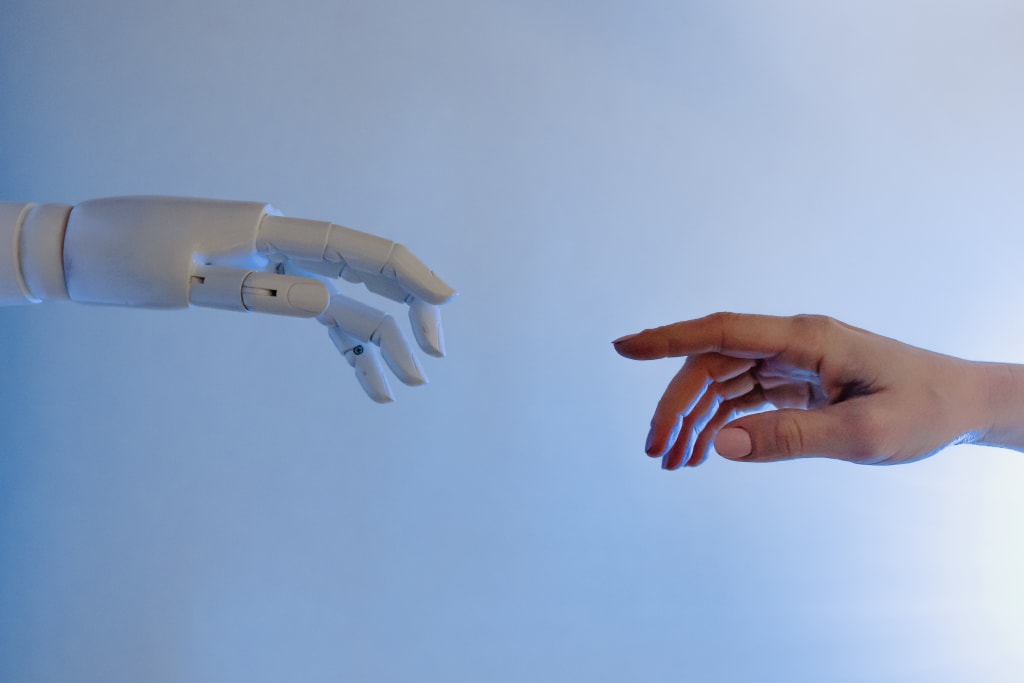
Artificial intelligence (AI) has been a hot topic for decades, but recent advancements in machine learning and deep learning have brought it to the forefront of modern technological advancements. The future of AI presents both incredible opportunities and daunting challenges.
Opportunities of AI:
Efficiency and automation: AI can automate repetitive and time-consuming tasks, freeing up human resources to focus on more complex and creative work. This can lead to increased productivity and cost savings for businesses.
Personalization: AI algorithms can analyze large amounts of data and provide personalized recommendations or solutions. This can enhance customer experiences and improve satisfaction.
Healthcare: AI can assist in the diagnosis and treatment of illnesses, potentially improving patient outcomes and reducing healthcare costs.
Sustainability: AI can be used to optimize energy usage, reduce waste, and minimize environmental impact, helping to create a more sustainable future.
Education: AI can enhance learning experiences by providing personalized learning paths, adaptive assessments, and automated grading.
Challenges of AI:
Bias and discrimination: AI algorithms can be biased if they are trained on biased data. This can result in discrimination against certain groups, perpetuating inequality.
Job displacement: As AI becomes more advanced, it has the potential to replace human workers in certain industries. This could lead to job displacement and economic inequality.
Privacy and security: AI relies on vast amounts of data, raising concerns about privacy and security. If this data is misused or hacked, it could lead to significant harm.
Ethics and accountability: As AI becomes more advanced, it raises ethical questions about its use. Who is responsible if an AI system makes a mistake? What happens if an AI system is used to cause harm?
Regulation: The rapid pace of AI development has outpaced regulatory frameworks, creating potential risks for society. Regulations must be developed to ensure the safe and ethical use of AI.
Despite these challenges, the potential benefits of AI are enormous, and it is important to continue exploring its applications while addressing the associated risks.
Here are some examples of how AI is being used today:
Healthcare: AI is being used to assist in the diagnosis and treatment of diseases. For example, machine learning algorithms can analyze medical images to help detect cancer.
Customer service: AI-powered chatbots are being used to provide personalized customer service and support, reducing the need for human customer service representatives.
Finance: AI is being used to detect fraud and manage risk in the financial industry. For example, machine learning algorithms can analyze large amounts of data to identify patterns that indicate fraudulent activity.
Education: AI is being used to enhance the learning experience. For example, adaptive learning algorithms can adjust the difficulty of questions based on a student's performance, providing personalized learning paths.
Transportation: AI is being used to improve transportation efficiency and safety. For example, self-driving cars use AI algorithms to make driving decisions.
As we look to the future, there are several areas where AI is likely to have a significant impact:
Healthcare: AI has the potential to revolutionize healthcare by providing more accurate and efficient diagnosis and treatment options.
Finance: AI is likely to continue to play a significant role in the financial industry, providing greater insights into risk management and fraud detection.
Manufacturing: AI is likely to improve manufacturing efficiency and reduce costs by automating processes and predicting maintenance needs.
Education: AI is likely to continue to enhance the learning experience by providing personalized learning paths and adaptive assessments.
Transportation: Self-driving cars and other autonomous vehicles are likely to become more common, leading to improved safety and reduced traffic congestion.
In conclusion, the future of AI presents both opportunities and challenges. While there are risks associated with the development and use of AI, its potential benefits cannot be ignored.
About the Creator
Hanaff Jr
Just Writer...
About Binding Prometheus
I want to start actively advocating on behalf of my own work, and the most valuable part of my canon is, without a doubt, Binding Prometheus, the play I have been working on since 2019 and only finished in 2023 as part of my MA. The play itself is an amalgamation of a million different inspirations. On one end, it evokes the Ancient Greek myth-play, deriving its own title from the earliest extant work of Western drama we have, Aeschylus’s Prometheus Bound. On the other end, it borrows significantly from the sci-fi bulwarks from over the years, namely Mary Shelley’s Frankenstein and Karel Capek’s Rossum’s Universal Robots. The play could be an episode of Black Mirror, I fear. I don’t know. I’ve only ever seen one episode of Black Mirror.
By Steven Christopher McKnight18 days ago in Futurism
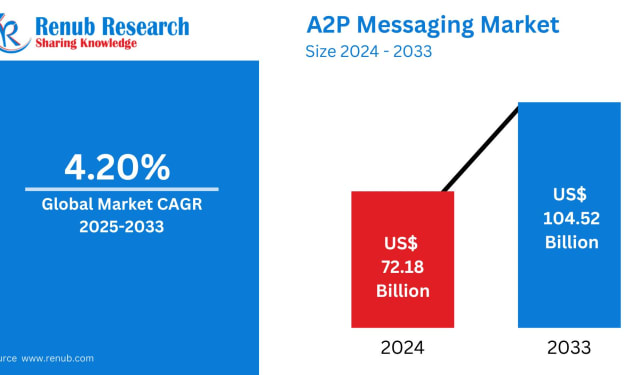
A2P Messaging Market Outlook 2025–2033
Introduction In an era where instant, reliable, and secure communication defines business success, Application-to-Person (A2P) messaging has become one of the most indispensable tools in the global digital economy. From one-time passwords (OTPs) and transaction alerts to delivery updates, customer notifications, and marketing campaigns, A2P messaging has reshaped how enterprises interact with consumers in real time.
By Marthan Sir7 days ago in Futurism



Comments
There are no comments for this story
Be the first to respond and start the conversation.