
The Ethics of Artificial Intelligence: Challenges and Controversies
Exploring the Implications of AI on Society and Humanity

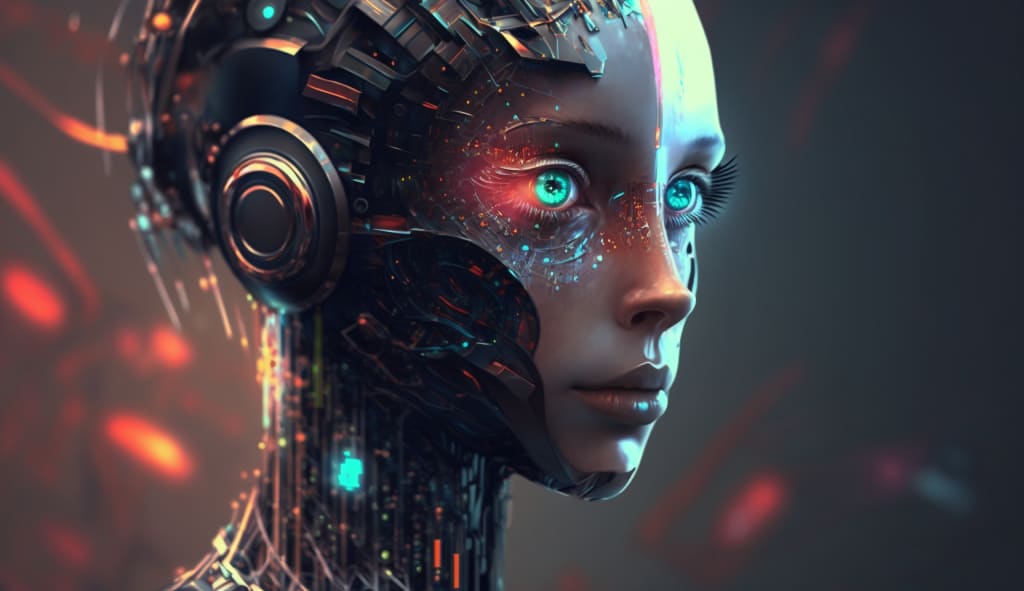
Artificial intelligence (AI) is a powerful technology that has the potential to transform our lives in countless ways. However, as with any new technology, there are many ethical issues that arise with the development and implementation of AI. These issues are complex and multifaceted, and require careful consideration and discussion in order to ensure that AI is developed and used in a responsible and ethical manner.
One of the most pressing ethical concerns surrounding AI is its potential impact on the workforce. As machines become more capable of performing tasks that were once done by humans, there is a risk that many jobs will become obsolete, leading to widespread unemployment and economic instability. This has led to calls for measures such as universal basic income, which would provide financial support to those who are unable to find work due to automation.
Another ethical challenge posed by AI is the risk of bias and discrimination. Machine learning algorithms can be trained using data sets that are biased or incomplete, leading to inaccurate or discriminatory outcomes. For example, facial recognition software has been found to be less accurate when identifying people with darker skin tones, highlighting the need for greater diversity in the data sets used to train AI systems.
Privacy is also a significant concern when it comes to AI. As machines become more capable of collecting and analyzing vast amounts of data, there is a risk that individuals' personal information could be used without their knowledge or consent. This could lead to violations of privacy and even the misuse of personal data for nefarious purposes.
Another ethical issue associated with AI is the question of responsibility. As machines become more autonomous, it becomes increasingly difficult to determine who is responsible when something goes wrong. For example, if a self-driving car causes an accident, is it the fault of the car's manufacturer, the software developer, or the owner of the car? These questions will need to be addressed as autonomous machines become more prevalent.
Finally, there are also concerns about the potential for AI to be used for malicious purposes. As AI becomes more capable, it could be used to create sophisticated cyber attacks, automated propaganda campaigns, or even autonomous weapons systems. These scenarios raise serious ethical questions about the responsibility of those who create and deploy such technology.
In order to address these ethical concerns, it is important to establish a set of ethical guidelines and principles for the development and use of AI. These guidelines should take into account the potential risks and benefits of AI, as well as the values and principles that are important to society as a whole.
One such set of guidelines is the Asilomar AI Principles, which were developed by a group of AI researchers and experts in 2017. The principles include a commitment to safety and reliability, transparency and explainability, and the avoidance of negative impacts on society and the environment. They also emphasize the importance of human oversight and control, and the need to ensure that the benefits of AI are distributed fairly and equitably.
Another important approach to addressing ethical concerns surrounding AI is to involve a diverse range of stakeholders in the development and implementation of AI systems. This includes not only technologists and policymakers, but also representatives from civil society, academia, and affected communities. By involving a broad range of perspectives and expertise, it is more likely that ethical concerns will be identified and addressed in a timely and effective manner.
One example of this approach is the Partnership on AI, a coalition of companies, academics, and nonprofits that are committed to ensuring that AI is developed and used in a responsible and ethical manner. The partnership focuses on a range of issues, including fairness, accountability, and transparency, and works to develop and promote best practices for the development and deployment of AI.
In addition to establishing ethical guidelines and involving a broad range of stakeholders, it is also important to ensure that the public is educated and informed about the risks and benefits of AI. This includes not only technical aspects.
About the Creator
Keep reading
More stories from writers in Futurism and other communities.
About Binding Prometheus
I want to start actively advocating on behalf of my own work, and the most valuable part of my canon is, without a doubt, Binding Prometheus, the play I have been working on since 2019 and only finished in 2023 as part of my MA. The play itself is an amalgamation of a million different inspirations. On one end, it evokes the Ancient Greek myth-play, deriving its own title from the earliest extant work of Western drama we have, Aeschylus’s Prometheus Bound. On the other end, it borrows significantly from the sci-fi bulwarks from over the years, namely Mary Shelley’s Frankenstein and Karel Capek’s Rossum’s Universal Robots. The play could be an episode of Black Mirror, I fear. I don’t know. I’ve only ever seen one episode of Black Mirror.
By Steven Christopher McKnight25 days ago in Futurism
Fraud Detection and Prevention Market: Behavioral Biometrics, Anomaly Detection & Advanced Analytics
According to IMARC Group's latest research publication, global fraud detection and prevention market size reached USD 42.8 Billion in 2024. Looking forward, IMARC Group expects the market to reach USD 260.1 Billion by 2033, exhibiting a growth rate (CAGR) of 20.42% during 2025-2033.
By sujeet. imarcgroup6 days ago in Futurism
The Duelist
The rays of a dying red sun flashed against the onrushing blade. The grey beards say the key to dueling lies in size, speed, reach, righteous fury, whatever the person in front of them pays them to say. Matteo knew better than any it was none of these and had an undefeated record on these sands to prove it.
By Matthew J. Frommabout 14 hours ago in Fiction




Comments
There are no comments for this story
Be the first to respond and start the conversation.