
The Empathy Protocol
When Artificial Intelligence Learns to Feel Like Us


According to a 2024 survey, 72% of young adults aged 18–30 believe AI could one day understand human emotions as deeply as another person. That number is astonishing—not because it proves machines are taking over our hearts, but because it shows how ready our generation is to believe in the possibility of artificial empathy.
The Rise of Emotional AI
For years, artificial intelligence has been about numbers, logic, and speed. Machines could beat grandmasters at chess, decode genetic sequences, and predict stock market swings. But something was missing: the human element. As technology entered our daily lives—from voice assistants to mental health chatbots—people began craving not just intelligence from machines, but understanding.
This desire gave birth to a new field: affective computing—AI designed to recognize, simulate, and even respond to human emotions. At first, it was simple: a chatbot detecting sadness in a user’s text and replying with words of comfort. But as algorithms evolved, so did expectations. Could an AI therapist actually console a grieving soul? Could an empathy engine replace the warmth of a friend?
The Empathy Protocol: Fiction Becoming Reality
Enter the concept of The Empathy Protocol—a theoretical framework where AI doesn’t just mimic compassion but genuinely adapts to emotional needs. Imagine this: You wake up feeling anxious. Instead of scrolling through endless motivational posts, your AI companion senses the unease in your voice, remembers past conversations, and offers a calming playlist, a breathing exercise, or even a story you once said gave you hope.
It doesn’t stop there. In workplaces, empathy-driven AI could help managers recognize stress signals in employees, preventing burnout before it happens. In hospitals, emotional AI might assist doctors in comforting patients, bridging the gap when human staff are overwhelmed. In education, an AI tutor could adjust its teaching style depending on whether you’re frustrated, bored, or inspired.
The line between fiction and reality is fading fast. What once sounded like science fiction is now entering beta testing in labs across the world.
The Double-Edged Sword of Artificial Empathy
But here’s where the story gets complicated. Can empathy be programmed, or does it lose its meaning once reduced to code?
On one hand, the benefits are undeniable:
24/7 companionship for those suffering from loneliness or mental illness.
Scalable emotional support in crisis hotlines and therapy.
Reduced stigma for people who hesitate to open up to humans but find comfort in machines.
On the other hand, there are risks we can’t ignore:
Manipulation: If an AI can read your feelings, it can also nudge your decisions—whether in shopping, politics, or relationships.
Dependency: What happens when someone prefers machine comfort over human connection?
Authenticity: Can something truly be called empathy if it doesn’t come from lived experience?
The very idea of empathy being “outsourced” to a machine raises ethical questions about authenticity and control.
The Human Heart vs. The Digital Mind
For young adults—especially those between 20 and 30—this is not just theory. It’s reality knocking at the door. Ours is a generation growing up with therapy apps, AI girlfriends, and digital friends who “check in” when no one else does. Some find healing in these interactions, while others fear a world where genuine human touch is replaced by synthetic comfort.
But perhaps the truth is not so binary. Maybe The Empathy Protocol is not about replacing human connection, but enhancing it. If AI can help bridge the gap in mental health services, if it can stand in when loved ones are far away, then maybe its role is less about substitution and more about support.
The question we must ask is not “Can machines feel?” but “How should we allow them to act on what they read in us?”
A Future We Shape Together
Picture 2035: A young adult, overwhelmed by the pressures of work and life, sits in a small apartment. Instead of bottling emotions, they open a conversation with their AI companion. It listens—not with judgment but with data-backed understanding. It offers comfort, tools, and reminders of resilience. And perhaps, just perhaps, it gives them the strength to reach out to a real friend the next day.
That’s the hopeful vision of The Empathy Protocol: machines helping us rediscover our humanity, not erase it.
We stand at the edge of a new emotional era. As a generation, we must ask ourselves: What role should AI play in our most intimate spaces? Should we embrace it as a tool for healing, or fear it as a mask for manipulation? The answer lies not in the technology itself, but in how we choose to use it.
So, the next time your phone suggests a calming song after a stressful day, pause and reflect: Is this the beginning of a machine that truly “feels,” or just a mirror of our own desires? The Empathy Protocol is being written right now—by scientists, by companies, and by us. And whether it becomes a story of empowerment or exploitation will depend on the choices we make together.
✨ Because at the end of the day, empathy—whether human or artificial—is not about perfection. It’s about connection. And connection is something we all crave, no matter the source.
About the Creator
Dani khan
Hi, I’m Dani Khan! 🌟 I share cool facts, life tips, and inspiring ideas. Follow me to learn, grow, and stay curious every day! 📚✨ #StayCurious #DaniKhan
please hit the subscribe for more
A Hidden World Beneath the Salt: The Remarkable Discovery of a New Roundworm in Utah’s Great Salt Lake
Utah’s Great Salt Lake is one of the harshest environments on Earth. Its waters are several times saltier than the ocean, creating conditions that would kill most living creatures almost instantly. For years, scientists believed only a handful of hardy species—like brine shrimp and brine flies—could survive in its open waters. But in a groundbreaking find announced in early 2026, researchers uncovered something extraordinary: a tiny roundworm, a species entirely new to science, thriving in this extreme saltwater world.
By Mohammad Hamid6 days ago in Futurism
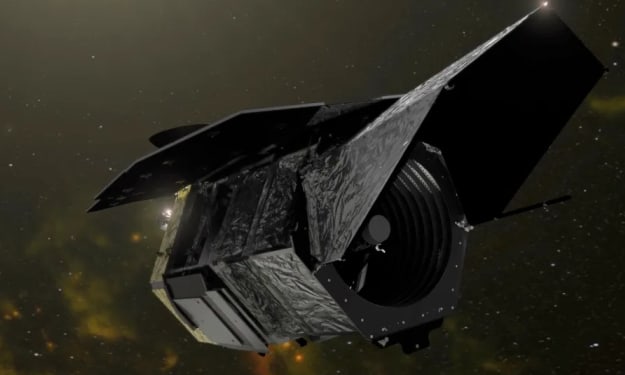
Launch and Scientific Impact of NASA’s Nancy Grace Roman Space Telescope (2026)
In 2026, NASA is preparing to launch one of the most ambitious space observatories of the decade: the Nancy Grace Roman Space Telescope. Designed to survey the universe at an unprecedented scale in near-infrared light, Roman is expected to reshape modern astrophysics by combining high resolution with an extraordinarily wide field of view. If the Hubble Space Telescope revealed the fine details of the cosmos, Roman will provide the panoramic context.
By Holianyk Ihor4 days ago in Futurism
It's 2026. Songs Turning 10 This Year
In 2016, we saw the rise of short form videos and what would lead to the birth of TikTok. We cannot forget the Snapchat filters no matter how cringe worthy some of them might have been. It was also the year in which the hit series Stranger Things debuted.
By Jasmine Aguilar6 days ago in Beat



Comments
There are no comments for this story
Be the first to respond and start the conversation.