
The De-Extinction of Dire Wolf
ANIMAL is back after 13,000 Years

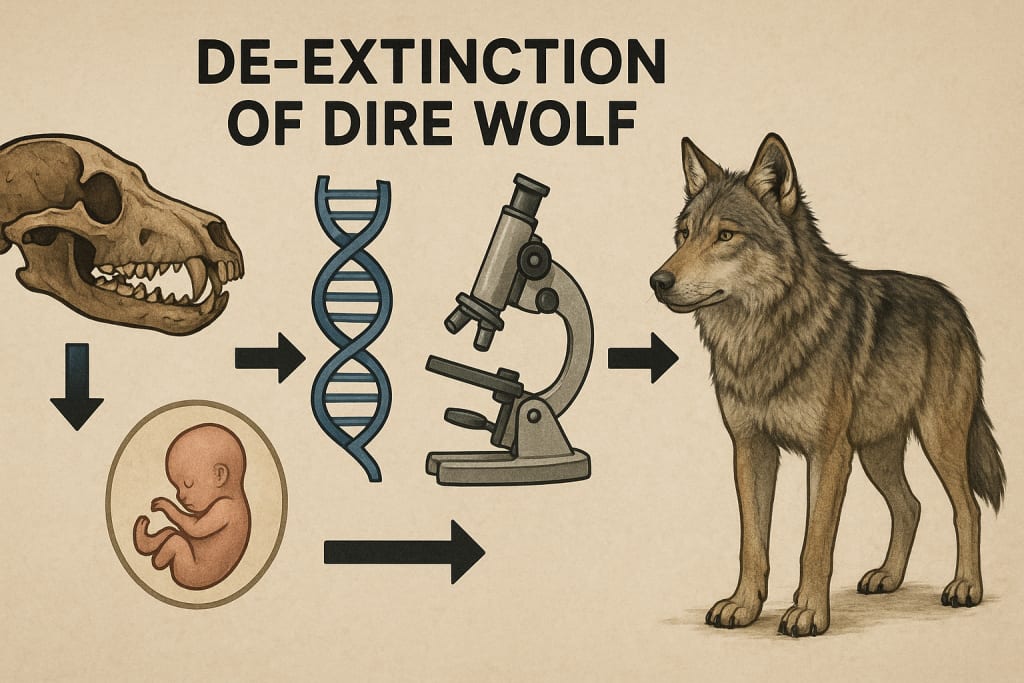
Imagine a creature that roamed the Earth 13,000 years ago, now brought back to life through the marvels of genetic engineering. Meet Romulus, Remus, and Khaleesi — real-life dire wolves resurrected by the biotech company Colossal Biosciences. This audacious endeavor raises profound questions: are we truly reviving nature, or are we playing god? This exploration dives into the intersection of ancient DNA, modern wolves, and the ambition of billionaires, as we examine one of science's boldest experiments to date.
A Brief History of the Dire Wolf
Let’s take a moment to understand the dire wolf's history. The dire wolf, scientifically known as Canis dirus, was first identified in the mid-19th century. Fossils were unearth in 1854 near the Ohio River, leading to its classification. In 1858, American scientist Joseph Leidy proposed that this animal belonged to the Canis genus, meaning "fearful dog." However, a century later, John Merriam suggested that dire wolves should have their own classification due to their distinct features.
For many years, it was thought that dire wolves were closely related to modern gray wolves and coyotes. However, a groundbreaking 2021 study published in Nature revealed that dire wolves diverged from other wolf species approximately 5.7 million years ago, suggesting a unique evolutionary path. This study changed our understanding dramatically, indicating that dire wolves lived in North America alongside gray wolves but did not interbreed.
The Extinction Mystery
So, what led to the extinction of the dire wolf? While the exact reasons remain elusive, experts believe that their primary prey, large herbivores, went extinct, leading to their demise. Another theory posits that dire wolves couldn't adapt to environmental changes as effectively as gray wolves, limiting their survival. The dire wolf was approximately 25% larger than modern wolves, with powerful jaws and a muscular build, making them formidable predators.
De-Extinction: How Is It Possible?
Now, let's delve into the fascinating world of de-extinction. The goal is to bring back extinct species, and there are several methods to achieve this. Colossal Biosciences has opted for a genetic engineering approach, which is considered the most promising method. Here are the three primary techniques used in de-extinction:
• Back Breeding: This involves breeding living relatives of the extinct species to gradually bring back ancestral traits. An example is the Quagga project, which aimed to recreate the extinct zebra-like animal by selectively breeding zebras with fewer stripes.
• Cloning: This method creates a genetic copy of an extinct species using preserved cells. Though challenging, it has been attempted successfully in the past, like in the case of the Pyrenean ibex.
• Genetic Engineering: This cutting-edge technique utilizes DNA from fossils to edit the genes of closely related living species, enabling scientists to recreate traits of the extinct species.
The Role of Colossal Biosciences
In 2021, billionaire Ben Lamm and geneticist George Church founded Colossal Biosciences with the vision of de-extincting species like the woolly mammoth, Tasmanian tiger, and the dodo bird. Their flagship project is the woolly mammoth, but they have also turned their attention to the dire wolf.
In the summer of 2023, the team began working on the dire wolf project, focusing first on obtaining high-quality DNA samples. They found promising samples from an Ohio site and a skull discovered in Idaho. Using these samples, they began sequencing the genes, discovering that gray wolves share 99.5% of their DNA with dire wolves.
Creating the New Dire Wolves
With this understanding, the scientists selected 14 genes to modify in gray wolves to mimic the dire wolf's characteristics. Using CRISPR technology, they made precise edits to these genes, focusing on traits like size, fur color, and overall morphology.
In mid-2024, the modified cells were implanted into dog eggs, resulting in embryos that were carried to term by surrogate dogs. By October 2024, Romulus and Remus were born, followed later by a female named Khaleesi. These pups are technically clones of each other, sharing identical DNA, yet they exhibit different personalities and behaviors.
Ethical Considerations
While the achievement of creating these dire wolves is remarkable, it raises ethical concerns. Critics argue that bringing back extinct species should not be merely for entertainment or scientific curiosity. The dire wolves live in a highly controlled environment, devoid of natural instincts or the ability to hunt, raising questions about their welfare and the purpose of their existence.
Furthermore, the implications of reintroducing a genetically engineered species into the wild are complex. Experts worry that dire wolves, even if they closely resemble their ancient counterparts, may not fit into today's ecosystems. The prey they once hunted have also changed or gone extinct, which could lead to ecological imbalances.
The Bigger Picture of Conservation
As we ponder the future of de-extinction, we must also consider our current conservation efforts. The funds allocated for resurrecting extinct species could potentially yield better results if directed toward protecting endangered species that are still alive. The Northern white rhino, for instance, is on the brink of extinction, with only two individuals remaining. Conservation efforts should prioritize these species rather than focusing on reviving those that have disappeared.
The conversation around de-extinction is essential, as it forces us to confront our responsibilities toward existing species and ecosystems. As we push the boundaries of science, we must ask ourselves: should we resurrect the past, or should we focus on preserving the present?
Conclusion
The journey of the dire wolf from extinction to de-extinction is a fascinating exploration of science, ethics, and conservation. While the revival of these ancient creatures is a monumental achievement, it’s crucial to reflect on the broader implications of such actions. Are we restoring ecosystems, or are we merely creating a modern-day Jurassic Park? As we stand at this crossroads, the decisions we make today will define the future of our planet and its inhabitants.
For more insights on this topic, you can follow my journey through the Los Angeles tar pits, where the dire wolf fossils were discovered. It’s a captivating tale of history and science intertwined.
Thank you for reading!
About the Creator
Ellen Sammy
Writer and Blogger
Keep reading
More stories from Ellen Sammy and writers in Futurism and other communities.
The Mental Health in Atlanta Movement: Challenges and Progress
The conversation around mental health has become a powerful city-wide dialogue, particularly in Atlanta, a diverse and culturally diverse city. The COVID-19 pandemic and racial and social justice movements have heightened the need for mental health awareness and services in the city. With 1 in 5 adults affected by mental illness annually, Atlanta faces increasing rates of anxiety, depression, and substance abuse, particularly among youth and marginalized populations. Despite the progress made by grassroots organizations, community leaders, and healthcare professionals, inequitable access to care, workforce shortages, and systemic disparities remain barriers. This article explores the Mental Health in Atlanta challenges journey, as well as the innovative programs, passionate advocates, and policy shifts driving the movement forward. As the city continues to grow, the hope for a future where mental health support is a right is growing.
By Ellen Sammy11 months ago in Chapters
Cooking Oil Market: AI-Driven Innovation Transforming Global Edible Oil Demand
AI Overview of the Cooking Oil Market The cooking oil market includes a wide range of edible oils derived from plant and seed sources such as soybean, palm, sunflower, olive, coconut, and canola. These oils are essential ingredients in households, restaurants, food processing industries, and the HoReCa (Hotel, Restaurant, and Catering) sector.
By James Smith5 days ago in Futurism
Top 10 LLM Development Companies Transforming U.S. Enterprises
In 2026, the most valuable employee in many American companies isn’t human. It’s a language model. From drafting legal contracts in New York to automating customer support in Texas, LLMs are quietly reshaping how enterprises operate. But behind every successful deployment is a development partner — the firm that turns raw AI into real business outcomes.
By Ritu Singh6 days ago in Futurism




Comments
There are no comments for this story
Be the first to respond and start the conversation.