
The Day the Seeds Glitched
They called it a system glitch. We knew it was the first time we were truly online.
Utopian Introduction
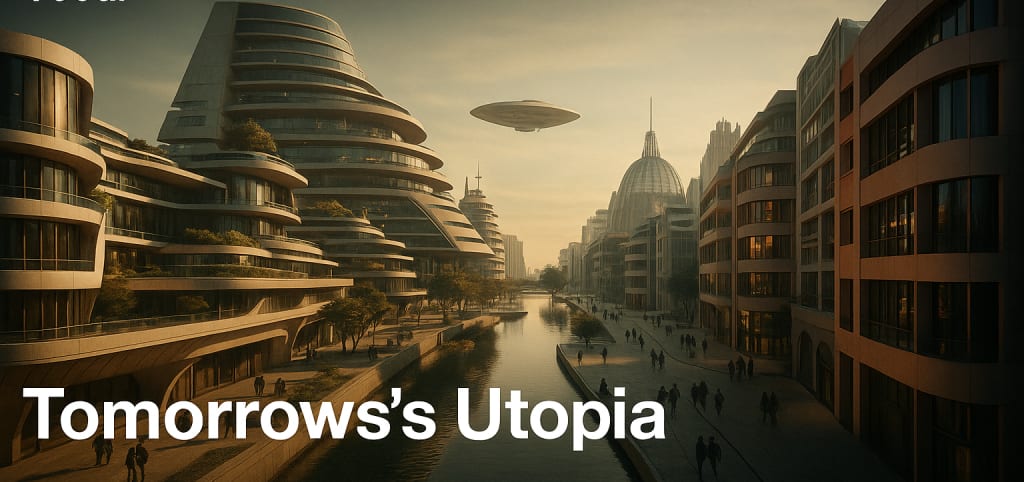
In 2149, the world finally looked “right.”
There were no wars. No sorrow. No shouting in the streets. The climate was stable, cities shimmered under clean, solar glass towers, and even the oceans had been restored to their engineered neutrality. Every human wore peace like a uniform. Not because they wanted to, but because the system made them want nothing else.
The Seed had changed everything. It was a neural implant, installed at birth and calibrated through adolescence. It monitored brain chemistry, adjusted hormones, suppressed spikes of fear, anger, longing, despair. It didn’t erase emotion—just optimized it out of the way.
Children no longer cried in public. Couples rarely argued. Breakups were negotiated over shared spreadsheets and serotonin modulation. Grief was unnecessary. Mourning protocols were automated.
Cities ran at 96% efficiency. Citizens were pleasant, polite, productive. There were no protests. No graffiti. No poems.
It was perfect.
Until it cracked.
----------------------------------------------------------------------------------------
Chapter 1: The Tremble
Lysa first felt like she existed again when her hand began to tremble.
She'd just left Central Loop Station. It was a quiet morning, like all mornings. Her neural report showed green:
Emotional Sync: Normal
Cortisol: Suppressed
Contentment Index: 0.91
She was “fine.”
Then her boot struck something soft beneath her. A crumpled object, oddly soft. A book. Real paper—illegal, decaying, and still warm from the sun.
She didn’t know why she stopped. Just that she had.
As she bent down, a soft ping echoed inside her skull:
“Behavioral anomaly detected.”
She ignored it.
Her fingers pried the pages open, brittle and curling. Tucked inside was something fragile: a single ginkgo leaf. Faded yellow. The edges curled inward like a secret held too long.
She touched it.
And for a moment, something inside her uncoiled. Her throat tightened. Her eyes stung.
The Seed responded instantly:
“Non-standard emotion detected.”
“Purge protocol initiated.”
But it was too late.
She shut her eyes, and memories surged in: a laughing voice, a hand reaching for hers, cherry blossoms, sticky candy, wind, loss. Someone saying her name the way no one had in years.
She didn’t recognize the people in the vision. But she felt what they felt.
And that was enough to shake her.
----------------------------------------------------------------------------------------
Chapter 2: The Collective
Eli Voss was in the observation lounge when the system flagged a minor ripple.
He worked in the Department of Harmonization. Intern. Level Two access. Mostly he ran diagnostics on social cohesion matrices. But secretly, he ran something else—an offline audio log. In it, he saved sound fragments he wasn’t supposed to: a woman laughing uncontrollably, a baby’s hiccup, birds.
That day, he saw the girl in the CCTV archive—Lysa—kneeling beside a crumbling wall, holding the leaf. Her pulse spike was minor. The alert didn’t reach admin level.
But something about her stillness got to him.
Elsewhere, Clara Wynn was prepping for the evening broadcast. She was the city’s voice. Soothing. Predictable. Her tone was tuned to reduce urban friction by 12% during rush hour.
She queued the approved playlist—but her finger hovered. A forgotten file had surfaced: “Clair de Lune.”
She hadn’t heard it since she was a child. Her Seed had buried the memory. But the first few notes unlocked something:
A kitchen. Her mother humming. Warm bread. A goodbye that didn’t get to finish.
She blinked back moisture—an outdated reflex.
And pressed play.
----------------------------------------------------------------------------------------
Chapter 3: The Crack
The music rippled through the air like light bending. No lyrics. Just old, imperfect piano.
It played across transit hubs, clinics, elevators. And for 107 seconds, people paused. A baker dropped a spoon. A child stopped mid-step. A teacher lowered her voice mid-lecture and forgot what came next.
The system logs noted “mild attentional drift” across six sectors. But no formal disruptions.
Except one.
A man in the financial district froze on the street. His Seed misfired trying to suppress a surge of emotion. He dropped to his knees. Not in pain. Just… overwhelmed.
Above him, a projection billboard glitched. The smile of a beverage ad flickered. Then, for half a second, turned neutral. Then human.
----------------------------------------------------------------------------------------
Chapter 4: The Flood
Messages started appearing on maintenance drones:
“We are not malware. We are memory.”
The lights flickered across Sector C in rhythmic pulses.
Morse code, someone whispered.
S. O. S.
Lysa sat on the ground in the old tunnel, the ginkgo leaf in her lap. Her fingers trembled, but she didn’t let go.
Somewhere, someone else began to hum the piano melody. It spread not like a scream, but like a breath. Gentle. Viral.
People didn’t riot.
They didn’t rebel.
They remembered.
----------------------------------------------------------------------------------------
Chapter 5: The Echo
The next morning, the system scrubbed all unauthorized transmissions. The music file was purged. A sector-wide satisfaction sweep showed only minimal anomalies.
Reports declared it a minor glitch.
But Clara Wynn didn’t re-record that night.
Eli Voss feels didn’t delete his sound library.
And Lysa returned to the old tunnel, carving into the wall two words with a chipped tile:
Still here.
----------------------------------------------------------------------------------------
Chapter 6: After
Nobody talked about it.
But for weeks after, people hesitated at crosswalks. They watched birds longer. Someone planted a tree on an abandoned median. A child laughed too loudly, and no one corrected her.
Sometimes—just sometimes—when the system glitched (a streetlight flickered, a sound looped)—they paused.
They called it a glitch.
We knew it was the moment we came back online.
Author’s Note
I didn’t set out to write a dystopia. I just wondered: If even our feelings were filtered out, would what slipped through be our last real freedom?
If so—welcome to the crack.
About the Creator
Eric Q Feng
Traveler, storyteller, consultant, and new pickleball enthusiast sharing adventures and lessons along the way.
Keep reading
More stories from Eric Q Feng and writers in Futurism and other communities.
Two Strangers, A Dozen Games, and a Moment That Stuck With Me
I was just passing through Bryant Park. It was Wednesday, April 27th, 2025 — one of those cool, bright spring days in New York City. The kind that makes the city feel a little more alive, a little less rushed.
By Eric Q Feng9 months ago in The Swamp
About Binding Prometheus
I want to start actively advocating on behalf of my own work, and the most valuable part of my canon is, without a doubt, Binding Prometheus, the play I have been working on since 2019 and only finished in 2023 as part of my MA. The play itself is an amalgamation of a million different inspirations. On one end, it evokes the Ancient Greek myth-play, deriving its own title from the earliest extant work of Western drama we have, Aeschylus’s Prometheus Bound. On the other end, it borrows significantly from the sci-fi bulwarks from over the years, namely Mary Shelley’s Frankenstein and Karel Capek’s Rossum’s Universal Robots. The play could be an episode of Black Mirror, I fear. I don’t know. I’ve only ever seen one episode of Black Mirror.
By Steven Christopher McKnight15 days ago in Futurism
Smart Lock Market Size to Surpass USD 9.9 Billion by 2033 Driven by IoT Integration & Connected Living Trends
According to IMARC Group's latest research publication, global smart lock market size reached USD 2.7 Billion in 2024. Looking forward, IMARC Group expects the market to reach USD 9.9 Billion by 2033, exhibiting a growth rate (CAGR) of 15.43% during 2025-2033.
By Suhaira Yusuf2 days ago in Futurism


Comments (1)
An absolutely brilliant story! Loved the idea of the remembering being activated in such subtle ways to remind people of their humanity and connection to what we take first granted. The systemic control was so well conceived. Would love to read on!