
The Dawn of Robo-Taxis: Elon Musk's Vision Unveiled
A Revolutionary Leap in Transportation Awaits!

Elon Musk, the visionary CEO of Tesla, has once again captivated the public's imagination with his latest bold idea: the Robo taxi. During a recent presentation, Musk unveiled the concept of a futuristic "Cyber cab," a fully autonomous vehicle that operates without steering wheels or pedals. This ambitious project has ignited both excitement and skepticism among investors and industry experts alike. With an estimated market potential of $400 billion for Robo taxis, the excitement around this development is undeniable. But as with many of Musk’s ideas, the question remains: can this vision truly become a reality?
Ray Wong, a prominent tech analyst, shared his insights on Musk's latest reveal, explaining that after five years of anticipation, the Cyber cab has finally arrived. Wong described Tesla's two-phase rollout plan. In the first phase, existing Model Y and Model 3 owners will have the opportunity to loan out their vehicles as Robo taxis when not in use. This would allow car owners to monetize their vehicles while Tesla handles the logistics of connecting drivers to passengers. The second phase will involve Tesla customers purchasing dedicated Cyber cabs for around $30,000, a price point that could undercut traditional ride-sharing services and reshape the market. Wong believes that this business model has the potential to disrupt ride-sharing companies like Uber and Lyft by offering services at a fraction of the current cost.
Tesla's timeline for the Robo taxi rollout is ambitious. Musk has set his sights on a 2026 launch, with vehicle upgrades expected as early as 2025. However, significant regulatory challenges remain, particularly in Texas and California. Wong pointed out that while Tesla faces competition from companies like GM and Waymo, which are developing their own autonomous vehicles, Musk's strategy is unique. Rather than waiting for new models to be built from scratch, Tesla will leverage its existing fleet of cars, giving owners the ability to make money while their vehicles would otherwise sit idle. This approach could revolutionize transportation, turning personal cars into income-generating assets.
Despite the excitement surrounding Musk’s announcement, Tesla's stock saw an 8% decline shortly after, as investors had been hoping for immediate availability and a more expansive market reach. Wong emphasized that Tesla’s long-term vision goes beyond its identity as a car manufacturer; the company is positioning itself as a leader in robotics and AI. Musk has repeatedly expressed his belief that Tesla's future success hinges not just on electric vehicles, but on breakthroughs in AI-driven technology. If investors are willing to embrace this broader vision, Wong predicts that Tesla's stock could surge to around $400 per share within the next five years, bolstered by the launch of new models and continued advancements in energy management.
However, the road ahead is not without obstacles. One of the most pressing concerns is safety, as fully autonomous vehicles are still relatively new, and the public’s trust in them remains tentative. There have been several high-profile accidents involving self-driving cars, leading to lawsuits and heightened scrutiny. As more autonomous vehicles hit the streets, the public's tolerance for risk will play a critical role in determining the success of projects like the Robo taxi. Wong believes that, over time, people will become more comfortable with the technology, especially as safety features improve and accidents become rarer.
In addition to reshaping transportation, Musk’s Robo taxi could have a profound impact on the housing market. The ability to travel long distances without the stress of driving could encourage people to move farther from urban centers, potentially reducing congestion in cities and making suburban or rural living more attractive. Musk’s Robo van concept, which is aimed at providing passengers with a more spacious and comfortable travel experience, could further drive this shift.
As the conversation surrounding Musk’s latest venture continues, some critics have raised concerns about his political involvement, suggesting that corporate leaders should avoid taking public political stances. Whether Musk's political leanings will impact Tesla’s future remains to be seen, but for now, the focus is squarely on his technological ambitions. As excitement builds for what the future holds for Tesla and the Robo taxi, only time will tell if Musk will go down in history as a modern-day Edison or if his vision is simply too far ahead of its time.
About the Creator
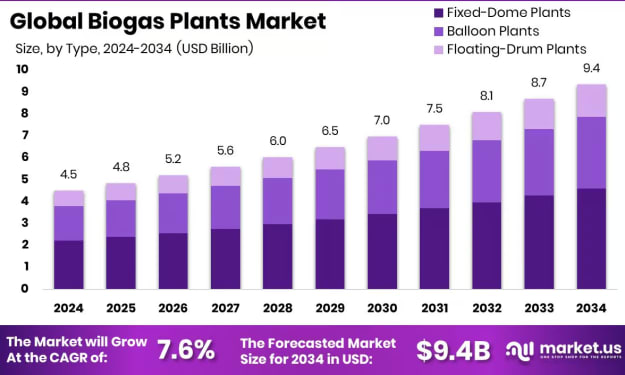
Biogas Plants Market To Reach USD 9.4 Billion by 2034 at 7.6% CAGR
Overview The Biogas Plants Market is projected to experience steady growth over the coming decade, driven by increasing demand for renewable energy and sustainable waste management solutions. The market is expected to be worth around USD 9.4 billion by 2034, up from USD 4.5 billion in 2024, growing at a compound annual growth rate (CAGR) of 7.6% from 2025 to 2034. Biogas plants convert organic waste such as agricultural residues, food waste, and animal manure into renewable energy in the form of biogas, which can be used for electricity generation, heating, and transportation fuel.
By Hayden Kulas3 days ago in Futurism
Thermal Paper Market: POS Receipt Demand, Retail Digitization & Industry Growth Outlook
According to IMARC Group's latest research publication, The global thermal paper market size was valued at USD 4.7 Billion in 2025. Looking forward, IMARC Group estimates the market to reach USD 6.9 Billion by 2034, exhibiting a CAGR of 4.22% during 2026-2034.
By sujeet. imarcgroup4 days ago in Futurism
A Transparent Look at Vocal Challenges and Top Stories
Almost three years ago, we shared a resource article that served as a place for people to suggest new challenge prompts. We thought it would be a good idea to refresh that thread, and take the opportunity to answer a few common questions about top stories, how challenges are judged and how submissions are reviewed.
By Vocal Curation Team4 days ago in Resources



Comments (1)
well done