
The Amazing Effects Of One Small Change - Secrets Unfold!
Life in 2050

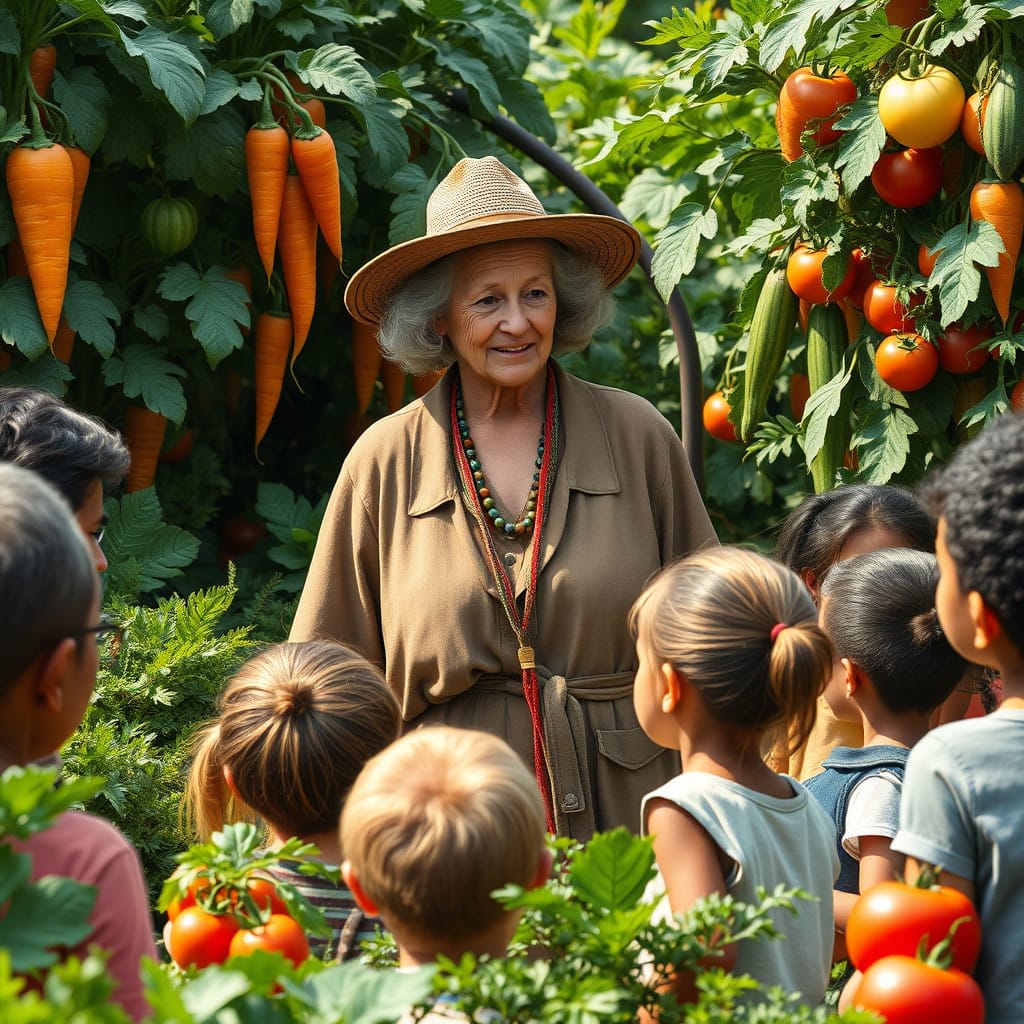
So, you want to know what life is like in 2050? I can tell you all about it; I lived it. The “powers that be” asked me to return here to explain what happened. Yes, time travel is part of the future!
Well, my family, sit comfortably, and then I will begin. I’ve got a feeling you are in for a big surprise!
In 2029, poverty was at an all-time high. People had nothing; they were often hungry and homeless, not just here but all over the world. Fortunately, I had a shed—just six feet by six feet- but it was somewhere to sleep. I had to cook outside and go to the toilet in the woods - not great, but I was one of the lucky ones. Many people slept rough, on boxes, with maybe a tarp over them.
Politicians were in a state of alarm. The fabric of society was unravelling as people with nothing to lose were pushing it to the brink. To salvage the situation, they convened a summit, a grand affair befitting their status, and elected Thomas Grey to lead the charge.
Now, Thomas Grey was an extremely popular politician. He had ruled over more than one country and facilitated peace between several nations. He was popular with the masses but had a way of charming the hard-headed business folk.
The thing is, he went to bed that night - and never woke up! Yes, he died in his sleep, and the people, having been looking forward to his minimum income policies, went a bit crazy.
People started throwing money in the streets—yes, even the little bit they had. More and more people joined them, including the middle class and the wealthy! They were just giving away money, putting it in bins. Finally, the billionaires joined in. Every person took their money out of the banks and tried to give it away. No one wanted cash, credit……or anything else.
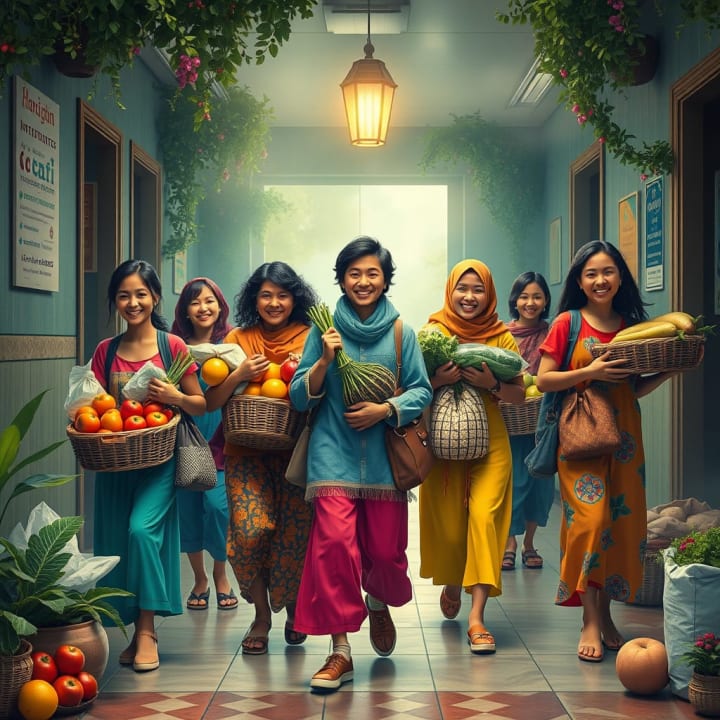
Everything worked with bartering, which is when you swap something you don’t need or want for something you do. When money disappeared, seeds or bulbs that produced food were among the most popular things to trade. Although bartering started with physical products, later, people bartered their services. For instance, a man skilled in carpentry could exchange a few hours of work for a sack of potatoes. This transition was not without its challenges, but it was a testament to human adaptability and resilience. Later, I'll tell you about a man who bought four ducks for a couple of work hours!
I see you there, with your jaw on the floor. It was indeed a shocking turn of events! But what was even more surprising was...
It changed people in a very dramatic way. First of all, the big pharmaceutical companies gave up all their secrets. Someone gave away cures for so many diseases, previously hidden, became available to everyone. So, the hospitals treated everyone who walked in. People brought anything they had in to “pay.” Like furniture that people had decorated, hand-made anything and especially homegrown food!
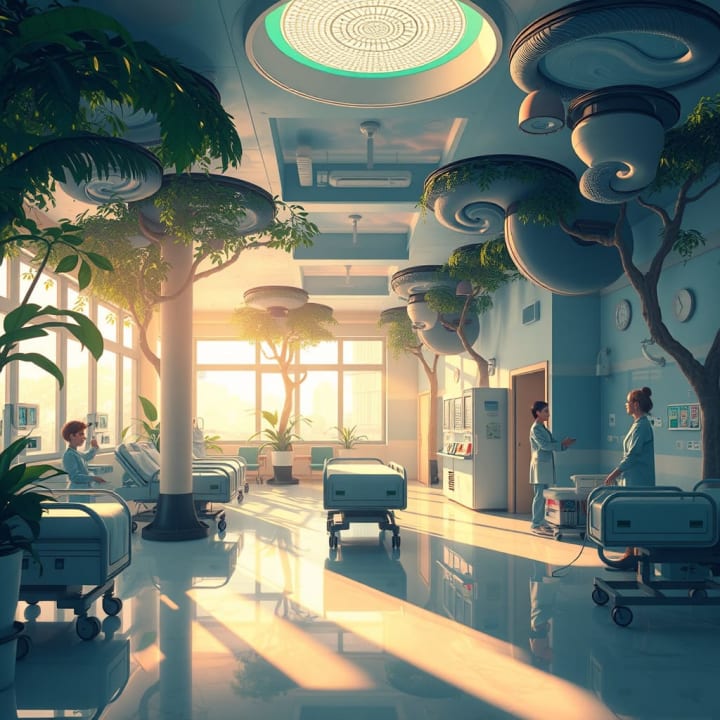
People swapped what they had, and no one grumbled. Everything slowed down, right down. People were less stressed. Nurses were smiling as they went about their business.
Patients' illnesses improved because someone from the pharmaceutical companies gave away the drugs - after all, no one had any money.
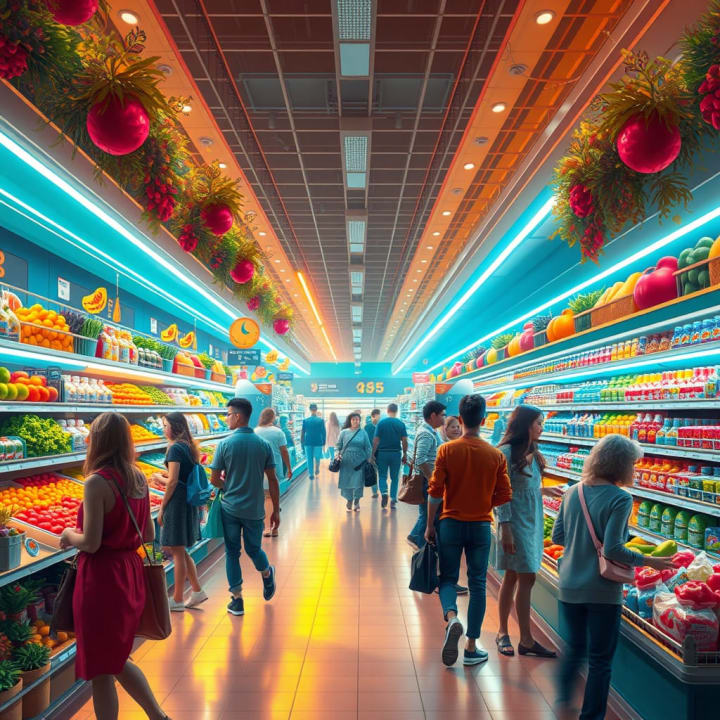
Walmart and all the supermarkets had no staff because no one was getting paid, so there was food for everyone. Somehow, the lack of money, no cash, stopped anyone from being greedy. Folks took what they needed and left the remainder for the next person.
But the people who were doing best were growing plants. Anyone with fresh vegetables could swap them for just about anything, so everyone started developing what they could, and farmers had a head start. Farmers who just grew vegetables started growing a wider variety, and meat farmers reduced their flocks and planted vegetables.
Things started to become more peaceful. Because people were spending time outside in nature, stress levels were diminishing. People were fighting less, and families were less demanding. Not only that, but people were also helping one another. When survival depended on working together, women were getting things done. Men had to fall in and help one another. It was more challenging because they believed they needed to fight for dominance. But dominance didn’t mean anything any more. Instead, people began seeing the importance of sharing and supporting. They helped one another. Folk realised that everyone's contribution was vital for the community's well-being, a complete shift in social dynamics.
Everyone’s mental health was improving fast. Even those living on the street found peace and calm in parks, planting basil, tomatoes, and other fruits and vegetables. Homeless or not, everyone worked their bit of garden, but they were there to help anyone in need.
With the shift towards self-sufficiency, people began to recognise the value of their individual contributions. Families moved out of cities, seeking land to grow food, and formed collectives. The older generation's wisdom and the younger ones' skills became equally valuable in this new world.
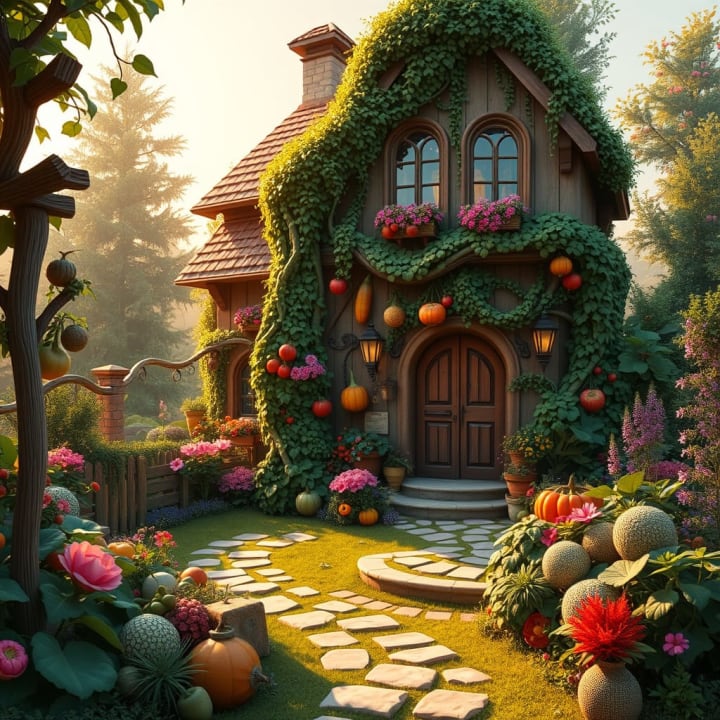
So, people with houses and gardens tended to stay where they were. They just started growing what they could, and until their food grew, supermarkets were available. Freezers stayed on so everyone could have enough to eat for many weeks.
Now, what about the moaners? The negative people, who grumbled and groaned over everything? Well, first of all, survival. People needed to grow food; they needed to make things to swap so that they could survive. Everyone focused on getting enough to supply their families, so they didn’t have as much time to grumble, complain or whine. I guess they still did so sometimes, but they didn’t share it around as much!
Now, the politicians were not happy. They wanted money back because it helped them control the ordinary folk. But ordinary folk took their stand and refused to be involved in any currency. Billionaires were finding peace in being with nature and growing food. People were talking with one another, conversing with their neighbours, and sharing tips on sustainability. This sense of community and shared purpose brought people closer together.
The engineers were in their element. They were designing greenhouses and growing tunnels that would produce more food. They were building new modes of transport, carriages and carts, but in the longer term, they were looking at cars that ran on water. Solar panelling previously had been something for hippies and van dwellers, but now everyone wanted them. The population was worried that the electricity would soon run out…..and they were correct. For a while, the national grid went down. However, the society quickly adapted. People started using solar power for their energy needs, and engineers developed innovative solutions to ensure a sustainable and efficient use of resources. I'll tell you what happened to that later on.
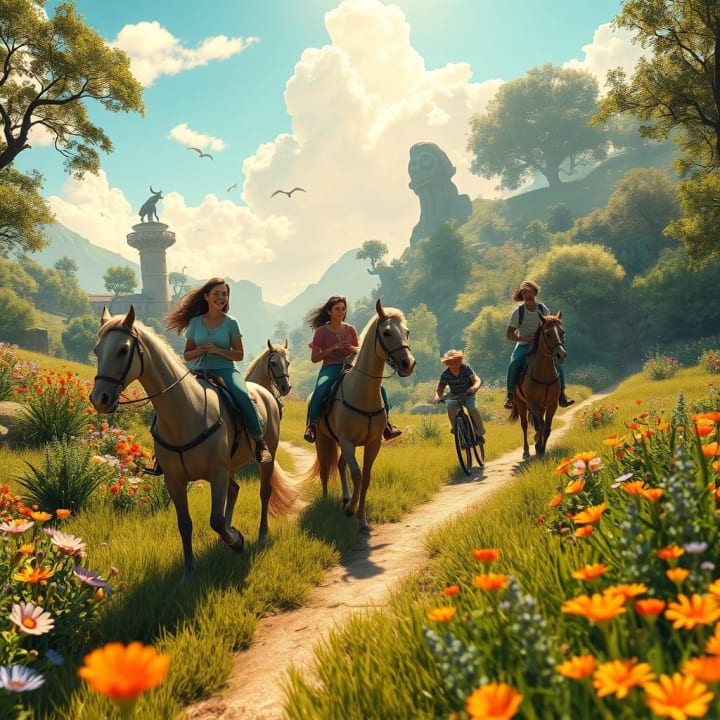
Petrol was running out, well, that’s what the politicians said - but it was just because they made so much profit on it before everyone became demonetised. People began to walk everywhere they wanted to go, cycle, or ride if they had horses. Even children would play out.
You may be wondering about the people who were disabled. The thing is, nearly everyone could do something. People who couldn’t walk but could use their arms and hands knitted and sewed. People who couldn’t use their arms or legs could do research, some could paint with their mouths and produce paintings; it seemed like there was no end to people's talents.
Before demonetisation, everyone just wanted to get enough money to buy food to eat. If a family member couldn’t help, they were useless. But after demonetisation, everyone had a use. Everyone could do something to improve life, and everyone had value. Of course, they had always had a value, but society hadn’t recognised this before.
Let me tell you about one family to illustrate the point.
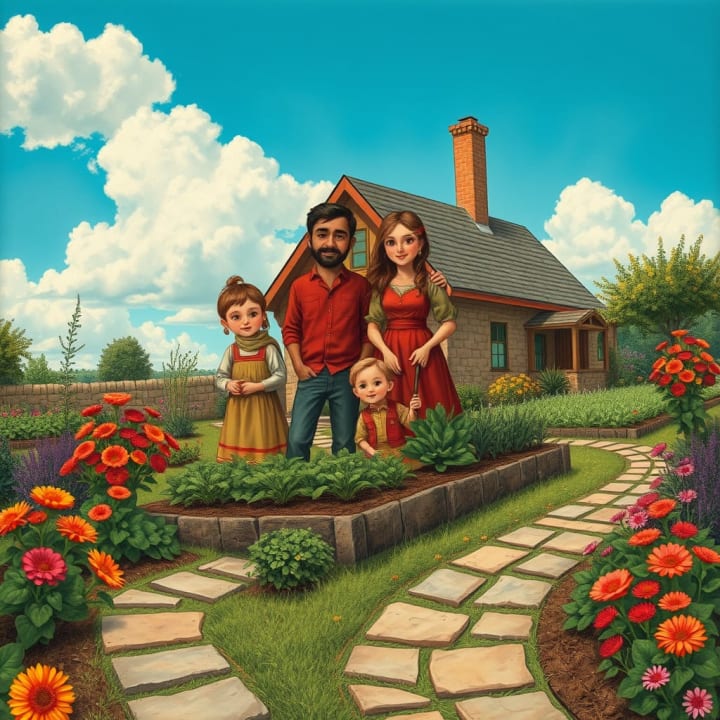
Mum and Dad were in their forties and had two children aged 11 and 16. They had relatives a couple hours' drive away, both sets of grandparents, and Mum's sister, Enid, and Dad's brother, David.
Mum phoned Enid, and they chatted. They decided Enid would drive everyone to Mum and Dad’s house because they had the most considerable property. Grandpa and Grandma had lived through many recessions and had some experience dealing with tight situations. Also, Geegee and Pop came from farming families, so there was much knowledge there.
David was disabled; he had an accident at work while driving, and he couldn’t move much on his left side. Although he was left-handed, he worked hard at using the “wrong” side, and he was pretty functional, although he got tired quickly.
Mum and Dad worked hard in their garden. Mum had previously worked in an opticians' office, which had closed down, and Dad worked in a factory before demonetisation. The children, Rebecca and Donald, helped out as much as they could after school.
Mum also volunteered at the school, teaching the younger children Mondays and Tuesdays.
David couldn't do much in the garden and was frustrated because he wanted to do more. Grandpa and Grandma would do what they could to encourage and help David, but they could see he wasn’t happy. Then Geegee and Pop had an idea.
There was a big problem with birds; they attacked the plants and often ate the seedlings if they weren’t protected. They used their beaks to tear the netting and get them. Also, slugs and snails were an issue. GeeGee suggested they could make a device that rocked and scared the birds with a loud clanging noise.

Pops got to work. He took GeeGee’s plans and built the device. It could work using water, which filled the cup. The cup would then fall and clang on the corrugated metal panel. However, that took up quite a bit of water, and the birds would get used to the regularity of the clanging.
So Pops tied a rope to the cup of water and directed it to a rocking chair. David could sit in the rocking chair with the rope attached to his foot, rest from working the garden, and keep the birds off the vegetables as he rocked.
David felt a bit happier. He could be helpful even though he was resting.
But David was in for a surprise.
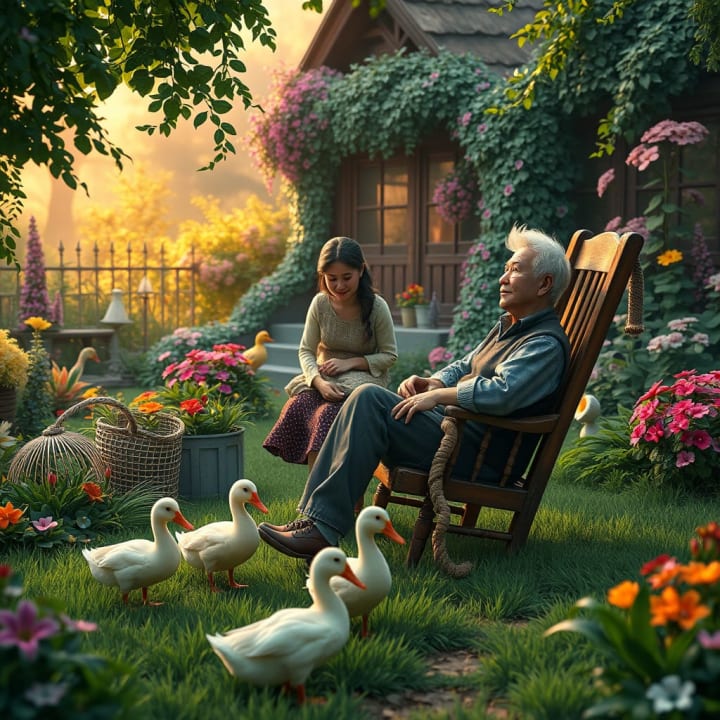
Pops had been talking to one of the neighbours. They had seen him build GeeGees bird scaring device and wanted some work done in his garden. In return, he gave Pops four running ducks. Running ducks eat slugs and snails. David had always loved animals, so his four new duck friends helped him. And the ducks ate the slugs that attacked the garden, and the bird-scarer protected the plants. David took care of them, so he felt he was contributing.
Another crazy story I heard was about a homeless man. His name was Gregg, and he was six-foot five-inches tall. He was a drug addict, and he was very violent. People avoided him like the plague because he was so scary! Even other drug addicts wouldn’t talk to Gregg.
When demonetisation came in, Gregg was okay at first. The dealers didn’t know what was happening and gave Gregg the drugs he wanted. But slowly, the drugs dried up; it wasn’t worth the dealers producing more drugs when no one had money.
Gregg decided to adapt to this new world, so he began walking. He met some people and talked normally with them, trying to be polite. They directed him to an empty house, so Gregg started making it his home. He was hungry but had nothing. He had no seeds, seedlings, or creative skills, but he did his best to help the folks who lived next door.
They were an older couple who were keen gardeners. Before demonetisation, they grew food in their garden. They shared their food with Gregg, who helped them with home and garden jobs. Gregg was strong, although he had been a drug addict, and he worked hard. The couple fed him and gave him seedlings for his garden.
Gregg decided he wanted to eat meat. Meat was more challenging to find than vegetables, but a farm was nearby. He chatted with the neighbours, and they decided to take some vegetables, a homemade blanket, and some crochet panels to swap for some meat. They could not carry the products, so Gregg put them all in a wheelbarrow and walked to the farm.
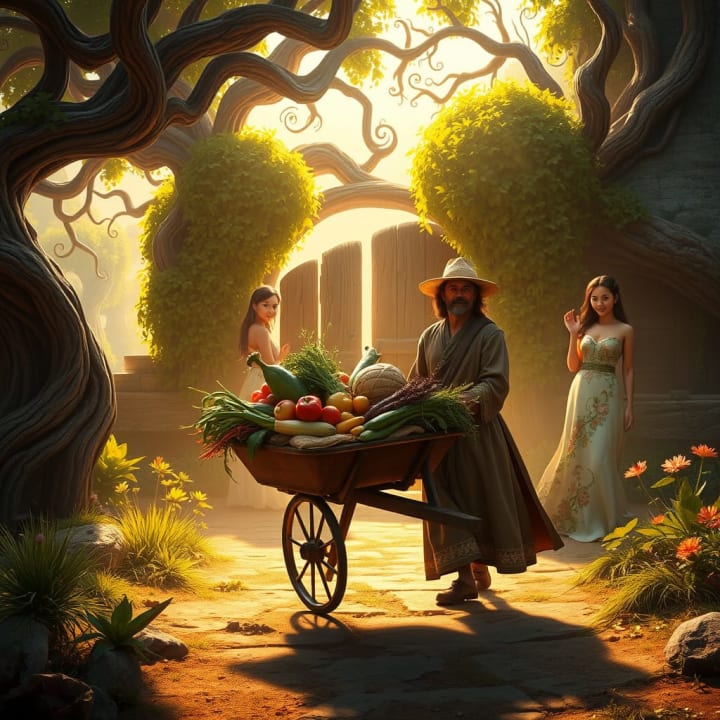
The farmer was delighted to see him. She and her wife had been struggling to grow some vegetables. They took everything and gave Gregg a large leg of lamb in exchange—it sat in the wheelbarrow in pieces. They also said he could come back in a week, and they would give him more meat.
The older couple was delighted and began to cook the lamb for dinner, perfectly accompanied by the vegetables still at home. Gregg sat at that table eating dinner with his friends. He had never done that before, having spent his whole life scrabbling for scraps. He felt like a whole new person!
Now, let me tell you more about the national grid. I’m sure you, my dear family, never even think about it! We needed electricity, and only a few folks had solar panels to produce electricity. The people had to get something together quickly. We offered the folk who worked for the grid some of our produce. They had meat, vegetables, and clothes when they needed them. The workers agreed readily to the deal and continued working.
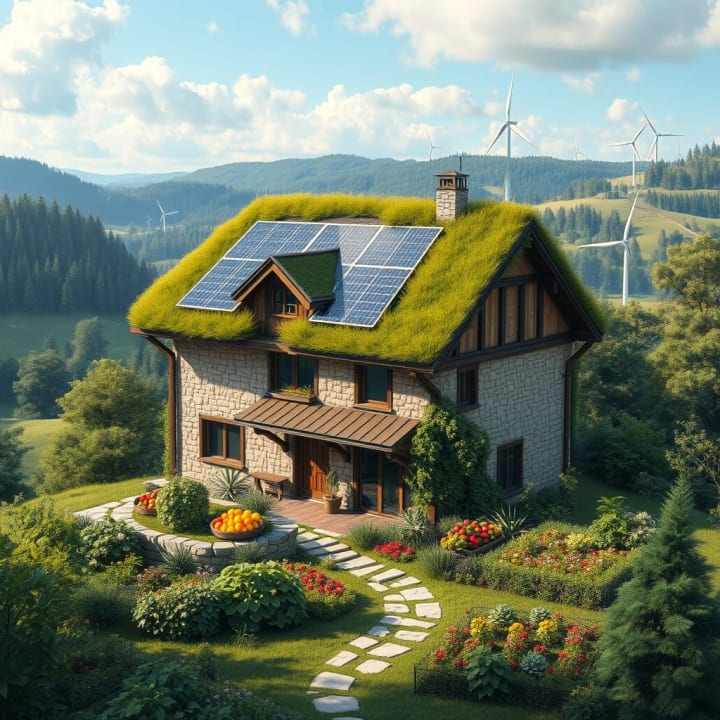
The politicians who wanted power tried to shut the grid down. But since they weren’t paying the workers, and we were, it stayed on, although it sometimes had to be shut down for a little while. Eventually, everyone got solar panels, or communities had wind turbines, another free way to produce electricity. So everyone had what they needed to make things work.
My dears, I’m sure you have many questions, and I promise I’ll answer as best I can. But for now, I'm getting sleepy and need to rest. You guys have fun and come back tomorrow. I'll tell you more about 2050.
About the Creator
Ruth Stewart
Never one to do one thing at a time, I'm currently writing a horror novel and a book of poetry for the daughters of narcissists. Come back soon for a link to be included in all my news, on Vocal and elsewhere. I'd love to get to know you!
Keep reading
More stories from Ruth Stewart and writers in Futurism and other communities.
Microcontroller Market Trends: IoT Expansion, Smart Devices Growth & Forecast to 2034
Rising integration of microcontrollers across smart devices, connected vehicles, and industrial automation is reshaping the global electronics landscape. Backed by explosive IoT growth, accelerating electric vehicle production, and the rapid shift toward edge intelligence, the microcontroller market is entering a new and sustained growth phase. According to IMARC Group's latest data, the global microcontroller market size reached USD 28.7 Billion in 2024. Looking forward, IMARC Group expects the market to reach USD 58.3 Billion by 2033, exhibiting a growth rate (CAGR) of 7.55% during 2025-2033. Asia Pacific currently dominates the market, holding the largest market share.
By Suhaira Yusuf4 days ago in Futurism
Specialty Polymers Market: Automotive & Aerospace Lightweighting Trends & Market Forecast
According to IMARC Group's latest research publication, the global specialty polymers market size reached USD 92.19 Billion in 2025. Looking forward, IMARC Group expects the market to reach USD 159.33 Billion by 2034, exhibiting a growth rate (CAGR) of 5.74% during 2026-2034.
By sujeet. imarcgroup5 days ago in Futurism
A System That Isn’t Working Challenge Winners
Systems promise order. They organize behavior, distribute opportunity, and suggest that if everyone follows the rules, things will work. The entries in A System That Isn’t Working look closely at what happens when that promise begins to slip.
By Vocal Curation Team4 days ago in Resources


Comments (6)
I love how everyone went back to how things used to be back then. So peaceful and economic. Loved your take on this challenge!
I love the positivity of this piece, Ruth!! It's awesome!!
I love how positive and upbeat this and how packed it is with rich details. Very well thought out concept and take on the challenge. You've written it exceptionally well. Loved it, darling.
Great Ideas and wonderful photos. Well Done!! Good Luck in the challenge.
Love the images and your take on 2050.
Excellent take on the challenge with some great ideas and images