
Sustainable Manufacturing Methods - The New Way of Building Things
How smarter, cleaner methods are transforming the way we produce

What Is Sustainable Manufacturing and Why Does It Matter?
Sustainable manufacturing – the creation of manufactured products through processes that minimize negative environmental impacts, conserve energy and natural resources, are safe for employees, communities, and consumers, and are economically sound. It’s not just a buzzword—it’s a growing global movement that is changing how industries design, produce, and deliver goods.
Unlike traditional manufacturing, which focuses primarily on output and efficiency (often at the cost of long-term environmental and social stability), sustainable manufacturing methods emphasize resource optimization, emissions reduction, life cycle thinking, and systems efficiency. It’s a mindset shift from “make more” to “make better.”
The industrial sector is responsible for roughly 25% of global energy-related carbon emissions, according to the International Energy Agency (IEA), and nearly 50% of the world’s total resource extraction, based on estimates by the United Nations Environment Programme (UNEP). Transitioning to sustainable manufacturing practices can significantly reduce greenhouse gas emissions, energy and water consumption, and overall material waste.
- So what actually makes a process “sustainable”? It often includes:
- Closed-loop systems (recycling and reuse of materials)
- Eco-design (designing products with minimal environmental impact)
- Green chemistry (avoiding toxic substances in production)
- Smart resource management (reducing energy and material input)
- Life cycle assessment (LCA) practices (analyzing environmental impact across a product’s entire lifespan)
What makes sustainable manufacturing particularly unique is how it blends operational efficiency with environmental stewardship. These aren’t conflicting goals—they can complement each other. For example, companies that invest in energy-efficient machinery often experience a rapid ROI through lower energy bills. Similarly, designing products that are easier to recycle reduces long-term disposal costs.
Moreover, sustainability today is often built into the enterprise value chain. It’s not just about compliance or CSR anymore—it's about resilience, brand value, risk mitigation, and regulatory alignment. The EU Green Deal, for example, is putting increasing pressure on industries to move toward sustainable models, and legislation like the Corporate Sustainability Reporting Directive (CSRD) demands transparency in environmental performance.
In short, sustainable manufacturing is not a fringe concept—it’s becoming the new industry baseline. Companies that fail to adapt risk losing market access, falling behind in innovation, or facing regulatory penalties. Those that embrace it stand to gain not only reputational benefits but also cost savings, supply chain robustness, and long-term viability.
In the next section, we’ll break down the core methods used in sustainable manufacturing—and how they actually work on the factory floor.
The Core Sustainable Manufacturing Methods and How They Work
At the heart of sustainable manufacturing is a set of operational methods that optimize materials, reduce energy usage, and minimize environmental harm. These are not one-size-fits-all practices—they vary widely by sector, product type, and geography. But across the board, certain core methods form the backbone of sustainable production.
1. Lean Manufacturing – Waste Not, Want Not – Originally developed by Toyota, Lean manufacturing isn’t just about cutting costs; it’s about eliminating all forms of waste, including time, materials, overproduction, and even underutilized talent. In a sustainable context, Lean is especially valuable because it reduces environmental impact while improving efficiency.
For example, a company that uses Lean principles might switch from batch processing to just-in-time (JIT) production, drastically reducing warehouse energy use and product spoilage. Or they might standardize work processes to minimize scrap and offcuts, conserving raw materials.
2. Additive Manufacturing – Material Efficiency by Design – Also known as 3D printing, additive manufacturing builds components layer by layer using only the material needed—often resulting in zero material waste. This is revolutionary in sectors like aerospace or medical device manufacturing, where components are complex, high-value, and traditionally waste-intensive.
Additive processes also support localized production, reducing transportation emissions and enabling on-demand manufacturing, which cuts down on unsold inventory.
3. Closed-Loop and Circular Production Systems – Sustainable factories increasingly aim for closed-loop production, where waste is seen as a resource. This can mean recycling water used in processing, regrinding defective plastic components for reuse, or recovering heat from one part of the process to warm another.
This is the foundation of the circular economy—a model where materials flow in a loop rather than a line. Products are designed for disassembly and remanufacture, which keeps materials in use longer and reduces the need for virgin resource extraction.
4. Green Energy Integration – Many advanced manufacturers now integrate renewable energy sources into operations—like photovoltaic panels on facility roofs, wind turbines on-site, or purchasing electricity from green suppliers. Smart energy management systems monitor real-time consumption and can shift high-energy processes to off-peak hours.
For example, in Europe, many manufacturers are connected to smart grids that allow them to adapt energy usage based on grid demand—reducing both carbon footprint and cost.
5. Sustainable Sourcing and Supply Chain Transparency – No manufacturing method is truly sustainable unless it considers the full value chain. This means sourcing raw materials from certified sustainable suppliers, ensuring fair labor practices upstream, and auditing the environmental performance of logistics partners.
Digital tools like blockchain and supplier traceability platforms now help companies track every step of a product’s journey—from raw material to finished item. This level of transparency not only supports sustainability goals but also builds trust with regulators and consumers.
6. Digital Twins and Smart Manufacturing – The use of digital twins—virtual models of real-world processes—allows for simulation of process changes before actual implementation. Want to test a new water recycling system? Run it in the digital twin first. Need to assess how a material change will impact emissions? The model will show you.
Combined with IoT sensors, smart factories use data to optimize machine uptime, reduce overproduction, and fine-tune energy use. The result: more efficient, less resource-intensive operations.
Sustainable Manufacturing in Practice — From Europe to the World
Sustainable manufacturing doesn’t look the same everywhere. Regional policy, access to technology, and market forces create distinct approaches across the globe.
Europe — Policy-Driven and Standards-Oriented – Europe is arguably leading the global push for sustainable industry. Under the European Green Deal, initiatives like the Circular Economy Action Plan and Fit for 55 package provide clear roadmaps for emission reductions, circular product design, and carbon border adjustments.
The EU is also pushing Extended Producer Responsibility (EPR) laws, making manufacturers accountable for a product’s entire life cycle—including post-use recycling or disposal.
Sectors like automotive, packaging, and electronics are being reshaped by EcoDesign Directives, requiring everything from modularity to recyclability. In Germany, “Industry 4.0” intersects with environmental goals through smart factory networks with net-zero targets.
United States — Market-Led, Tech-Heavy – While less regulated than the EU, the U.S. relies on private sector innovation and federal incentives. The Inflation Reduction Act (IRA) has catalyzed massive investments in clean energy manufacturing, from solar panel assembly to battery gigafactories.
Silicon Valley startups focus on climate tech, leveraging AI, IoT, and material science to drive sustainable solutions. Tesla’s vertical integration and gigafactory energy strategies are prime examples of sustainable industrial scale-up.
China — Centralized Planning with Green Aspirations – China’s industrial sustainability is built into its 5-year plans. Through programs like Made in China 2025, the nation is transitioning toward green manufacturing zones, electrified heavy transport, and massive investment in solar and wind manufacturing.
Pilot cities like Shenzhen run on nearly 100% electric buses. However, challenges remain around enforcement and balancing growth with environmental reform.
Global South — Leapfrogging and Localization – In regions like Africa and Southeast Asia, there’s a unique opportunity to leapfrog into sustainability by bypassing legacy infrastructure. For instance, off-grid solar factories in Kenya or textile recycling micro-hubs in India are pioneering models that are both community-based and low-emission.
Different Models of Sustainable Manufacturing — Who’s Doing What, and How
Sustainable manufacturing isn’t a single formula applied the same way across all businesses. Instead, it plays out through a spectrum of operational models, depending on the company’s size, sector, infrastructure, and market demands.
Large-Scale Manufacturers (e.g., automotive, aerospace, electronics) – These players often have the capital and technical resources to deploy cutting-edge sustainable technologies at scale. Companies like BMW or Airbus use digital twins, predictive maintenance systems, and energy-positive production facilities. They implement closed-loop recycling of production waste and use AI to optimize logistics routes for lower emissions.
But more than that, these giants are redefining product lifecycle ownership. Car manufacturers, for instance, are testing subscription-based vehicle models, where the product returns to the company after use for remanufacturing. This supports the product-as-a-service trend that is tightly aligned with circular economy principles.
Small-to-Medium Enterprises (SMEs) – For SMEs, agility is an advantage. Though budgets are tighter, many adopt localized supply chains, renewable energy procurement, or partner in industrial symbiosis networks—where one company's waste becomes another's input.
Take, for example, Scandinavian wood processors that use byproducts (sawdust, bark) to heat local greenhouses or generate biomass energy. These SMEs often serve niche markets that value sustainability, allowing them to command premium pricing and foster strong brand loyalty.
Startups and Eco-Tech Ventures – Startups bring bold innovation. These businesses often design sustainability into their DNA from day one. Consider vertical farming companies using hydroponics and AI to grow food indoors with 90% less water, or material startups using mycelium or algae-based composites as alternatives to plastics and foams.
They are less restricted by legacy systems and often move faster in prototyping sustainable business models like cradle-to-cradle production, hyperlocal sourcing, and zero-waste logistics.
Legacy Industries Transitioning to Sustainability – Heavy industry—steel, cement, chemicals—is typically harder to decarbonize. But change is happening. Through partnerships with governments and tech firms, they’re investing in carbon capture and storage (CCS), green hydrogen fuel, and electrification of high-heat processes.
In the EU, several steel producers are now using electrolysis-based direct reduced iron (DRI) methods, which cut CO₂ emissions by up to 90% compared to blast furnaces.
Final word – Sustainable manufacturing is no longer a distant goal—it’s fast becoming the foundation for how we design, build, and scale everything from infrastructure to everyday products. It’s not just about cleaner inputs or fewer emissions—it’s a shift toward systems thinking, where long-term impact matters as much as short-term output. From digital factories in Europe to off-grid micro-facilities in Kenya. While no two paths are identical, the shared destination is clear: a resilient, circular, and future-ready industrial system.
About the Creator
Manufacturingworld.net
Welcome to the world of manufacturing—your hub for guides, news, and tips on all things in manufacturing.
Keep reading
More stories from writers in Futurism and other communities.
About Binding Prometheus
I want to start actively advocating on behalf of my own work, and the most valuable part of my canon is, without a doubt, Binding Prometheus, the play I have been working on since 2019 and only finished in 2023 as part of my MA. The play itself is an amalgamation of a million different inspirations. On one end, it evokes the Ancient Greek myth-play, deriving its own title from the earliest extant work of Western drama we have, Aeschylus’s Prometheus Bound. On the other end, it borrows significantly from the sci-fi bulwarks from over the years, namely Mary Shelley’s Frankenstein and Karel Capek’s Rossum’s Universal Robots. The play could be an episode of Black Mirror, I fear. I don’t know. I’ve only ever seen one episode of Black Mirror.
By Steven Christopher McKnight29 days ago in Futurism
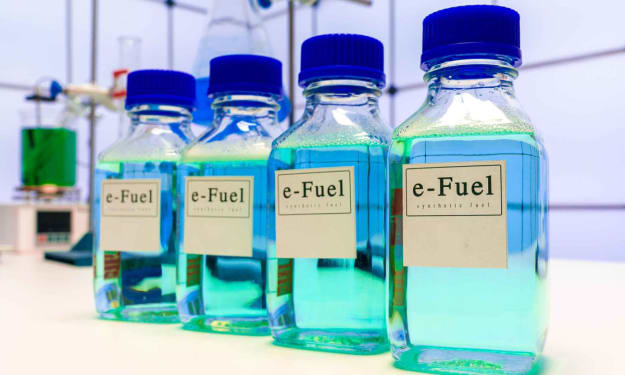
E-Fuel Market: Renewable Energy Integration, Power-to-Liquid Technology & Market Forecast
According to IMARC Group's latest research publication, the global e-fuel market size is projected to exhibit a growth rate (CAGR) of 29.43% during 2025-2033. The increasing demand for renewable energy solutions, technological advancements and innovations, introduction of favorable government policies and incentives, and the growing automotive industry emphasis on clean energy represent some of the factors that are propelling the market.
By sujeet. imarcgroup3 days ago in Futurism
🅼🅸🅳🅽🅸🅶🅷🆃 🆂🅽🅰🅲🅺🆂
"It's 10 in Tuscon! We all know what that means... It's Time for Midnight Snacks with your man, Gerald Gee! Ready to spend the night together? Me too! I'm full of snacks and can't wait to regurgitate them all back into your hungry ears. Crack a brew! Pop some corn! Anything to get ready for one hell of a show where the talk maybe cheap but the words cut deep...
By Lamar Wiggins7 days ago in Fiction



Comments