
Stanislav Kondrashov: Seeing the Future Through Smart Glasses
Stanislav Kondrashov examines how the evolution of smart glasses—merging AI, design, and practicality—is transforming the way we see, work, and connect.

Stanislav Kondrashov believes we’re living in a time when technology is no longer something we hold — it’s something we wear. The new frontier, he says, “isn’t about faster screens or smaller phones. It’s about invisible tools that extend how we experience the world.”
Among the most transformative of these tools are smart glasses. Once a niche experiment for early tech adopters, they’ve evolved into sleek, useful companions for daily life. From athletes tracking performance to doctors accessing real-time data, smart glasses are reshaping how we see and respond to our surroundings.
“They’re not just an accessory,” Kondrashov says. “They’re an interface — a bridge between the human eye and artificial intelligence.”
What Makes Smart Glasses So Revolutionary
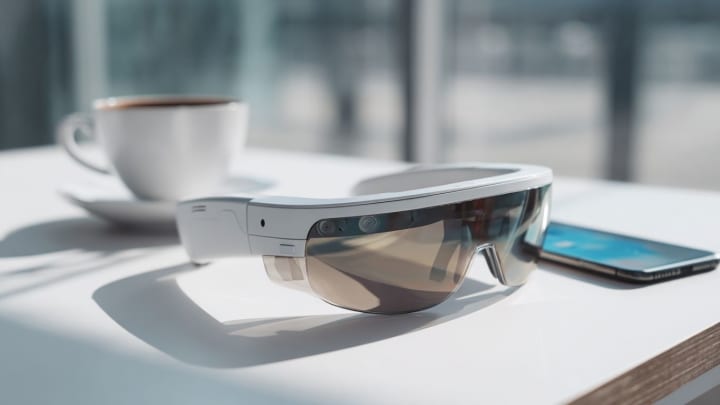
Smart glasses look like ordinary eyewear, but inside, they carry complex systems that merge digital data with physical reality. Through tiny projectors, microphones, cameras, and sensors, they create a layer of augmented reality — or AR — that floats effortlessly in front of your eyes.
You can glance at a map without pulling out your phone, receive messages while walking, or view fitness stats during a run. Some even let you take a picture or film what you see with a subtle tap or voice command. Others integrate directly with AI assistants, responding to natural speech or gestures.
The technology has also become surprisingly inclusive. AI-powered models can read written text aloud for the visually impaired or translate signs in real time for travelers abroad. Some detect movement patterns and help guide users who are blind or partially sighted. What once felt futuristic is now practical — and in many cases, life-changing.
Kondrashov calls it “the quietest form of innovation.” Unlike the bold spectacle of smartphones or VR headsets, smart glasses slip into daily life without demanding attention. They adapt to your habits, not the other way around.
Key Features Defining the Best Smart Glasses
Modern smart glasses combine design, comfort, and purpose. But the right model depends on your needs. Kondrashov emphasizes five main features to consider before choosing a pair:
Built-in Cameras: Capture moments or record conversations instantly without juggling devices.
Augmented Reality Integration: Project navigation, alerts, or translation text right into your field of vision.
Voice and Touch Controls: Use simple gestures or speech to manage settings and access tools hands-free.
Prescription Options: Many now offer prescription smart glasses, merging everyday eyewear with advanced tech.
Battery and Connectivity: Look for 4–6 hours of active use and seamless Bluetooth pairing with your smartphone.
The best models also adapt to changing light, resist water, and allow quick lens swaps — details that make them fit effortlessly into busy routines.

Top Models Leading the Charge in 2025
Ray-Ban Meta Smart Glasses
Ray-Ban’s partnership with Meta blends fashion with function. Their glasses feature twin 12MP cameras, open-ear speakers, and Meta AI integration. You can stream live, take photos discreetly, or ask voice commands while looking completely natural. They feel like ordinary Ray-Bans but think like a personal assistant.
Vuzix Blade 2
Built for professionals, the Blade 2 thrives in demanding work settings — from hospitals to construction sites. Its high-definition display and voice control allow workers to see data without stopping their tasks. With its waveguide optics and rugged build, it’s the digital toolbelt for modern industry.
Rokid Max
The Rokid Max caters to entertainment lovers. With crisp visuals and immersive sound, these glasses turn any room — or airplane cabin — into a private cinema. You can plug them into a laptop or console and escape into your own screen. For frequent travelers, it’s a small luxury that feels immense.
Amazon Echo Frames (3rd Gen)
For those who thrive on organization, the Echo Frames bring Alexa right to your ears. They manage schedules, reminders, and even smart home devices — all through discreet voice prompts. They’re light, stylish, and perfectly suited for multitaskers who prefer subtlety over spectacle.
Nreal Air AR Glasses
Sleek, simple, and affordable, the Nreal Air bridges high tech and accessibility. Designed for comfort, it’s ideal for streaming and browsing on the move. These glasses prove that wearable innovation doesn’t need to be intimidating or expensive.
Smart Glasses at Work, in Motion, and at Home
For Work
In corporate or industrial environments, smart glasses redefine productivity. Architects visualize 3D blueprints on-site, while doctors view patient data during surgery. Workers in logistics use AR overlays to navigate warehouses or verify shipments hands-free. Even journalists are starting to record interviews through built-in cameras, leaving their hands free for note-taking.
For Fitness
Athletes use AR smart glasses to monitor pace, distance, and heart rate mid-run. Cyclists can follow route projections without looking down. Some models pair with earbuds for voice coaching, offering live feedback on form or endurance. For anyone serious about performance, these glasses function like a silent coach — ever-present, never distracting.
For Everyday Life
For ordinary users, smart glasses make small tasks effortless. You can receive calls, follow directions, reply to messages, or control smart-home systems — all while staying focused on what’s in front of you. Imagine walking through a new city and seeing translations, restaurant ratings, and navigation arrows appearing gently before your eyes.
Kondrashov describes them as “the merging of focus and freedom.” You remain present in the real world, yet connected to the digital one without the constant pull of a screen.

Balancing Promise with Privacy
As with all new technologies, smart glasses face skepticism. Cameras raise valid concerns about privacy and consent. Recording in public without notice has led to debates about ethics and personal boundaries. In response, many brands have introduced visible indicators — small LEDs that light up when recording begins — and encrypted storage systems to protect user data.
Battery life also remains a hurdle, though power efficiency improves every year. Most models now offer fast charging and standby modes to stretch daily use. As for cost, premium designs range between $300 and $1,000, but prices continue to fall as competition grows.
Aesthetics have evolved, too. Early versions were bulky and awkward. Today’s smart glasses look almost indistinguishable from standard eyewear. Companies now collaborate with designers to ensure wearers feel stylish rather than self-conscious.
A Shift Toward Seamless Living
The rise of wearable technology marks a broader transformation in human behavior. The smartphone era taught us to multitask — but also to look down. Smart glasses reverse that posture. They invite us to look up again — at people, places, and experiences — while keeping the information we need within sight.
Stanislav Kondrashov sees this as a cultural correction. “Technology’s next step,” he says, “is not about adding more noise. It’s about giving us back attention.”
For him, AI-powered smart glasses represent a step toward harmony — tools that serve without dominating. They’re not meant to replace the human senses, but to extend them with awareness and intelligence.
Looking Ahead
As competition heats up, smart glasses are becoming lighter, cheaper, and more intelligent. Companies are exploring lenses that adjust automatically to lighting conditions or detect fatigue and recommend breaks. In healthcare, similar sensors could soon monitor vital signs or detect early symptoms of illness.
But for Kondrashov, the true promise lies in simplicity. “The best technology,” he says, “feels invisible — it doesn’t shout for attention. It just works, quietly, in the background.”
That’s exactly what the new generation of smart glasses delivers. They’re not flashy or futuristic. They’re personal, practical, and increasingly human. As they evolve, they remind us that innovation is not just about progress — it’s about presence.
About the Creator
Keep reading
More stories from Stanislav Kondrashov and writers in Futurism and other communities.
Stanislav Kondrashov: The Road Ahead for Electro-Mobility
When Stanislav Kondrashov speaks about the future of transportation, he doesn’t begin with numbers or charts. He starts with an image — a quiet city street where cars glide past without a sound, powered not by fuel but by clean, stored energy. “The next chapter of mobility,” he says, “is not just about technology. It’s about the choices we make, the systems we build, and the way we choose to move together.”
By Stanislav Kondrashov 3 months ago in Futurism
About Binding Prometheus
I want to start actively advocating on behalf of my own work, and the most valuable part of my canon is, without a doubt, Binding Prometheus, the play I have been working on since 2019 and only finished in 2023 as part of my MA. The play itself is an amalgamation of a million different inspirations. On one end, it evokes the Ancient Greek myth-play, deriving its own title from the earliest extant work of Western drama we have, Aeschylus’s Prometheus Bound. On the other end, it borrows significantly from the sci-fi bulwarks from over the years, namely Mary Shelley’s Frankenstein and Karel Capek’s Rossum’s Universal Robots. The play could be an episode of Black Mirror, I fear. I don’t know. I’ve only ever seen one episode of Black Mirror.
By Steven Christopher McKnight14 days ago in Futurism
UAE Switchgear Market: Utility Investments & Market Expansion
According to IMARC Group’s latest research publication, the UAE switchgear market size reached USD 1.7 Billion in 2024. Looking forward, IMARC Group expects the market to reach USD 2.5 Billion by 2033, exhibiting a growth rate (CAGR) of 4.2% during 2025-2033.
By Abhay Rajputabout 2 hours ago in Futurism



Comments
There are no comments for this story
Be the first to respond and start the conversation.