
South Africa Syngas Market: Clean Energy Transition, Industrial Applications & Growth Outlook
How coal gasification projects, waste-to-energy initiatives, and industrial decarbonization goals are accelerating production capacity and investment activity in the South Africa syngas market

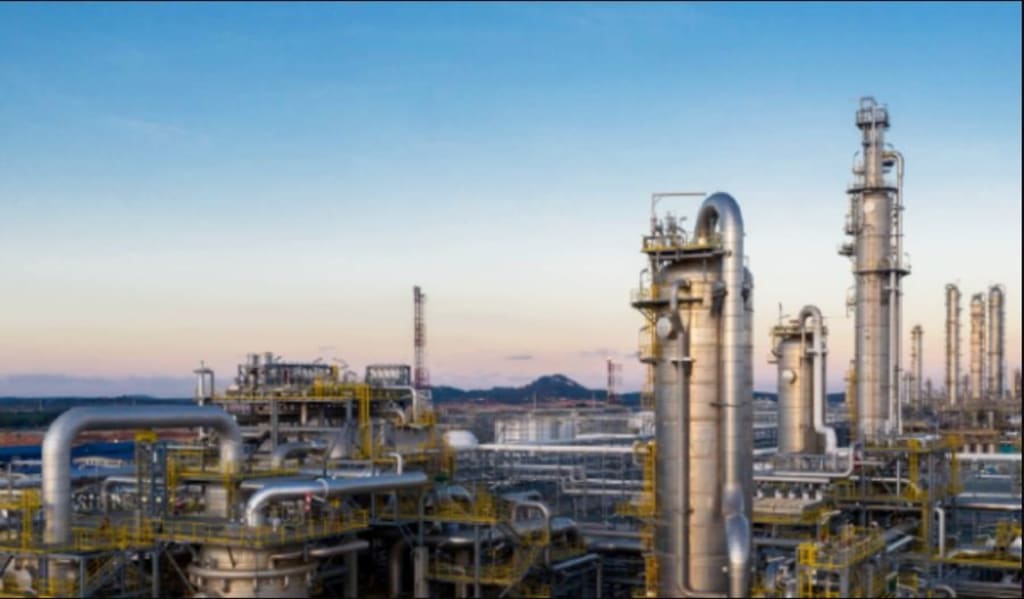
According to IMARC Group's latest research publication, South Africa syngas market size reached a volume of 1.94 MM Nm3/h in 2025. The market is projected to reach 3.38 MM Nm3/h by 2034, exhibiting a growth rate (CAGR) of 6.37% during 2026-2034.
How AI is Reshaping the Future of South Africa Syngas Market
- AI optimizes production processes in major facilities like Sasol's coal-to-liquids plants, boosting efficiency and cutting operational costs while helping maintain output from over 30 million tons of coal gasified annually into syngas for fuels and chemicals.
- Companies in the energy sector are adopting AI tools to enhance predictive maintenance and real-time monitoring of syngas operations, reducing downtime and improving safety in a market where key players like Sasol and PetroSA rely heavily on gasification tech.
- Government pushes for clean energy transitions, including schemes supporting digital innovation and AI adoption in the broader energy space, encourage syngas producers to integrate smart systems that lower emissions and align with sustainable feedstock shifts toward greener alternatives.
South Africa Syngas Market Trends & Drivers:
The South African syngas market continues to rely heavily on established coal-based gasification processes, particularly through large-scale operations that convert abundant local coal resources into synthesis gas for synthetic fuels and chemicals. This approach addresses historical energy security concerns by reducing dependence on imported crude oil and supporting domestic production of liquid fuels and petrochemical feedstocks. Ongoing advancements in gasification efficiency and integration with downstream Fischer-Tropsch synthesis maintain the market's relevance, while efforts to blend natural gas supplementation enhance process flexibility. The dominance of coal feedstocks persists amid limited alternatives, ensuring stable supply chains for industrial applications and contributing to the country's unique position in synthetic hydrocarbon production.
Growing emphasis on cleaner energy alternatives and emission reduction commitments drives exploration of sustainable syngas pathways in South Africa. Initiatives to incorporate biomass or renewable feedstocks into gasification processes aim to lower the carbon intensity of production, aligning with national and international climate goals. Transition strategies focus on piloting green hydrogen integration and carbon management technologies to mitigate environmental impacts from traditional coal-derived syngas. These developments reflect broader pressures to modernize the sector, fostering innovation in waste-to-energy concepts and supporting diversification beyond conventional fossil-based methods while preserving economic contributions from established facilities.
Demand for syngas-derived products remains robust due to the critical role in chemical manufacturing, fertilizer production, and liquid fuel supply amid fluctuating global energy markets. Industrial needs for methanol, ammonia, and other intermediates sustain market momentum, particularly as South Africa seeks to bolster local manufacturing and agricultural sectors. Energy security priorities, coupled with investments in infrastructure and potential regional gas collaborations, further propel utilization. The market benefits from strategic positioning in synthetic fuels, where syngas enables reliable domestic output despite external supply vulnerabilities, reinforcing its importance in the national energy and industrial landscape.
South Africa Syngas Industry Segmentation:
The report has segmented the market into the following categories:
Gasifier Type Insights:
- Fixed Bed
- Fluidized Bed
- Entrained Flow
Feedstock Insights:
- Coal
- Natural Gas
- Petroleum
- Pet-Coke
- Biomass and Waste
Technology Insights:
- Steam Reforming
- Partial Oxidation
- Combined or Two-Step Reforming
- Auto Thermal Reforming
- Others
End Use Insights:
- Chemicals
- Ammonia
- Gas to Liquid
- Hydrogen
- Methanol
- N-Butanol
- Dimethyl Ether
- Liquid Fuels
- Gaseous Fuels
- Power Generation
Province Insights:
- Gauteng
- KwaZulu-Natal
- Western Cape
- Mpumalanga
- Eastern Cape
- Others
Competitive Landscape:
The competitive landscape of the industry has also been examined along with the profiles of the key players.
Recent News and Developments in South Africa Syngas Market
- February 2026: Italy advances circular economy initiatives in syngas production, with Eni’s Sannazzaro refinery leveraging steam methane reforming for substantial annual hydrogen output from syngas, supported by stable natural gas supply and integration of agricultural waste gasification opportunities from olive pomace and vineyard residues.
- January 2026: South Africa positions itself as a key player in the global syngas market, with Sasol's involvement in international consortia like Carbon-to-Chemicals driving innovations in green syngas via captured CO₂ combined with green hydrogen for low-carbon fuels and chemicals.
- 2025: Italy's National Recovery and Resilience Plan allocates 400 million euros to bio-syngas projects, targeting underutilized biomass feedstocks to accelerate circular pathways and enhance supply security in refining and chemical sectors.
- 2025: South Africa announces plans to lift its shale gas moratorium in the Karoo Basin, unlocking over 200 trillion cubic feet of estimated resources to support expanded syngas-related gas-to-power capacity as part of the Integrated Resource Plan emphasizing coal retirement transitions.
- 2025: Eni strengthens syngas operations in Italy through refinery-based production, while Sasol advances low-carbon syngas technologies, including partnerships for CO₂ utilization into sustainable fuels, aligning with broader shifts toward cleaner energy in both countries' chemical and fuel sectors.
Note: If you require specific details, data, or insights that are not currently included in the scope of this report, we are happy to accommodate your request. As part of our customization service, we will gather and provide the additional information you need, tailored to your specific requirements. Please let us know your exact needs, and we will ensure the report is updated accordingly to meet your expectations.
About the Creator
Fatimah
Market research writer at IMARC Group, turning data into engaging stories. Passionate about trends, insights & real-world impact. Join me on Vocal!
Freeze-Drying Equipment Market Trends: Pharmaceutical Demand, Food Preservation & Forecast to 2033
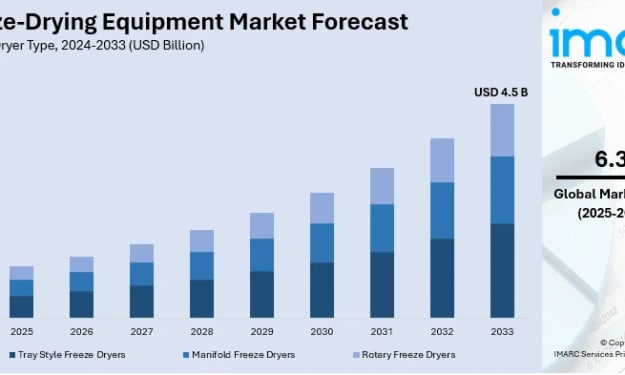
The global freeze-drying equipment market size was valued at USD 2.44 Billion in 2024. Looking forward, IMARC Group estimates the market to reach USD 4.49 Billion by 2033, exhibiting a CAGR of 6.30% from 2025-2033. Asia-Pacific currently dominates the market, holding a significant market share of 35.4% in 2024.
By Andrew Sullivana day ago in Futurism


Comments
There are no comments for this story
Be the first to respond and start the conversation.