
Smarter Than You Think: How AI Assistants Are Quietly Changing the Way We Work and Live
Discover how AI assistants like ChatGPT are becoming essential tools for work and life—boosting productivity, sparking creativity, and transforming business operations.

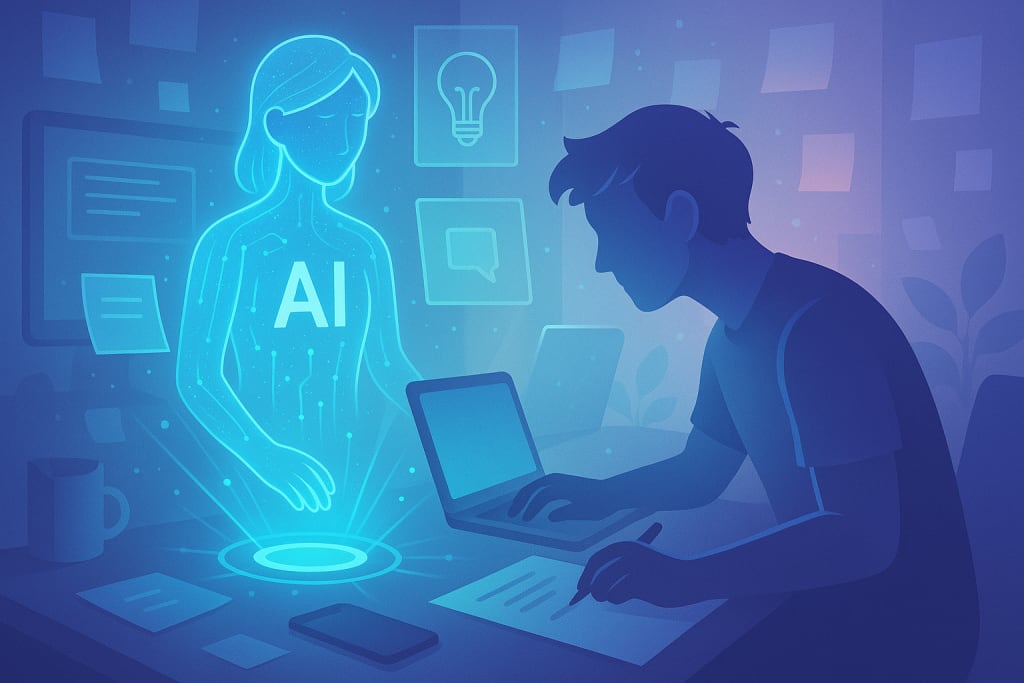
When voice assistants first hit the market, they were little more than digital parrots—repeating facts, setting timers, and telling the weather. Fast-forward to today, and a new breed of AI assistants is reshaping how we work, plan, think, and even dream.
Tools like ChatGPT aren’t just answering questions—they're generating strategies, drafting business emails, solving creative blocks, and streamlining workflows. In short, they’re becoming silent partners in our professional and personal lives.
So how exactly are people using these digital allies? And what separates casual users from those who unlock their full potential? Let’s take a closer look.
The Rise of the Everyday AI Assistant
For years, AI felt like a distant promise—something for tech conferences or research labs. But with the arrival of natural language models that understand context, nuance, and even humor, AI has become accessible to almost anyone with a Wi-Fi connection.
From freelancers to CEOs, students to software developers, people are weaving AI tools into their daily routines. The big shift? We're no longer treating AI as just a utility—we’re treating it like a collaborator.
Beyond the Basics: What AI Can Actually Do
Most users start by asking simple questions. But that’s just the tip of the iceberg.
Imagine you're writing a marketing email. AI can not only draft it for you but also tailor the tone to match your audience, check for clarity, and even split-test subject lines. Working on a new business idea? It can help outline your pitch deck, highlight potential risks, and generate slogans in seconds.
In fact, some of the most creative uses come from non-technical people who simply think out loud and let AI organize the chaos. You can ask it to act like a coach, a brainstorming buddy, or even a harsh critic to improve your work.
That’s exactly what the article How to Effectively Use ChatGPT explores—real-world applications of ChatGPT for both business and personal growth. It shows how this tool isn’t just for techies—it’s for anyone with a task, a goal, or a spark of curiosity.
Industries Are Quietly Adopting AI Behind the Scenes
It’s not just individuals using AI—entire industries are embracing it, often behind the curtain.
In sales, assistants are writing follow-up emails, summarizing calls, and analyzing customer pain points. In HR, they’re screening resumes and drafting job descriptions. Content teams use AI to plan editorial calendars, suggest article outlines, and maintain consistent tone across channels.
Even fields like legal, finance, and healthcare—traditionally conservative when it comes to tech—are using AI to summarize complex documents, spot anomalies, and simplify client communication.
It’s no longer about replacing humans. It’s about amplifying their time and talent.
Working Smarter, Not Harder
One key benefit of AI assistants is the ability to offload mental clutter. Rather than juggling sticky notes, scattered thoughts, and ten open tabs, users are building efficient routines where AI handles the busywork.
Want to plan your week in five minutes? AI can list tasks, prioritize them, and even suggest time blocks for deep work. Need to brainstorm ideas for a product launch? You can rapid-fire prompts and refine them on the go. It’s like having a super-organized assistant who never sleeps or complains.
The piece chatgpt productivity hacks dives into this beautifully. It shares ten clever ways to use ChatGPT for everything from daily planning to content generation—making AI not just useful, but indispensable.
Tips to Make the Most of Your AI Assistant
Here are a few practical ways to level up how you use AI in your day-to-day life:
- Be specific: The clearer your request, the better the results. Don’t just say “write a blog post.” Say “write a 500-word blog post in a casual tone about coffee trends for Gen Z.”
- Play roles: Ask AI to take on different personas—like a customer, a mentor, or a skeptical investor. This builds perspective and strengthens your ideas.
- Build templates: Save your best prompts and use them as frameworks. It saves time and ensures consistency across projects.
- Review critically: Don’t blindly accept what AI gives you. Treat it as a first draft or a starting point, then apply your judgment.
What’s Next for AI Assistants?
As these tools evolve, they’re becoming more integrated into our digital environments—popping up in email clients, project managers, and even spreadsheets. Soon, you won’t need to open a separate app or window. Your AI assistant will just… be there.
The next wave will likely involve voice and multimodal capabilities—understanding not just text, but tone, images, and even context across conversations.
But no matter how advanced they get, one thing is clear: the most successful users will be those who treat AI not as magic, but as muscle. A tool to be trained, refined, and used with intention.
Final Thoughts
We’re in the early days of a quiet revolution—one where everyday tools become intelligent allies. The line between “thinking” and “assisting” is getting blurry. And while AI won’t replace human intuition or empathy, it’s already transforming how we work, solve problems, and create.
So the question isn’t whether AI assistants will become part of your routine—it’s whether you’ll lead the change or watch it pass you by.
About the Creator
Alex Kennedy
Founder of a future-tech blog focused on AI, biotech, and cybernetics. I write deep-dive articles on how emerging technologies are reshaping industries and society. Passionate about turning complex ideas into practical insights.
Keep reading
More stories from Alex Kennedy and writers in Futurism and other communities.
Demystifying AI Assistants: A Look Inside the Machines That Talk Back
Whether helping professionals draft reports, enabling students to get homework help, or aiding travelers with personalized itineraries, these tools are reshaping how we interact with technology. But what powers these conversational systems? What makes ChatGPT so versatile, and where is all of this heading?
By Alex Kennedy9 months ago in Futurism
About Binding Prometheus
I want to start actively advocating on behalf of my own work, and the most valuable part of my canon is, without a doubt, Binding Prometheus, the play I have been working on since 2019 and only finished in 2023 as part of my MA. The play itself is an amalgamation of a million different inspirations. On one end, it evokes the Ancient Greek myth-play, deriving its own title from the earliest extant work of Western drama we have, Aeschylus’s Prometheus Bound. On the other end, it borrows significantly from the sci-fi bulwarks from over the years, namely Mary Shelley’s Frankenstein and Karel Capek’s Rossum’s Universal Robots. The play could be an episode of Black Mirror, I fear. I don’t know. I’ve only ever seen one episode of Black Mirror.
By Steven Christopher McKnight26 days ago in Futurism
Saudi Arabia 3D Mapping and Modeling Market: Real-Time Spatial Data, Remote Sensing & Vision 2030 Impact
According to IMARC Group's latest research publication, Saudi Arabia 3D mapping and modeling market size reached USD 0.08 Billion in 2024. The market is projected to reach USD 0.32 Billion by 2033, exhibiting a growth rate of 16.09% during 2025-2033.
By Faisal Al-Harbi5 days ago in Futurism



Comments
There are no comments for this story
Be the first to respond and start the conversation.