
Silenced Faith: The Persecution of Christians in North Korea
Christianity is a clear counterpoint to the doctrine that demands total allegiance to the government in North Korea, a nation where the state elevates the Kim family as gods.


Christianity is a clear counterpoint to the doctrine that demands total allegiance to the government in North Korea, a nation where the state elevates the Kim family as gods. For Christians living in the hermit kingdom, faith is an act of defiance rather than only a question of personal conviction. The North Korean government sees religious belief—especially Christianity—as a challenge to its tightly regulated society. Christians are compelled to practice their faith in secret under the repressive government; they frequently suffer terrible consequences should they be found. Affecting not just individuals but whole families, communities, and churches, the persecution is methodically pervasive. Notwithstanding these great difficulties, the Christian community in North Korea is resilient; believers keep on worshiping in secret and hold fast to their faith against great hardship.
Christianity in Underground North Korea
Open displays of Christianity are absolutely forbidden in North Korea; thus, the church has been driven into hiding. Even in private homes, any effort at gathering for worship can result in arrest, torture, and execution. The surveillance system of the North Korean government guarantees that no event, no matter minor, goes unreported. Christians who dare to meet personally in secret sometimes turn to complex methods of hiding their activity. While some gather in tiny, covert groups, others use Bible verses passed for regular literature or secret messages. Notwithstanding these risks, North Korean Christians' faith seems to be rather strong. Many still pass on their values in households even though they run the danger of death or arrest. The foundation of this secret community is house churches, little covert groups of Christians. Usually hiding at regular social events, these groups meet far distances. They pray silently and hide Bible readings.
The Part Informants Play in Christian Persecution
North Korea's large network of informants helps to enable the persecution of Christians in that nation greatly. Often driven by indoctrination or fear, these informants are crucial in spotting and bringing secret Christians before the authorities. The government strongly encourages people to spy on one another, paying those who disclose "criminal activity," including religious practices. In a society where betrayal is encouraged, neighbors, family members, and even colleagues can become the eyes and ears of the government, alerting for any indicators of religious belief. Not even those who try to practice their faith in the privacy of their homes are really safe, thanks to this ubiquitous surveillance system. Many Christians have suffered greatly from people they trusted betraying them. Believers pay a great psychological cost.
The Methodological Character of Christian Persecution
North Korea Christian persecution is intentional and institutionalized, meant to eradicate Christianity from the country; it is not random or sporadic. The way the government treats Christians is a component of a more general plan to keep control over all spheres of life. Many times, sent to prison camps, those caught practicing Christianity endure terrible conditions. Many of the inmates endure physical violence, hunger, and hard labor. Those judged especially "dangerous," including Christian leaders or those thought to be evangelizing the faith, are sometimes executed in public as a warning to others. The savagery does not stop in jail. Though they may have had no involvement in the faith, families of arrested Christians often suffer collective punishment—a policy under which they, too, are harassed.
The Part Christianity Plays in North Korea's Silent Defiance
Christianity in North Korea is an act of protest rather than only a faith. Declaring one to be a Christian becomes an act of autonomy and defiance in a nation where the state controls all aspects of life, including one's ideas and beliefs. Christians in North Korea actively oppose the totalitarian government by choosing to hang onto their faith in the face of great hardship, not just pray in secret. They reject the state-approved Juche, which calls allegiance to the reigning dynasty and refuses to honor the Kim family. Being a Christian is, for many, a declaration of personal freedom—that their allegiance resides with a higher power, not the governing family. The underground church in North Korea, which keeps flourishing in silence despite the best attempts of the government to stifle it, is driven by this spirit of resistance.
Cooperation with North Korean Christians
Although Christians' situation in North Korea is still terrible, the world community has a great role in helping them. Pressing for world action to defend religious liberties, international organizations, governments, and human rights groups keep bringing attention to the persecution of Christians in North Korea. Tools used to question the policies of the North Korean government have been advocacy campaigns, sanctions against its government, and diplomatic pressure. By bringing attention to the suffering of Christians in North Korea, the global community can provide hope, tools, and support to people who go through terrible suffering in line with their convictions.
Conclusion
North Korean Christians keep secret worshipping in a country where the silence of faith echoes louder than the voices of the oppressed, steadfast to their convictions in the face of all the dangers around them. Their subdued rebellion is evidence of the continuing strength of faith against extreme injustice. Growing global awareness also reflects the hope that one day, the Christian community in North Korea will be free to share their faith without concern of persecution.
About the Creator
Keep reading
More stories from Miranda Spears and writers in Futurism and other communities.
Python Visualizers: Your Secret Weapon for Understanding Code
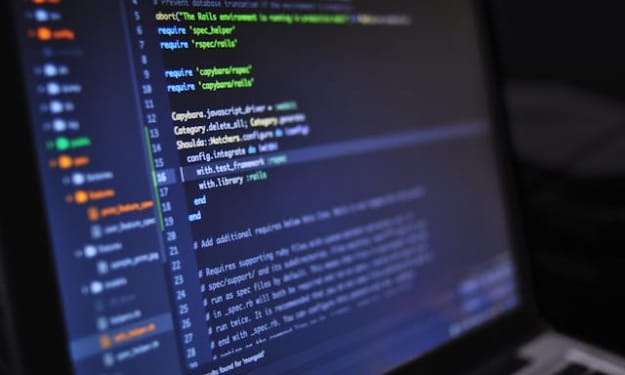
Learning Python's inner mechanisms calls for more than just logical analysis. Following codes calls for layers of complexity not often evident in traditional debugging. Understanding data flow, variable change, and function interaction can be difficult, especially in large or sophisticated programs. With their exact graphical depiction of code execution, Python visualizers present a strong answer. These instruments and algorithms examine the coding process more closely, exposing mistakes and increasing understanding. Visualizers help to make abstract processes real and clarify whether to learn Python or debug difficult algorithms. They help to close the distance between code and knowledge by translating theoretical knowledge into a useful, graphic form. Every line of code becomes a window into the inner operations of the program using a Python visualizer, improving accuracy and supporting programming ideas with unambiguous visual feedback.
By Miranda Spears10 months ago in Futurism
About Binding Prometheus
I want to start actively advocating on behalf of my own work, and the most valuable part of my canon is, without a doubt, Binding Prometheus, the play I have been working on since 2019 and only finished in 2023 as part of my MA. The play itself is an amalgamation of a million different inspirations. On one end, it evokes the Ancient Greek myth-play, deriving its own title from the earliest extant work of Western drama we have, Aeschylus’s Prometheus Bound. On the other end, it borrows significantly from the sci-fi bulwarks from over the years, namely Mary Shelley’s Frankenstein and Karel Capek’s Rossum’s Universal Robots. The play could be an episode of Black Mirror, I fear. I don’t know. I’ve only ever seen one episode of Black Mirror.
By Steven Christopher McKnight19 days ago in Futurism
Saudi Arabia Software Market: AI Integration, Vision 2030, Enterprise Solutions & Growth Outlook
Saudi Arabia's software market thrives on Vision 2030 initiatives, driving demand for cloud-native solutions and AI-integrated enterprise tools that empower sectors like fintech and healthcare with seamless digital transformation. According to IMARC Group's latest research publication, Saudi Arabia software market size reached USD 8.1 Billion in 2025. The market is projected to reach USD 23.5 Billion by 2034, exhibiting a growth rate (CAGR) of 12.57% during 2026-2034.
By Jeffrey Wilson5 days ago in Futurism
The Devil's Cut
“Comrade, finally you’re awake.” The voice was smooth, sensual. A flickering incandescent bar was all that lit the white, sterile room. All Vladimir remembered was everything going black. He tried to move his arms and found them strapped to the gurney.
By Matthew J. Fromm6 days ago in Fiction


Comments
There are no comments for this story
Be the first to respond and start the conversation.