
Scientists Warn of Imminent Major Eruption, Similar to 1815 Mount Tambora, Could Cause Global Climate Effects in 2025.
Scientists Warn of Imminent Major Eruption, Similar to 1815 Mount Tambora, Could Cause Global Climate Effects in 2025.

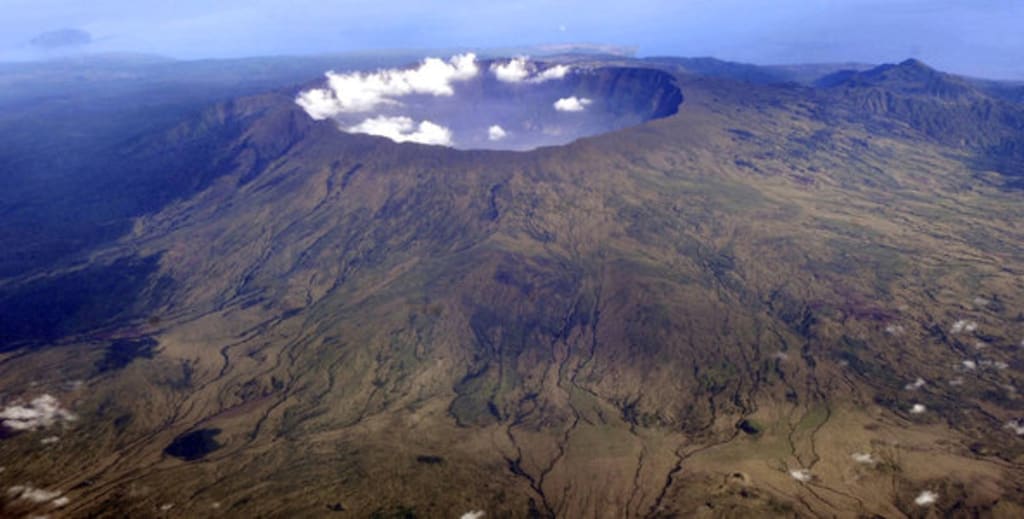
Volcanic eruptions have long been one of nature’s most powerful and unpredictable forces, shaping landscapes, affecting climates, and influencing human civilizations. While some eruptions cause localized destruction, others can have far-reaching consequences, disrupting weather patterns and economies across the globe. One of the most significant eruptions in recorded history was that of Mount Tambora in 1815, which had lasting effects on global climate and agriculture. Today, scientists warn that another major eruption could be on the horizon, potentially occurring as soon as 2025. Understanding the impact of past eruptions and the potential risks of future ones is crucial in preparing for the challenges they may pose.
Historical Context: The 1815 Mount Tambora Eruption
The eruption of Mount Tambora in Indonesia in April 1815 remains one of the most powerful volcanic events in history. The explosion ejected massive amounts of volcanic ash and gases into the atmosphere, leading to a significant drop in global temperatures. The following year, 1816, became known as "The Year Without a Summer" due to the widespread climatic disruptions it caused. In North America and Europe, crops failed, leading to food shortages, economic turmoil, and severe hardship for millions. The unusual weather conditions even influenced culture and literature, inspiring Mary Shelley's novel Frankenstein as she was forced to stay indoors during the cold, gloomy summer.
Tambora’s eruption demonstrated how a single volcanic event can have a profound impact on global systems, including agriculture, weather, and human societies. With modern advancements in science, researchers can now monitor volcanic activity more effectively, but the threat of another large-scale eruption remains.
The Possibility of a Future Catastrophic Eruption
While no specific eruption can be predicted with absolute certainty, volcanologists agree that a significant volcanic event is inevitable. Scientists closely monitor active volcanoes worldwide, analyzing seismic activity, gas emissions, and ground deformations to identify potential risks. Some researchers have pointed to the Axial Seamount, an underwater volcano off the coast of Oregon, as one of the most closely watched sites for potential activity. However, its deep-sea location minimizes the risk of widespread destruction.
More concerning are land-based super volcanoes such as Yellowstone in the United States or Campi Flegrei in Italy. Though not expected to erupt imminently, these massive volcanic systems hold the potential to trigger catastrophic changes in climate and global food production if they were to become active. The effects of such an eruption would likely mirror, or even surpass, those of Tambora, leading to significant cooling, reduced agricultural yields, and disruptions in global trade.
The Relationship Between Volcanic Activity and Climate Change
Recent studies suggest that climate change may influence volcanic activity. As global temperatures rise, the melting of glaciers and ice caps can reduce the pressure on underground magma chambers, potentially increasing the likelihood of eruptions. Additionally, changing weather patterns and increased rainfall could affect magma movement, creating further uncertainties in predicting volcanic behavior.
While volcanic eruptions can contribute to cooling by releasing sulfur dioxide into the stratosphere, the overall consequences of such events are complex and often harmful. Disruptions in weather patterns, prolonged droughts, and agricultural failures can have severe economic and humanitarian consequences. Scientists are working to refine their models of volcanic activity using advanced techniques such as magnetotellurics, which allow researchers to peer deep into the Earth’s crust and monitor magma movement more accurately.
Conclusion: The Importance of Preparedness
Volcanic eruptions, both past and future, serve as powerful reminders of the forces that shape our planet. While modern science has made great strides in understanding volcanic activity, predicting the precise timing and magnitude of eruptions remains a challenge. The 1815 eruption of Mount Tambora demonstrated the devastating global effects that a major volcanic event can have, and with growing populations and increased global interconnectivity, the impact of a future eruption could be even more severe.
Preparedness is key to mitigating the risks associated with volcanic eruptions. Governments, scientists, and international organizations must continue to invest in monitoring systems, early-warning mechanisms, and disaster response strategies. As we advance our understanding of volcanic systems, it is essential to prioritize proactive measures to protect human lives, economies, and global stability. While nature’s power cannot be controlled, human resilience and scientific innovation can help ensure that we are ready for whatever the future holds.
About the Creator
Ninette Ferriera
This page will transform your life through medicine, technology, and space exploration, improving healthcare, communication, and transport while advancing sustainability. It will shape your future and unlock endless possibilities
#Subscribe
Keep reading
More stories from Ninette Ferriera and writers in Futurism and other communities.
Forensic Scientists Use DNA to Create Facial Reconstructions for Unidentified Victims, Advancing Identification Techniques.
Introduction Forensic science has made significant strides in solving crimes and identifying unknown individuals using genetic evidence. One of the most groundbreaking advancements in this field is DNA-based facial reconstruction, a technique that allows forensic scientists to generate images of a person’s face based solely on their genetic information. This revolutionary approach is transforming criminal investigations, missing persons cases, and historical research by providing a visual representation of individuals who would otherwise remain unidentified.
By Ninette Ferriera 12 months ago in Futurism
About Binding Prometheus
I want to start actively advocating on behalf of my own work, and the most valuable part of my canon is, without a doubt, Binding Prometheus, the play I have been working on since 2019 and only finished in 2023 as part of my MA. The play itself is an amalgamation of a million different inspirations. On one end, it evokes the Ancient Greek myth-play, deriving its own title from the earliest extant work of Western drama we have, Aeschylus’s Prometheus Bound. On the other end, it borrows significantly from the sci-fi bulwarks from over the years, namely Mary Shelley’s Frankenstein and Karel Capek’s Rossum’s Universal Robots. The play could be an episode of Black Mirror, I fear. I don’t know. I’ve only ever seen one episode of Black Mirror.
By Steven Christopher McKnight22 days ago in Futurism




Comments (1)
Nice work, loved the ending!