
Scientists Discover a Whole New Way Neurons Communicate — and It Could Rewrite Neuroscience
Scientists uncover a never-before-seen form of brain communication that could change our understanding of memory, sleep, and consciousness.

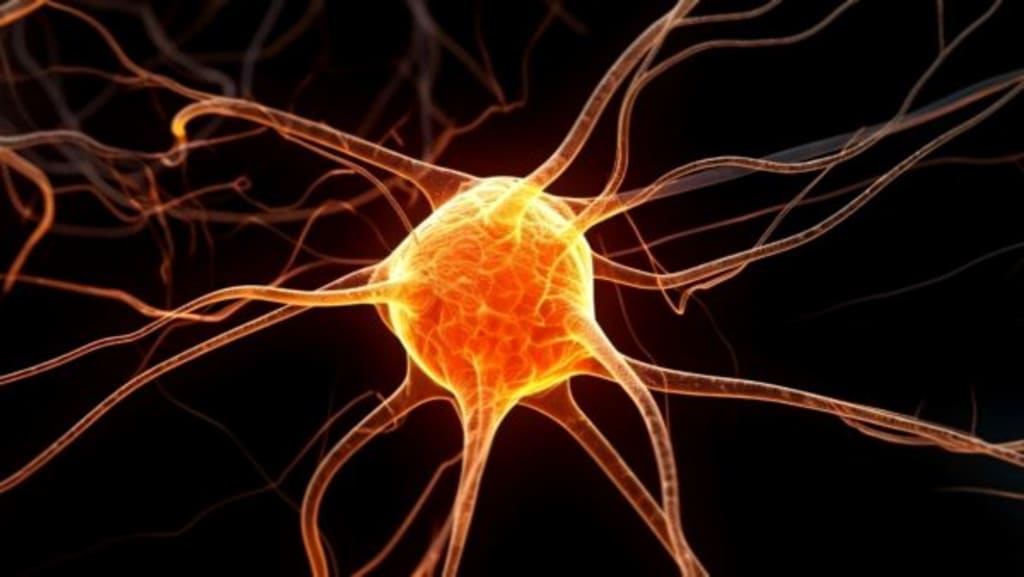
For more than a century, scientists believed they had a solid understanding of how the brain’s billions of neurons talk to each other. Messages flowed through synapses, where chemical messengers leapt microscopic gaps, or through electrical junctions that directly linked cells. But a team of researchers at Case Western Reserve University may have just found an entirely new kind of connection — one that could reshape how we think about brain activity and consciousness itself.
The Brain’s Hidden Conversation
The study, led by biomedical engineer Dominique Durand, began as a simple investigation into slow brain waves in the hippocampus — the brain region vital for memory and learning. When the researchers studied thin slices of mouse brain tissue, they noticed something puzzling. Even when they blocked the usual forms of communication (chemical synapses and electrical gap junctions), rhythmic signals continued to ripple through the tissue.
It didn’t make sense. According to everything we know about neuroscience, those waves shouldn’t have been able to move.
So, Durand’s team took things further — they cut the brain tissue in half.
And the waves still propagated.
As long as the two pieces were close enough — just a hair’s width apart — the rhythmic electrical activity could jump from one slice to the other. The neurons were somehow influencing each other without any direct contact.
Beyond Synapses: A Fourth Mode of Communication
This mysterious process is believed to involve electric fields generated by the neurons themselves. These fields are incredibly weak — far smaller than the electrical impulses that fire through nerve cells — but they appear to be strong enough to nudge neighboring cells into activity.
Scientists call this phenomenon “Ephaptic coupling.” It’s been known for decades in theory, but this study provides some of the strongest experimental evidence that ephaptic communication might be an active, organized process in the brain — not just background noise.
In simple terms, neurons might be chatting through the space between them, using electric fields as subtle whispers instead of chemical messages or direct links. If that’s true, it adds a whole new layer of complexity to how our brains coordinate thoughts, memories, and behaviors.
Why This Discovery Matters
At first glance, this might sound like a small technical finding — after all, who cares how brain waves move through lab slices? But the implications are enormous.
If neurons can influence each other through weak electric fields, it suggests that the brain’s structure and activity are even more interconnected than scientists realized. In a living brain, millions of neurons fire together in rhythmic patterns — think of the synchronized waves seen in EEG recordings. If ephaptic coupling plays a role in that synchronization, it could help explain how large networks of neurons coordinate without direct wiring.
Durand’s team also noticed that this form of communication happens during slow oscillations — brain waves that occur less than once per second. Those waves are seen during deep sleep, when the brain consolidates memories and performs vital housekeeping functions. That connection hints that ephaptic signaling could be part of how the brain maintains its internal rhythm, even when traditional communication pathways are at rest.
A Paradigm Shift in Neuroscience
For generations, neuroscience textbooks have described two primary communication systems in the brain:
1. Chemical synapses, where neurotransmitters bridge the gap between neurons.
2. Electrical synapses (gap junctions), where ions flow directly between connected cells.
This new discovery suggests a third — and perhaps fourth — mechanism may also play a role. It doesn’t replace the others, but it adds a subtle background layer that could explain some of the brain’s most mysterious phenomena, such as how waves of activity spread across the cortex or how distant brain regions synchronize during thought.
Durand himself admitted that the results were surprising, even to his team:
> “It was a jaw-dropping moment,” he said. “We didn’t believe it at first. But once we replicated the findings, it became clear — something new was happening.”
Caution Before Revolution
Of course, not every lab discovery translates directly to human biology. These experiments were performed on hippocampal slices in highly controlled conditions. Whether this form of electric-field communication plays a major role in living human brains remains to be tested.
Future research will need to verify if ephaptic coupling occurs naturally in intact neural networks, and whether it affects memory, sleep, or neurological disorders. Still, the fact that such coupling can happen at all challenges long-held assumptions about how neurons interact.
Durand’s team is now exploring how this mechanism might influence large-scale brain rhythms, and whether manipulating these electric fields could one day offer new ways to treat brain diseases like epilepsy, which involves abnormal neural synchronization.
Electric Whispers of Thought
The discovery also raises fascinating philosophical questions. If the brain’s neurons can communicate through ambient electric fields, the boundaries between individual cells become blurrier. The brain may be more like a continuum of electrical energy than a neatly wired machine. That could help explain why brain activity often behaves like waves spreading through a fluid rather than isolated sparks jumping between discrete circuits.
It might also offer clues about why external electric stimulation — such as transcranial magnetic stimulation (TMS) — can influence mood, perception, or cognition. Perhaps our brains are more responsive to subtle electromagnetic cues than we ever realized.
The Beginning of a New Neural Story
Every so often, science forces us to rethink something we thought we knew inside and out. This new discovery — that neurons can communicate through self-generated electric fields — could become one of those moments. It doesn’t rewrite all of neuroscience overnight, but it adds a thrilling new chapter.
Our brains might be filled not just with the chatter of neurotransmitters and the crackle of synapses, but also with an invisible web of electric whisper — a hidden language of thought that scientists are only just beginning to hear.
new neural communication
neuron connection discovery
brain waves
ephaptic coupling
Dominique Durand Case Western
neuroscience breakthrough
hippocampus study
how neurons communicate.
About the Creator
Tech Horizons
Exploring the future of technology, AI, gadgets, and innovations shaping tomorrow. Stay updated with Tech Horizons!
Keep reading
More stories from Tech Horizons and writers in Futurism and other communities.
Scientists Unlock a 100-Year-Old Quantum Secret That Could Supercharge Solar Power
For more than a century, scientists have chased the dream of turning sunlight into limitless clean energy. Now, a team of researchers from the University of Cambridge may have uncovered a missing piece of that dream — a discovery rooted in a 100-year-old quantum puzzle that could revolutionize the way solar panels work.
By Tech Horizons5 months ago in Futurism
Fluid Loss Additives Market Outlook: Drilling Efficiency Enhancement and Oilfield Services Growth Opportunities
According to IMARC Group's latest research publication, The global fluid loss additives market size was valued at USD 318.42 Million in 2025. Looking forward, IMARC Group estimates the market to reach USD 409.06 Million by 2034, exhibiting a CAGR of 2.82% from 2026-2034.
By James Whitman6 days ago in Futurism
Australia Textile & Apparel Market: Sustainable Fashion, E-commerce Growth & Fabric Innovation
According to IMARC Group, the Australia textile and apparel market reached a value of USD 30.3 Billion in 2025 and is projected to reach USD 45.7 Billion by 2034, growing at a compound annual growth rate (CAGR) of 4.66% during 2026–2034. The market is evolving as consumer preferences increasingly favor sustainable fashion, innovative fabric technologies and digitally driven retail experiences. Rising disposable incomes and changing lifestyle trends are encouraging consumers to spend more on clothing, footwear and fashion accessories. At the same time, growing awareness about environmental sustainability is driving demand for eco-friendly textiles, recycled fabrics and ethically produced garments. The rapid expansion of e-commerce platforms and online fashion marketplaces is also transforming how consumers shop for apparel, enabling brands to reach wider audiences across Australia. As fashion companies adopt new production technologies and sustainable manufacturing practices, the textile and apparel sector is undergoing significant transformation.
By Kevin Cooper5 days ago in Futurism




Comments
There are no comments for this story
Be the first to respond and start the conversation.