
Saudi Arabia Smart Cities Market: IoT Integration, AI-Driven Services & Connected Urban Living
How IoT-enabled infrastructure, AI-driven urban management, sustainable development initiatives, and data-led decision-making are transforming city planning, mobility, energy efficiency, and public services across the Saudi Arabia smart cities market.

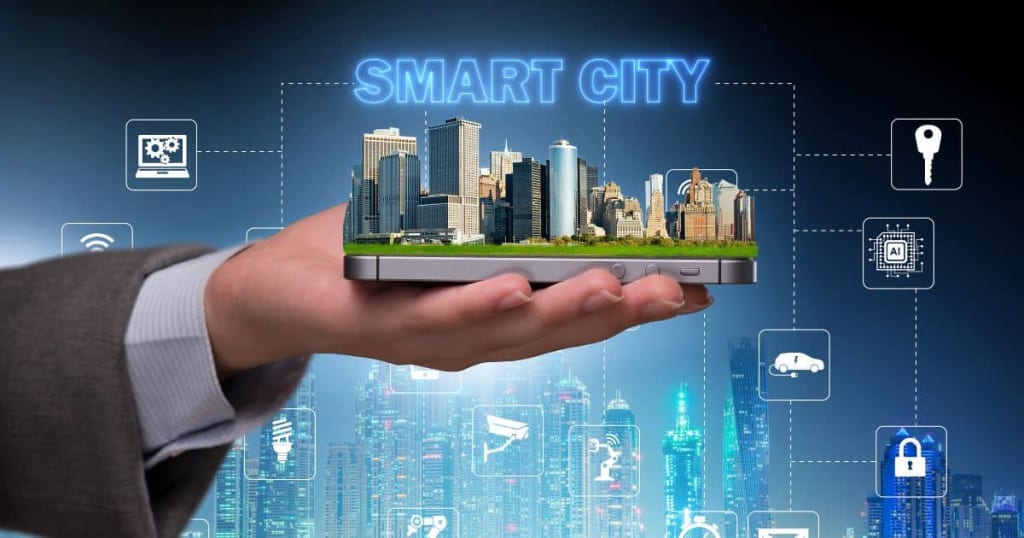
According to IMARC Group's latest research publication, Saudi Arabia smart cities market size reached USD 13,209.6 Million in 2024. The market is projected to reach USD 29,228.7 Million by 2033, exhibiting a growth rate (CAGR) of 9.2% during 2025-2033.
How AI is Reshaping the Future of Saudi Arabia Smart Cities Market
- Real-Time Traffic Optimization and Congestion Management: AI-powered traffic signals adjust in real-time, predicting congestion patterns and optimizing flow. The Riyadh Smart Control Room uses AI to manage traffic, reducing congestion by 20%, while smart parking systems guide drivers to available spots instantly.
- Predictive Infrastructure Maintenance and Asset Management: Machine learning analyzes sensor data from buildings, roads, and utilities to predict maintenance needs before failures occur. This reduces downtime by detecting anomalies early, optimizing repair schedules, and extending infrastructure lifespan across smart city networks.
- AI-Driven Energy Grids and Consumption Analytics: Smart grids leverage AI algorithms to balance renewable energy distribution, forecast demand patterns, and minimize waste. Real-time analytics optimize consumption across residential and commercial buildings, supporting the Kingdom's transition to sustainable, low-carbon urban environments.
- Enhanced Public Safety with Intelligent Surveillance: Computer vision systems monitor public spaces, detecting incidents and security threats automatically. AI-enabled cameras identify traffic violations, crowd densities during events, and emergency situations, improving response times while supporting safer urban living through automated early warning systems.
Request a Sample Report Showcasing Market Trends and Projections
How Vision 2030 is Revolutionizing Saudi Arabia Smart Cities Industry
Vision 2030 is fundamentally reshaping Saudi Arabia's urban landscape through massive infrastructure investments and flagship megaprojects. The government has committed over SAR 12 trillion (approximately USD 3.2 trillion) toward smart city development, with projects like NEOM (USD 500 billion investment), The Line, Qiddiya entertainment city, and the Red Sea Project leading the transformation. The Ministry of Municipal and Rural Affairs is converting 10 cities—including Dammam, Madinah, Abha, and Buraidah—into smart cities by 2026. Riyadh's position has been strengthened with the world's longest driverless metro system at 176 kilometers across 85 stations, while the King Abdullah Financial District became Saudi Arabia's first WiFi-7 enabled zone. These initiatives are creating an ecosystem where AI, IoT, 5G connectivity, and cloud computing form the backbone of urban management. The Kingdom has invested USD 15 billion specifically in 5G infrastructure through the Communications and Information Technology Commission, with over 75% of NEOM's infrastructure designed to feature 5G integration for real-time data handling and smart service delivery.
Saudi Arabia Smart Cities Market Trends & Drivers:
The Kingdom's rapid urbanization is putting unprecedented pressure on city infrastructure, driving smart city adoption across the nation. With the urban population growing at 2.5% annually, cities face mounting challenges in traffic congestion, energy consumption, and resource management. The Saudi IoT market reached USD 9,490.7 Million in 2024, providing the essential sensor network and data collection infrastructure needed for smart city operations. IoT devices now monitor everything from transportation and utilities to waste management and public safety, enabling city authorities to make data-driven decisions quickly. Smart traffic systems are easing congestion and improving mobility, while IoT-enabled utilities optimize energy and water usage. In waste management, sensors track bin levels and improve collection efficiency. Public safety benefits from integrated surveillance systems and emergency response coordination. Smart buildings use IoT to monitor occupancy, lighting, and climate control for better energy use. As urban areas continue expanding, IoT technology helps cities scale services without compromising performance or resident experience.
High internet penetration is providing the critical connectivity backbone that smart cities need to function effectively. Around 48.6% of internet users in Saudi Arabia engage online for seven hours or more daily, demonstrating deep digital engagement. With widespread access to high-speed internet, it's becoming increasingly feasible to implement cloud-based platforms and real-time data analytics across city services. Citizens actively use online portals and mobile apps for accessing smart services like transportation updates, utility payments, and public safety alerts. This connectivity ensures seamless communication between devices, systems, and users—vital for real-time monitoring and efficient city management. The government's Cloud First policy adopted by all government entities is accelerating digital infrastructure deployment. High connectivity also enables greater citizen participation and engagement, as residents can report issues, provide feedback, and stay informed about city developments. In June 2025, Zain KSA launched the first phase of its commercial 5G Standalone network over the 600-MHz band in Riyadh and Jeddah, while Nokia opened its NextGen Lab in Riyadh's Laysen Valley to develop and test smart city applications.
The growing focus on improving transportation systems and traffic management is a major catalyst for smart city growth. As cities expand, there's an urgent need to reduce traffic congestion, enhance road safety, and ensure efficient movement of people and goods. Smart traffic signals, real-time monitoring, and AI-based route optimization help ease congestion and shorten travel times significantly. Public transport systems benefit from digital tools that track schedules, monitor usage, and provide real-time updates to commuters. Integrated mobility apps offer users seamless travel planning, combining buses, metros, and ride-sharing services into one platform. The smart parking market in Saudi Arabia expanded at over 19% annually from 2019 to 2024, with systems now guiding drivers to available spots automatically, reducing fuel waste and road stress. The Riyadh Municipality launched smart initiatives leveraging AI and deep learning to process moving images from vehicle-mounted cameras, creating a continuous city database that identifies urban irregularities. In December 2024, the Holy Makkah Municipality signed an agreement to develop AI-driven disaster resilience solutions, focusing on flood risk mitigation through smart infrastructure monitoring. These transportation advancements not only improve urban mobility but also lower emissions and energy consumption, strengthening the infrastructure backbone of smart cities nationwide.
Saudi Arabia Smart Cities Market Industry Segmentation:
The report has segmented the market into the following categories:
Focus Area Insights:
- Smart Transportation
- Smart Ticketing
- Traffic Management System
- Passenger Information Management System
- Freight Information System
- Connected Vehicles
- Others
- Smart Buildings
- Building Energy Optimization
- Emergency Management System
- Parking Management System
- Others
- Smart Utilities
- Advanced Metering Infrastructure
- Distribution Management System
- Substation Automation
- Others
- Smart Citizen Services
- Smart Education
- Smart Healthcare
- Smart Public Safety
- Smart Street Lighting
- Others
Regional Insights:
- Northern and Central Region
- Western Region
- Eastern Region
- Southern Region
Competitive Landscape:
The competitive landscape of the industry has also been examined along with the profiles of the key players.
Recent News and Developments in Saudi Arabia Smart Cities Market
- November 2025: Smart Cities Saudi Expo highlights public-private partnerships deploying IoT platforms and big data analytics, achieving 85% 5G coverage to enable real-time governance, boosting citizen engagement through advanced tech ecosystems.
- October 2025: Riyadh launches intelligent traffic systems powered by 5G and AI analytics, incorporating smart light networks that reduce congestion by over 30%, while adaptive controls optimize flow using real-time data for seamless urban mobility.
- April 2025: The King Abdullah Financial District Development and Management Company (KAFD DMC), alongside Huawei, introduced Saudi Arabia's inaugural smart WiFi-7 service aimed at improving digital infrastructure for residents and visitors. As a vital part of KAFD's Smart City Platform leveraging AI and data analytics, the adoption of WiFi-7 refined digital services significantly.
- April 2025: AlUla joined the IMD World Smart Cities Index 2025, published by the International Institute for Management Development, alongside five other Saudi cities: Makkah, Madinah, Riyadh, Jeddah, and Al-Khobar. This achievement highlighted the Kingdom's dedication to its Vision 2030 agenda focused on converting urban areas into smart cities through innovative projects spearheaded by the Saudi Data and AI Authority.
- January 2025: NEOM advances cognitive city model with AI-driven sensor networks and IoT HVAC systems, integrating solar facades for zero-carbon operations and real-time energy optimization via digital twins, enhancing sustainable urban efficiency across its districts.
Note: If you require specific details, data, or insights that are not currently included in the scope of this report, we are happy to accommodate your request. As part of our customization service, we will gather and provide the additional information you need, tailored to your specific requirements. Please let us know your exact needs, and we will ensure the report is updated accordingly to meet your expectations.
About the Creator
Jeffrey Wilson
Hello, I’m Jeffrey Wilson, a market research specialist with over 9 years of experience in uncovering consumer insights and driving data-backed strategies.
Keep reading
More stories from Jeffrey Wilson and writers in Futurism and other communities.
Saudi Arabia Retail Market: Digital Commerce Growth, AI-Driven Insights & Personalized Shopping
According to IMARC Group's latest research publication, Saudi Arabia retail market size reached USD 293.6 Billion in 2025. The market is projected to reach USD 411.7 Billion by 2034, exhibiting a growth rate (CAGR) of 3.83% during 2026-2034.
By Jeffrey Wilsonabout 13 hours ago in Futurism
About Binding Prometheus
I want to start actively advocating on behalf of my own work, and the most valuable part of my canon is, without a doubt, Binding Prometheus, the play I have been working on since 2019 and only finished in 2023 as part of my MA. The play itself is an amalgamation of a million different inspirations. On one end, it evokes the Ancient Greek myth-play, deriving its own title from the earliest extant work of Western drama we have, Aeschylus’s Prometheus Bound. On the other end, it borrows significantly from the sci-fi bulwarks from over the years, namely Mary Shelley’s Frankenstein and Karel Capek’s Rossum’s Universal Robots. The play could be an episode of Black Mirror, I fear. I don’t know. I’ve only ever seen one episode of Black Mirror.
By Steven Christopher McKnight20 days ago in Futurism
Saudi Arabia Dried Fruits and Nuts Market Analysis: Key Players and Market Forecast
According to IMARC Group's latest research publication, the Saudi Arabia dried fruits and nuts market size reached USD 590.61 Million in 2024. The market is projected to reach USD 1,059.61 Million by 2033, exhibiting a growth rate of 6.71% during 2025-2033.
By Abhay Rajputabout 14 hours ago in Futurism



Comments
There are no comments for this story
Be the first to respond and start the conversation.