
Saudi Arabia Semiconductor Market: Government Initiatives, Technology Partnerships & Capacity Building
How government-backed initiatives, rising demand for advanced electronics, and strategic partnerships are accelerating semiconductor ecosystem development and technology adoption across Saudi Arabia.

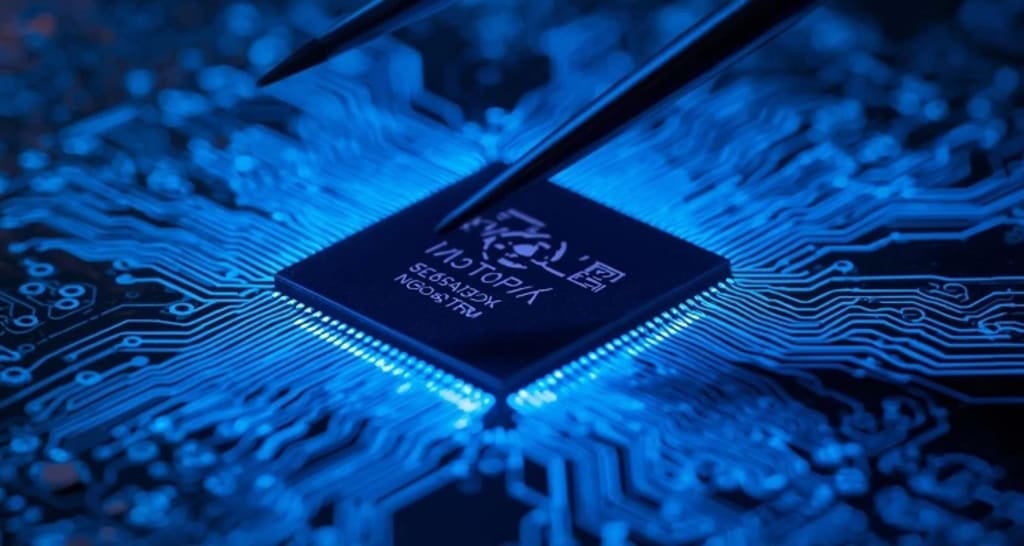
According to IMARC Group's latest research publication, Saudi Arabia semiconductor market size was valued at USD 6.20 Billion in 2024. The market is projected to reach USD 11.10 Billion by 2033, exhibiting a growth rate (CAGR) of 5.90% during 2025-2033.
How AI is Reshaping the Future of Saudi Arabia Semiconductor Market
- AI-Optimized Chip Design: Machine learning accelerates semiconductor design cycles, reducing time-to-market from 18 months to 12 months while optimizing power efficiency for data centers and edge computing.
- Predictive Manufacturing Analytics: AI-driven quality control systems detect defects during fabrication with 99 percent accuracy, minimizing waste and improving yield rates in local assembly and testing facilities.
- Smart Supply Chain Management: Advanced algorithms forecast semiconductor demand across automotive, telecom, and consumer electronics sectors, optimizing inventory levels and reducing procurement costs by 15-20 percent.
- Automated Testing and Validation: AI-powered systems perform real-time chip testing at NEOM and KACST facilities, identifying performance issues instantly and ensuring compliance with international quality standards.
- Energy-Efficient Chip Architecture: Neural networks design specialized processors consuming 30-40 percent less power, critical for Saudi Arabia's renewable energy initiatives and smart city infrastructure under Vision 2030.
How Vision 2030 is Revolutionizing Saudi Arabia Semiconductor Industry
Vision 2030 is transforming Saudi Arabia's semiconductor landscape through SAR 3.5 billion in government investment and the establishment of the National Semiconductor Hub, targeting 50 fabless chip design companies by 2030. The Research, Development, and Innovation Authority launched a comprehensive training program in September 2024 to develop 5,000 engineers in integrated circuit design, reducing dependence on foreign expertise. Strategic partnerships have accelerated technology transfer, with EdgeCortix establishing its Riyadh subsidiary in early 2025 and Groq securing USD 1.5 billion to expand data center operations in Dammam. The Kingdom aims for 50 percent local content sourcing in projects like Ceer's electric vehicle manufacturing, creating substantial opportunities for domestic chip suppliers. NEOM, The Red Sea Project, and Qiddiya smart city initiatives require advanced semiconductors for AI, IoT, and autonomous systems, driving an estimated USD 100 billion capital commitment through Alat Company's technology development programs.
Saudi Arabia Semiconductor Market Trends & Drivers:
The semiconductor market is experiencing rapid growth driven by 5G network deployment, with Saudi Arabia achieving 90 percent coverage in major urban locations and average speeds reaching 370.12 Mbps, primarily through STC Group's expansion to over 75 cities. The Kingdom operates 45 million IoT devices, projected to contribute USD 12 Billion in market value by 2030, creating massive demand for connectivity chips and sensors. LEAP 2025 technology conference in Riyadh attracted over USD 14.9 billion in AI investments, demonstrating international confidence in the Kingdom's semiconductor ecosystem. Approximately 92 percent of Saudi Arabia's population owned smartphones in 2024, according to Ubuy, driving consistent demand for advanced processors, memory chips, and display controllers. The government-backed USD 266 million deep tech venture capital fund supports semiconductor startups, while partnerships with global leaders including Nvidia, AMD, Qualcomm, and STMicroelectronics provide access to cutting-edge fabrication technologies and design expertise.
Electric vehicle adoption is reshaping semiconductor demand, with 70 percent of Saudi drivers expressing interest in battery-electric vehicles and 85 percent planning continued preference through 2035. Each EV requires USD 600-800 worth of semiconductors compared to USD 400 for conventional vehicles, translating into multi-hundred-million-dollar market expansion by mid-decade. Saudi consumers demonstrate the highest global awareness of Chinese EV brands at 93 percent, alongside strong acceptance of plug-in hybrid electric vehicles, positioning the Kingdom as a crucial automotive semiconductor market. Ceer's commitment to 45 percent local content sourcing intensifies supplier qualification opportunities for domestic design and packaging providers. The renewable energy sector drives specialized power semiconductor demand, with Saudi Arabia's green energy market valued at USD 1.02 Billion in 2024 and projected to reach USD 2.24 Billion by 2033, supporting solar panel inverters and wind turbine control systems requiring high-efficiency chips.
Healthcare digitization is accelerating semiconductor adoption through telemedicine platforms, AI-enabled diagnostics, and connected medical devices including wearable health monitors and robotic surgical tools. Smart hospitals and remote care initiatives require sophisticated chips for real-time data processing and secure patient information management. King Abdullah University of Science and Technology established the Center of Excellence for Generative AI alongside new semiconductor curricula, addressing the 24 percent increase in AI talent availability during 2024. Despite talent growth, competition remains intense for engineers experienced in sub-10 nm lithography, advanced packaging, and machine-learning accelerators. The Saudi Data and Artificial Intelligence Authority developed a National Strategy aiming to position Saudi Arabia among top AI nations by 2030, requiring domestic production capabilities for advanced computing hardware. US agreements removed export restrictions, enabling direct access to Nvidia H100 GPUs and AMD processors essential for large-scale AI model training.
Saudi Arabia Semiconductor Market Industry Segmentation:
The report has segmented the market into the following categories:
Component Insights:
- Memory Devices
- Logic Devices
- Analog IC
- MPU
- Discrete Power Devices
- MCU
- Sensors
- Others
Material Used Insights:
- Silicon Carbide
- Gallium Manganese Arsenide
- Copper Indium Gallium Selenide
- Molybdenum Disulfide
- Others
End User Insights:
- Automotive
- Industrial
- Data Center
- Telecommunication
- Consumer Electronics
- Aerospace and Defense
- Healthcare
- Others
Region Insights:
- Northern and Central Region
- Western Region
- Eastern Region
- Southern Region
Competitive Landscape:
The competitive landscape of the industry has also been examined along with the profiles of the key players.
Recent News and Developments in Saudi Arabia Semiconductor Market
- April 2025: Saudi Arabia launched its first Chipathon in Riyadh, organized by KACST and KAUST to advance innovation in semiconductor integrated circuit design. Over 250 students from 25 universities participated, developing solutions for IoT applications and addressing real-world chip design challenges in support of Vision 2030's semiconductor localization goals.
- May 2025: MemryX, a leading AI accelerator company, partnered with Saudi Arabia's National Semiconductor Hub to boost AI development capabilities. The partnership aligned with Vision 2030 objectives, with MemryX planning to expand operations, contribute to NEOM's digital infrastructure, and hire local talent in Riyadh.
- June 2025: Saudi Arabia launched the National Semiconductor Hub in Riyadh to establish a comprehensive semiconductor design ecosystem, targeting at least 50 companies by 2030. The initiative includes a SAR 1 billion venture capital fund and SAR 150 million technology support program, alongside plans to train 5,000 engineers and attract global semiconductor experts.
- July 2025: King Abdulaziz City for Science and Technology announced successful design and production of 25 advanced semiconductor chips through the Saudi Semiconductors Program. These chips support various applications including electronics and communications, demonstrating progress toward technological self-reliance under Vision 2030.
- August 2025: Humain, a Saudi AI company, announced construction of its first data centers in Riyadh and Dammam, scheduled to launch in early 2026. The centers will utilize semiconductors from Nvidia, with approval already secured for purchasing 18,000 AI chips to support Saudi Arabia's ambition to become a regional AI superpower under Vision 2030.
Note: If you require specific details, data, or insights that are not currently included in the scope of this report, we are happy to accommodate your request. As part of our customization service, we will gather and provide the additional information you need, tailored to your specific requirements. Please let us know your exact needs, and we will ensure the report is updated accordingly to meet your expectations.
About the Creator
Kishan Kumar
My name is Kishan Roy and I am a market analyst having 5 years of experience and a skilled researcher with a keen eye for consumer trends and data-driven insights.
Keep reading
More stories from Kishan Kumar and writers in Futurism and other communities.
Saudi Arabia Cosmetics Market: Halal Beauty, Digital Influence & Product Personalization
According to IMARC Group's latest research publication, Saudi Arabia cosmetics market size was valued at USD 3.97 Billion in 2025. The market is projected to reach USD 4.62 Billion by 2034, exhibiting a growth rate (CAGR) of 1.71% during 2026-2034.
By Kishan Kumar3 days ago in Futurism
About Binding Prometheus
I want to start actively advocating on behalf of my own work, and the most valuable part of my canon is, without a doubt, Binding Prometheus, the play I have been working on since 2019 and only finished in 2023 as part of my MA. The play itself is an amalgamation of a million different inspirations. On one end, it evokes the Ancient Greek myth-play, deriving its own title from the earliest extant work of Western drama we have, Aeschylus’s Prometheus Bound. On the other end, it borrows significantly from the sci-fi bulwarks from over the years, namely Mary Shelley’s Frankenstein and Karel Capek’s Rossum’s Universal Robots. The play could be an episode of Black Mirror, I fear. I don’t know. I’ve only ever seen one episode of Black Mirror.
By Steven Christopher McKnightabout a month ago in Futurism
In-Game Advertising Market: Interactive Ad Formats, Player Attention & Growth Outlook
The In-Game Advertising Market is rapidly growing as brands use AI and targeted ads to reach millions of engaged gamers across mobile, PC, console, and streaming platforms. According to IMARC Group's latest research publication, The global in-game advertising market size was valued at USD 60.6 Billion in 2024. Looking forward, IMARC Group estimates the market to reach USD 156.3 Billion by 2033, exhibiting a CAGR of 11.1% during 2025-2033.
By Olivia Smithabout 23 hours ago in Futurism
Off the Book
It ended like every other stupid idea. Badly, and alone. I’m researching digital confession ethics, he said. A tech ethicist. He gestured at floating data I couldn’t see then pulled out a physical notebook. Actual paper, fountain pen. He held it up like he was showing me scripture.
By Nicky Frankly2 days ago in Fiction


Comments
There are no comments for this story
Be the first to respond and start the conversation.