
Saudi Arabia Railway System Market: Vision 2030 Investments & Rail Network Development
How large-scale rail infrastructure investments, smart signaling systems, and integrated mobility planning are enhancing connectivity, operational efficiency, and long-term transport sustainability across the Saudi Arabia railway system market.

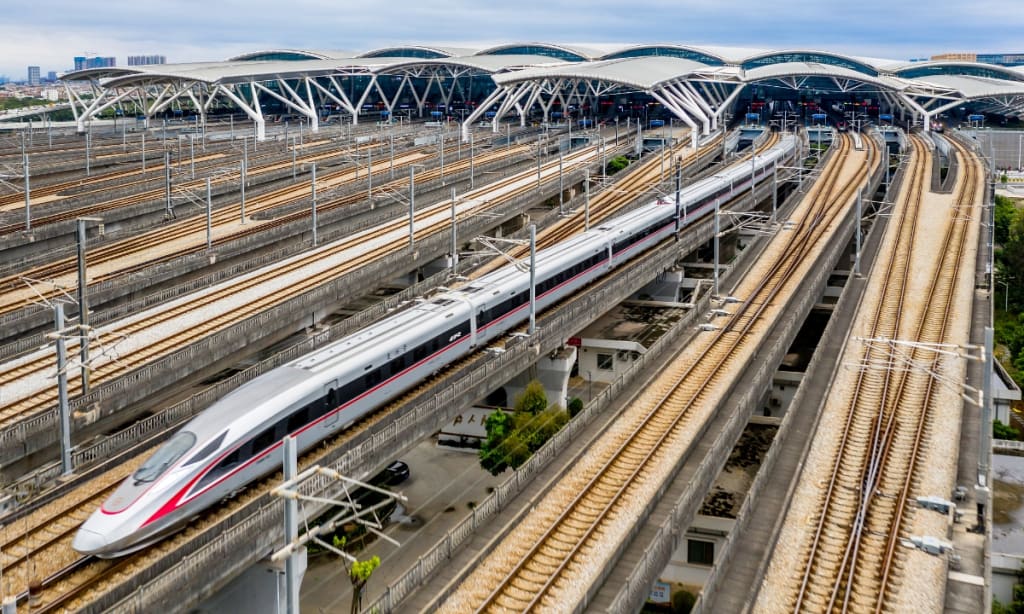
According to IMARC Group's latest research publication, Saudi Arabia Railway System Market size reached USD 266.1 Million in 2024. The market is projected to reach USD 379.0 Million by 2033, exhibiting a growth rate (CAGR) of 3.60% during 2025-2033.
How AI is Reshaping the Future of Saudi Arabia Railway System Market
- Predictive Maintenance and Downtime Reduction: SAR partnered with global rail technology firms to establish a Digital Maintenance Hub in Riyadh, where IoT sensors analyze data from hundreds of train cars in real-time, predicting faults and reducing unplanned downtime significantly.
- Smart Operations and Automated Systems: The Riyadh Metro deploys driverless trains with AI-driven automated signaling, optimizing efficiency and safety while digital twin models and 5G communications monitor track infrastructure remotely to enhance traffic flow.
- Real-Time Asset Monitoring: Alstom's digital maintenance platform enables predictive approaches for SAR's diesel locomotives on the east-west freight corridor, minimizing downtime and optimizing fleet availability to support the Kingdom's logistics ambitions under Vision 2030.
- Enhanced Safety and Defect Detection: Machine learning algorithms identify track defects including cracks, misalignments, and loose fastenings in real-time, improving safety standards across passenger and freight networks while reducing maintenance costs through proactive interventions.
- Data Analytics for Resource Optimization: Advanced analytics platforms process sensor data to optimize maintenance schedules, spare parts inventory, and workforce deployment, achieving up to 40% efficiency gains in monitoring and reducing reliance on manual verification processes.
How Vision 2030 is Revolutionizing Saudi Arabia Railway System Industry
Saudi Arabia's railway transformation is central to Vision 2030's economic diversification strategy, fundamentally reshaping national connectivity and logistics capabilities. In November 2024, the Ministry of Transport and Logistic Services announced a USD 4 billion investment to strengthen the domestic rail industry, aiming to raise local content in railway activities to 60% by 2025 while creating up to 3,000 jobs. The Kingdom plans to expand its network from approximately 5,300 kilometers to over 8,000 kilometers, with the $7 billion Cross-Kingdom Rail Corridor (Saudi Landbridge Project) connecting Jeddah to Dammam to enhance trade and logistics capabilities. Major urban projects including the Riyadh Metro—earning the Guinness Record as the world's longest driverless train with 176km across 85 stations—and planned Jeddah Metro systems are designed to serve millions of passengers daily, reducing congestion and emissions in rapidly urbanizing cities.
Download the Sample Report to Understand Market Trends and Outlook
Saudi Arabia Railway System Market Trends & Drivers:
Rapid urbanization across major cities including Riyadh, Jeddah, Mecca, and Dammam is accelerating demand for high-capacity public transportation networks as existing road infrastructure struggles with growing commuter volumes. Urban populations across the GCC region are projected to grow by 30 percent between 2020 and 2030, with Saudi Arabia experiencing particularly pronounced growth due to ongoing urban development programs. The Riyadh Metro and planned Jeddah Metro are structured to integrate with buses, ride-sharing services, and last-mile mobility platforms, offering millions of passengers accessible alternatives to car-based travel. These metro systems incorporate digital ticketing, real-time monitoring, and passenger information systems to improve user experience and encourage public transport adoption. Transit-oriented development principles are increasingly influencing city planning and infrastructure design in metropolitan areas, positioning rail connectivity as a cornerstone of sustainable urban growth.
Large-scale public investments under Saudi Arabia's national transformation plan are driving unprecedented railway expansion as the Kingdom prioritizes rail connectivity to diversify the economy and reduce oil revenue dependence. Public agencies including the Saudi Railway Company (SAR) and the Royal Commission for Riyadh City are managing multi-billion-dollar initiatives through public-private partnerships, foreign direct investment, and sovereign funding via the Public Investment Fund. In the first quarter of 2025, SAR reported transporting over 3.3 million passengers across its networks—marking a 24% increase compared to the same period in 2024—with more than 10,000 scheduled transits. The fourth quarter of 2025 saw passenger numbers reach 46.7 million, with the Haramain High-Speed Rail serving the religious corridor between Mecca and Medina, while freight operations moved over 7.4 million tons of minerals and goods in Q1 2025 alone, representing a 17% increase year-over-year. This coordinated government-led expansion is generating employment, attracting international railway operators, and improving intermodal logistics capabilities across the Kingdom while supporting sustainable transportation alternatives.
Advanced rail technologies and green mobility initiatives are positioning Saudi Arabia as a regional leader in modern railway operations and environmental sustainability. In 2024, the Kingdom became the first Middle Eastern country to test a hydrogen fuel cell train, the Alstom Coradia iLint, which emits only water vapor during operation. The National Transport and Logistics Strategy is breaking down silos between transport modes, enabling freight lines to seamlessly link with ports, airports, and roads through new logistics parks with unified customs and digital integration. Train stations are being designed with integrated access to buses, park-and-ride facilities, ride-hailing zones, and bicycle paths to improve first-to-last mile connectivity. The Saudi Railway Polytechnic trains young Saudis in railway engineering, operations, and maintenance, developing a skilled local workforce capable of designing and operating future network expansions. Railway expansion is enhancing Saudi Arabia's strategic position for regional connectivity, with potential future connections toward Jordan and long-term possibilities for links across the Red Sea to Egypt, strengthening the Kingdom's role as a logistics hub connecting three continents.
Saudi Arabia Railway System Market Industry Segmentation:
The report has segmented the market into the following categories:
Transit Type Insights:
- Conventional
- Diesel Locomotive
- Electric Locomotive
- Electro-Diesel Locomotive
- Coaches
- Rapid
- Diesel Multiple Unit (DMU)
- Electric Multiple Unit (EMU)
- Light Rail/Tram
System Type Insights:
- Auxiliary Power System
- Train Information System
- Propulsion System
- Train Safety System
- HVAC System
- On-Board Vehicle Control
Application Insights:
- Freight Transportation
- Passenger Transportation
Regional Insights:
- Northern and Central Region
- Western Region
- Eastern Region
- Southern Region
Competitive Landscape:
The competitive landscape of the industry has also been examined along with the profiles of the key players.
Recent News and Developments in Saudi Arabia Railway System Market
- October 2024: Saudi Arabia Railways (SAR) issued an Expression of Interest to global rail manufacturers for acquiring 15 new train sets, each comprising two power cars and five passenger coaches capable of speeds up to 200 km/h, plus eight additional power cars in reserve, designed to withstand extreme heat with amenities including Wi-Fi connectivity and advanced passenger information systems.
- November 2024: Saudi Railway Company (SAR) and Alstom announced a digital maintenance services agreement utilizing TrainScanner technology for predictive maintenance of diesel locomotives on the vital east-west freight corridor, enabling enhanced efficiency that directly supports Vision 2030's goal to strengthen Saudi Arabia's position as a global logistics hub.
- November 2024: The Ministry of Transport and Logistic Services confirmed a USD 4 Billion investment to strengthen the domestic rail industry, aiming to raise local content in railway activities to 60% by 2025, expected to create up to 3,000 jobs and enhance operational efficiency across the Kingdom's railway network.
- April 2025: SAR issued a public tender for Lead Design Consultancy Services for the Saudi Landbridge Railway Network, with the selected consultant responsible for Concept Design Stage and options to extend to Preliminary and Issued for Construction (IFC) Design Stages for a network exceeding 2,000 kilometers connecting the Red Sea to the east coast.
- Q4 2025: Saudi Arabia's railway sector reported transporting 46.7 million passengers during the fourth quarter, with more than 4 million tons of minerals and goods moved by rail, including 3.5 million tons via the Northern Line and approximately 439,000 tons plus 218,000 standard containers on the Eastern Line.
Note: If you require specific details, data, or insights that are not currently included in the scope of this report, we are happy to accommodate your request. As part of our customization service, we will gather and provide the additional information you need, tailored to your specific requirements. Please let us know your exact needs, and we will ensure the report is updated accordingly to meet your expectations.
About the Creator
Faisal Al-Harbi
Market research professional based in Saudi Arabia (KSA), focused on industry trends, market growth, and economic insights.
Writing data-driven articles on Saudi markets, business outlook, and Vision 2030–driven sectors.
Keep reading
More stories from Faisal Al-Harbi and writers in Futurism and other communities.
Saudi Arabia Renewable Energy Market: Clean Power Expansion, Investment Momentum & Outlook
According to IMARC Group's latest research publication, Saudi Arabia renewable energy market size reached 2.09 Gigawatt in 2025. The market is projected to reach 40.42 Gigawatt by 2034, exhibiting a growth rate of 35.07% during 2026-2034.
By Faisal Al-Harbi4 days ago in Futurism
About Binding Prometheus
I want to start actively advocating on behalf of my own work, and the most valuable part of my canon is, without a doubt, Binding Prometheus, the play I have been working on since 2019 and only finished in 2023 as part of my MA. The play itself is an amalgamation of a million different inspirations. On one end, it evokes the Ancient Greek myth-play, deriving its own title from the earliest extant work of Western drama we have, Aeschylus’s Prometheus Bound. On the other end, it borrows significantly from the sci-fi bulwarks from over the years, namely Mary Shelley’s Frankenstein and Karel Capek’s Rossum’s Universal Robots. The play could be an episode of Black Mirror, I fear. I don’t know. I’ve only ever seen one episode of Black Mirror.
By Steven Christopher McKnight26 days ago in Futurism
How Tampa Companies Avoid App Downtime During Rapid Growth?
Jonathan Pierce didn’t fear growth. He feared growth without warning. The company’s mobile app was gaining traction faster than forecast. Quarterly active users were up more than 40%. Transaction volume climbed week after week. Marketing campaigns that once felt ambitious now felt dangerous.
By Samantha Blakeabout 8 hours ago in Futurism


Comments
There are no comments for this story
Be the first to respond and start the conversation.