
Saudi Arabia Microgreens Market: Urban Farming, Health-Conscious Consumers & Growth Outlook
How controlled-environment farming, health-focused consumer preferences, and premium retail and foodservice demand are driving cultivation innovation, supply chain efficiency, and market growth across the Saudi Arabia microgreens market.

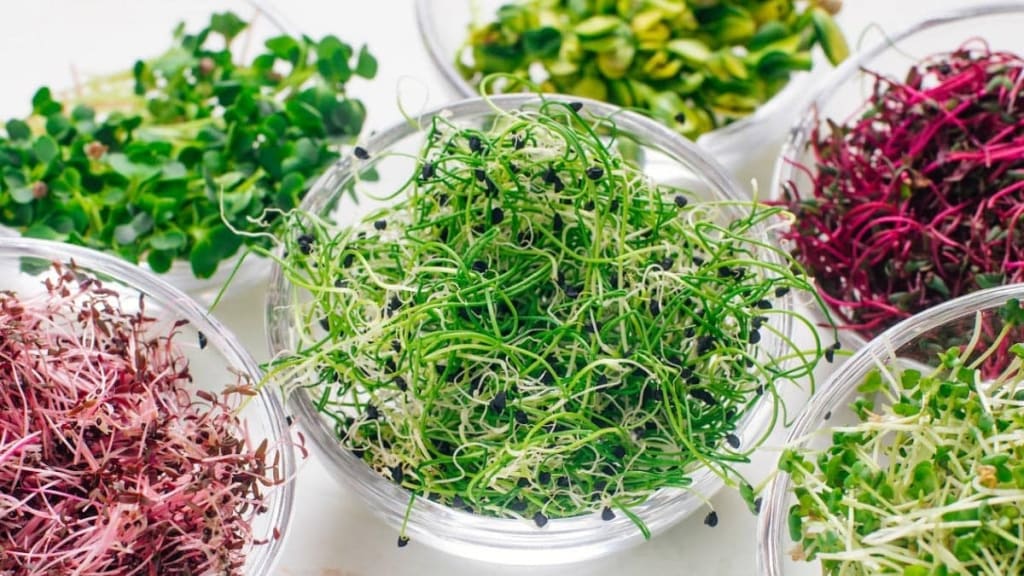
Saudi Arabia’s geography may be mostly desert, but a quiet agricultural revolution is changing what local farms can produce. Microgreens those tiny, nutrient-packed seedlings harvested just 7 to 21 days after germination are gaining serious traction across the Kingdom, fuelled by a health-conscious population, a booming hospitality industry, and government programmes squarely focused on food self-sufficiency. According to IMARC Group’s latest data, The Saudi Arabia microgreens market size reached USD 18.5 Million in 2025. Looking forward, IMARC Group expects the market to reach USD 41.4 Million by 2034, exhibiting a growth rate (CAGR) of 9.41% during 2026-2034.
Saudi Arabia’s microgreens sector remains small in absolute terms but is expanding faster than most regional food categories. Consumer demand is being shaped by rising nutritional awareness, the government’s ambitious Vision 2030 food-security agenda, and rapid growth in premium dining and hospitality. Controlled environment agriculture — particularly hydroponics and vertical farming — is proving especially well-suited to the country’s arid climate, where traditional open-field cultivation struggles. Key segments include broccoli, arugula, radish, basil, peas, cabbage, and cauliflower varieties, distributed through supermarkets, hypermarkets, retail stores, and direct foodservice channels, with end-use spanning both residential kitchens and commercial operators.
Saudi Arabia Microgreens Market Growth Drivers:
- Rising Health Consciousness and Nutritional Awareness
Microgreens contain up to 40% more vitamins, minerals, and antioxidants than their fully grown counterparts, making them attractive to a Saudi population that is increasingly managing diet-related conditions such as obesity and diabetes. Health spending in the Kingdom has grown consistently, and consumers are actively seeking out nutrient-dense, clean-label foods. Saudi Arabia’s fresh produce market was valued at USD 7.1 billion in 2025, and it is visibly shifting toward premium, functional options. Microgreens are benefiting directly from this trend, with the strongest demand coming from urban, younger consumers in Riyadh, Jeddah, and Dammam.
Government-Backed Food Security Programmes and Vision 2030 Investments
Vision 2030 has placed food security at the heart of Saudi Arabia’s economic transformation. The Ministry of Environment, Water and Agriculture has set a target to increase organic production by 300%, while the Agricultural Development Fund committed over USD 220 million (SAR 825 million) to advanced greenhouse development between 2021 and 2025, covering up to 70% of capital costs for qualifying projects. Saudi Arabia’s agricultural GDP hit a record SAR 114 billion in 2024. These subsidies and policy incentives make controlled-environment microgreens cultivation financially viable for a growing number of commercial operators.
- Expansion of Premium Hospitality and Fine Dining Demand
Saudi Arabia’s tourism and hospitality sector is scaling fast under Vision 2030, which targets 70 million inbound visitors annually. Inbound arrivals reached nearly 30 million in 2024, up from 27.4 million in 2023. Hotel average daily rates rose 35.6% and RevPAR climbed 43.9% by mid-2024. This surge is pushing restaurants and hotels to invest in premium ingredients, and microgreens — valued for both their nutritional profiles and their visual appeal on the plate — are becoming a standard feature in fine-dining kitchens and wellness-oriented menus across the Kingdom’s growing hospitality infrastructure.
Saudi Arabia Microgreens Market Trends:
- Rapid Adoption of Controlled Environment Agriculture (CEA)
Hydroponics and vertical farming have become the dominant growing methods in Saudi Arabia, mainly because they use roughly 90% less water than traditional agriculture — a decisive advantage in a country where farming accounts for 80% of national freshwater consumption. Controlled environment agriculture expanded to 12,000 hectares of greenhouse and hydroponic capacity by 2024. High-profile developments include a Public Investment Fund joint venture with AeroFarms to build indoor vertical farms capable of producing up to 1.1 million kg of crops annually, reinforcing the infrastructure that makes consistent, year-round microgreens production practical.
- NEOM and Large-Scale Agri-Tech Projects Shaping Supply
NEOM’s food division, Topian, has completed high-tech greenhouses in Oxagon and Tabuk and is piloting vertical farms that use AI modelling to optimise yields. The project aims to produce 600,000 metric tonnes of sustainable food annually by 2030. In April 2024, Tabuk Agricultural Development Co. signed an MoU with Topian to develop a 100-hectare hydroponic greenhouse in Tabuk for supplying local markets. These landmark projects are creating the distribution channels and technology ecosystems through which specialty crops like microgreens can scale from niche to mainstream across the Kingdom.
- Growing E-Commerce and Retail Distribution for Fresh Produce
With a smartphone penetration rate of 95%, Saudi consumers are comfortable buying fresh produce online, and retailers have responded by expanding premium product ranges. Annual investment of SAR 20 billion (USD 5.3 billion) in cold-chain infrastructure and controlled-environment farming is improving shelf life and availability. Supermarkets and hypermarkets currently lead microgreens distribution, but retail stores and direct-to-consumer online channels are growing quickly. The foodservice sector globally accounts for over 60% of microgreens demand, a ratio that Saudi Arabia’s fast-growing hospitality industry is helping to replicate domestically.
Recent News and Developments in Saudi Arabia Microgreens Market
- April 2024: Tabuk Agricultural Development Co. signed a non-binding MoU with TOPIAN, NEOM’s food company, to develop a 100-hectare hydroponic greenhouse project in Tabuk, Saudi Arabia. Tabuk will provide land, utilities, and infrastructure support, while Topian will manage design, technical operations, staffing, and sales. The facility aims to supply fruits and vegetables — including specialty crops such as microgreens — to local markets, aligned with NEOM’s self-sufficiency goals.
- April 2024: Koppert advanced its biological crop protection strategy through close collaboration with growers and continued innovation in application methods. The company focuses on simplifying the use of biological solutions and improving grower efficiency through digital twin simulations and flexible release systems, supporting sustainable and productive farming practices across diverse crops and regions, including Saudi Arabia’s growing CEA segment.
- December 2023: Pure Harvest Smart Farms, a UAE-based controlled-environment agriculture company, announced the strategic acquisition of Red Sea’s CEA production facility in Saudi Arabia to strengthen its farm footprint in the country. The move positions the company to scale output of high-value crops, including leafy greens and microgreens, for the Kingdom’s premium hospitality and retail channels.
- 2023: Saudi Arabia’s Public Investment Fund (PIF) signed a joint venture agreement with AeroFarms, a US-based sustainable agriculture company, to build indoor vertical farms across the Middle East. The first facility in Saudi Arabia is expected to have an annual production capacity of up to 1.1 million kg of crops, encompassing specialty items such as microgreens, backed by the Kingdom’s USD 620 billion sovereign wealth fund.
Note: If you require specific details, data, or insights that are not currently included in the scope of this report, we are happy to accommodate your request. As part of our customization service, we will gather and provide the additional information you need, tailored to your specific requirements. Please let us know your exact needs, and we will ensure the report is updated accordingly to meet your expectations.
About the Creator
Shubham Sharma
Market research enthusiast sharing insights on global industries, emerging trends, growth opportunities, and data-driven analysis across diverse markets.
Keep reading
More stories from Shubham Sharma and writers in Futurism and other communities.
Saudi Arabia Nanotechnology Market: Advanced Materials, R&D Investments & Growth Outlook
Growing investments in R&D, Vision 2030-driven diversification, and the rising integration of nanotechnology across healthcare, energy, and advanced manufacturing are fueling demand in Saudi Arabia. According to IMARC Group’s latest data, the Saudi Arabia nanotechnology market size reached USD 130.6 Million in 2025. Looking forward, IMARC Group expects the market to reach USD 1,150.7 Million by 2034, exhibiting a growth rate (CAGR) of 27.35% during 2026–2034.
By Shubham Sharma about 13 hours ago in Futurism
Low Density Polyethylene (LDPE) Market Outlook: Packaging Demand and Growth Opportunities
According to IMARC Group's latest research publication, The global low density polyethylene market size reached USD 47.3 Billion in 2024. Looking forward, IMARC Group expects the market to reach USD 67.4 Billion by 2033, exhibiting a growth rate (CAGR) of 3.8% during 2025-2033.
By Michael Richard6 days ago in Futurism
Australia E-Invoicing Market: Digital Adoption, Regulatory Mandates & Business Efficiency
According to IMARC Group, the Australia e-invoicing market reached a value of USD 512.9 Million in 2025 and is projected to expand significantly to USD 1,854.5 Million by 2034, exhibiting a strong compound annual growth rate (CAGR) of 14.89% during 2026–2034. This rapid growth reflects the accelerating digital transformation of financial processes across businesses in Australia. E-invoicing is moving beyond basic digitization of paper invoices toward fully automated, interoperable systems that streamline accounts payable and receivable operations. Government mandates, regulatory standardization and enterprise-level efficiency goals are collectively reshaping invoicing into a strategic digital infrastructure component. As organizations pursue cost savings, faster payment cycles and error reduction, e-invoicing adoption is becoming integral to modern business operations.
By Shrestha Roy6 days ago in Futurism




Comments
There are no comments for this story
Be the first to respond and start the conversation.