
Saudi Arabia Green Energy Market: Renewable Power Expansion, Energy Transition & Sustainability Goals
How renewable energy adoption, clean power investments, carbon reduction initiatives, and Vision 2030 goals are driving sustainable growth across the Saudi Arabia green energy market.

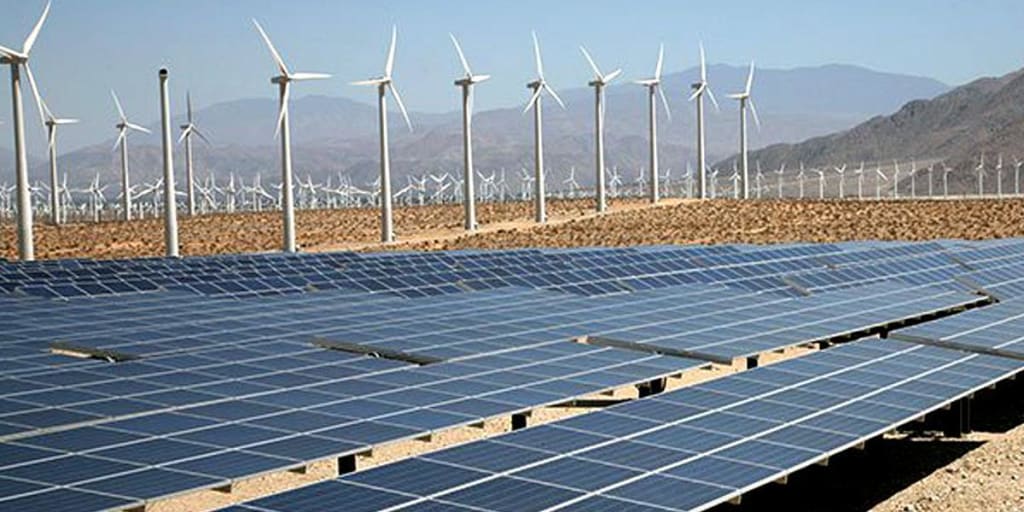
According to IMARC Group's latest research publication, the Saudi Arabia green energy market size was valued at USD 1.11 Billion in 2025 and is projected to reach USD 2.35 Billion by 2034, growing at a compound annual growth rate of 8.65% from 2026-2034.
How AI is Reshaping the Future of Saudi Arabia Green Energy Market
- Predictive Solar and Wind Power Forecasting: AI-driven algorithms analyze weather patterns and historical data to optimize energy generation forecasts, enhancing grid stability and improving dispatch efficiency for renewable facilities across the Kingdom.
- Smart Grid Optimization and Load Management: Machine learning systems dynamically balance electricity supply and demand in real-time, enabling higher renewable penetration rates while maintaining power quality and reducing transmission losses throughout the national network.
- Automated Maintenance and Defect Detection: Computer vision identifies equipment degradation at solar farms and wind facilities instantly, reducing downtime and maintenance costs by predicting failures before they occur, extending asset lifespan significantly.
Get a Sample Report Covering Market Size, Share, and Outlook
How Vision 2030 is Revolutionizing Saudi Arabia Green Energy Industry
Vision 2030 is fundamentally transforming Saudi Arabia's energy sector from an oil-dominant system into a diversified clean power ecosystem. The national program has unlocked $32 billion in renewable investments through clear policy frameworks that attract global developers and technology partners. Government-backed competitive auctions have driven renewable electricity costs down to record lows—as low as SAR 0.0484 per kWh for solar projects—making clean energy economically compelling. Strategic initiatives like the National Renewable Energy Program have contracted 43 GW of projects, with 10.2 GW already connected to the grid and another 33 GW in development. The Public Investment Fund's mandate to deliver 70% of national renewable capacity creates coordinated execution across state entities, while localization requirements are building domestic manufacturing and technical capabilities. Vision 2030 also prioritizes mega-projects like NEOM's green hydrogen facility and establishes ambitious targets—50% renewable electricity and net-zero emissions by specified future dates—positioning Saudi Arabia as a regional clean energy hub and global green hydrogen exporter.
Saudi Arabia Green Energy Market Trends & Drivers:
Large-scale project development is accelerating renewable deployment across the Kingdom at unprecedented speed. In July, ACWA Power, Badeel, and Saudi Aramco Power Company signed power purchase agreements worth $8.3 billion for 15 GW of new capacity—five solar plants and two wind farms—representing the largest single-phase renewable energy signing globally. The projects include the 3 GW Bisha solar plant in Asir and the 3 GW Humaij facility in Madinah, with operations starting between late 2027 and early 2028. By year-end, operational renewable capacity is expected to reach 12.7 GW, jumping to over 20 GW by the following year. The Kingdom is deploying solar faster than any country in history, breaking into the top 10 global markets for annual solar additions in the current year. Competitive auctions under the National Renewable Energy Program have awarded projects totaling 38 GW, with record-low electricity costs attracting major international developers including Masdar, TotalEnergies, EDF, and Korea Electric Power Corporation.
Industrial decarbonization and corporate sustainability commitments are driving substantial renewable energy adoption across manufacturing and heavy industry sectors. Energy-intensive operations—petrochemical plants, cement facilities, mining, and desalination complexes—are increasingly securing dedicated renewable power through long-term agreements to reduce costs and meet environmental targets. In November 2024, ENGIE signed a power purchase agreement with Al Jouf Cement Company to build a 22 MW solar plant at its northern facility, demonstrating how industrial consumers are proactively transitioning to clean energy. Multinational corporations operating in Saudi Arabia are aligning operations with global ESG standards, accelerating renewable adoption to meet sustainability reporting requirements. The Kingdom's strategic focus on developing industrial cities and manufacturing hubs creates concentrated demand clusters ideal for large-scale renewable installations. Rising electricity tariffs have improved renewable project economics for industrial users, while power purchase agreements provide stable, predictable energy costs insulated from fuel price volatility, making clean energy both environmentally and economically attractive.
Energy storage deployment and grid integration technologies are becoming critical enablers of renewable expansion across the national electricity network. Saudi Arabia currently operates four battery energy storage systems with 8 GWh of capacity (2 GW), with an additional 5.5 GW (22 GWh) under development to reach a national target of 48 GWh by the end of the decade. These large-scale battery installations enhance grid flexibility, enable higher renewable penetration, and provide reliable power during demand peaks and generation fluctuations. Aramco and ACWA Power are collaborating on AI-driven energy forecasting and vanadium flow battery testing to optimize long-duration storage in Saudi climatic conditions. Smart grid infrastructure investments support real-time load balancing and distributed energy management, reducing transmission constraints that previously limited renewable integration. The combination of utility-scale storage, advanced forecasting, and grid modernization is transforming intermittent solar and wind resources into dependable baseload alternatives, accelerating the displacement of fossil fuel generation and supporting the Kingdom's transition toward a clean, resilient power system.
Saudi Arabia Green Energy Market Industry Segmentation:
The report has segmented the market into the following categories:
Type Insights:
- Solar Energy
- Wind Energy
- Hydroelectric Energy
- Bio Energy
- Others
End-Users Insights:
- Residential
- Commercial
- Industrial
Regional Insights:
- Northern and Central Region
- Western Region
- Eastern Region
- Southern Region
Competitive Landscape:
The competitive landscape of the industry has also been examined along with the profiles of the key players.
Recent News and Developments in Saudi Arabia Green Energy Market
- November 2025: ACWA Power reached financial close on the 15 GW renewable energy portfolio with financing agreements valued at SAR 22.34 billion, accelerating execution of the Kingdom's largest renewable energy development phase under the National Renewable Energy Program.
- October 2025: Saudi Power Procurement Company awarded five renewable projects totaling 4.5 GW worth over $2.4 billion to developers including Masdar, TotalEnergies, and EDF, comprising solar plants in Najran, Ad Darb, Samtah, and Sufun, plus the 1.5 GW Dawadmi wind project.
- August 2025: ACWA Power commenced commercial operations at three solar plants—Al Kahfah (1,425 MW), Al-Rass 2 (1,000 MW), and SAAD 2 (365.7 MW)—adding 2.79 GW to the national grid and advancing Saudi Arabia's renewable electricity generation capacity.
- July 2025: ACWA Power, Badeel, and Saudi Aramco Power Company signed power purchase agreements valued at approximately $8.3 billion with Saudi Power Procurement Company to develop seven renewable plants totaling 15,000 MW, including five solar projects (Bisha, Humaij, Khulis, Afif1, Afif2) and two wind projects (Starah, Shaqra).
- May 2025: Aramco and ACWA Power signed agreements to develop AI-driven photovoltaic energy forecasting technology, assess vanadium flow battery storage systems, and advance green hydrogen production capabilities through partnerships with Hysata and King Abdullah University of Science and Technology.
Note: If you require specific details, data, or insights that are not currently included in the scope of this report, we are happy to accommodate your request. As part of our customization service, we will gather and provide the additional information you need, tailored to your specific requirements. Please let us know your exact needs, and we will ensure the report is updated accordingly to meet your expectations.
About the Creator
Jeffrey Wilson
Hello, I’m Jeffrey Wilson, a market research specialist with over 9 years of experience in uncovering consumer insights and driving data-backed strategies.
Keep reading
More stories from Jeffrey Wilson and writers in Futurism and other communities.
Saudi Arabia Edge Data Center Market: Low-Latency Computing, 5G Rollout & Digital Expansion
According to IMARC Group's latest research publication, Saudi Arabia edge data center market size reached USD 115.20 Million in 2024. The market is projected to reach USD 490.94 Million by 2033, exhibiting a growth rate (CAGR) of 15.60% during 2025-2033.
By Jeffrey Wilsonabout 7 hours ago in Futurism
About Binding Prometheus
I want to start actively advocating on behalf of my own work, and the most valuable part of my canon is, without a doubt, Binding Prometheus, the play I have been working on since 2019 and only finished in 2023 as part of my MA. The play itself is an amalgamation of a million different inspirations. On one end, it evokes the Ancient Greek myth-play, deriving its own title from the earliest extant work of Western drama we have, Aeschylus’s Prometheus Bound. On the other end, it borrows significantly from the sci-fi bulwarks from over the years, namely Mary Shelley’s Frankenstein and Karel Capek’s Rossum’s Universal Robots. The play could be an episode of Black Mirror, I fear. I don’t know. I’ve only ever seen one episode of Black Mirror.
By Steven Christopher McKnight20 days ago in Futurism



Comments
There are no comments for this story
Be the first to respond and start the conversation.