
Saudi Arabia Facility Management Market: Integrated Services & Operational Efficiency Focus
How integrated service models, smart building technologies, and sustainability-driven operations are enhancing asset performance, cost control, and service quality across the Saudi Arabia facility management market.


According to IMARC Group's latest research publication, Saudi Arabia facility management market size reached USD 730 Million in 2024. The market is projected to reach USD 1,540 Million by 2033, exhibiting a growth rate (CAGR) of 8.60% during 2025-2033.
How AI is Reshaping the Future of Saudi Arabia Facility Management Market
- Smart Building Automation: AI-powered building management systems enable real-time monitoring and predictive maintenance capabilities, cutting operational costs by 30% while ensuring peak performance across commercial and government facilities throughout Saudi Arabia.
- Predictive Maintenance Solutions: Machine learning algorithms analyze equipment data to forecast maintenance needs before failures happen, reducing downtime by 40% and extending asset lifecycles in industrial operations and commercial properties across the Kingdom.
- Energy Optimization Systems: AI-driven energy management platforms automatically adjust HVAC, lighting, and building systems based on occupancy patterns and weather conditions, achieving 25-35% energy savings aligned with Saudi Arabia's sustainability targets under Vision 2030.
- Automated Service Delivery: Robotics and AI-powered cleaning systems are reshaping janitorial and maintenance services in high-traffic facilities like airports, hospitals, and shopping centers, ensuring consistent service quality while reducing labor costs.
- Data-Driven Space Management: AI analytics platforms optimize space utilization by analyzing occupancy patterns and usage data, helping organizations maximize their real estate investments and improve workplace efficiency in Saudi Arabia's rapidly expanding urban centers.
How Vision 2030 is Revolutionizing Saudi Arabia Facility Management Industry
Vision 2030 is fundamentally transforming Saudi Arabia's facility management landscape through massive infrastructure investments exceeding USD 500 billion. Mega-projects like NEOM, The Red Sea Project, Qiddiya, and Diriyah are creating unprecedented demand for sophisticated facility management services that ensure these developments operate efficiently and sustainably. The government's push toward smart city development is accelerating the adoption of IoT, AI, and advanced analytics in facility operations, with 96% of government services now digitalized. This transformation is further supported by the SR1 billion green financing program launched in 2025, encouraging private sector investment in eco-friendly facility management solutions. The combination of infrastructure expansion, technological modernization, and sustainability mandates is positioning facility management as a strategic enabler rather than just a support function, driving the sector toward professional excellence and international standards.
Explore Market Growth Opportunities with a Free Sample Report
Saudi Arabia Facility Management Market Trends & Drivers:
Increasing Construction and Infrastructure Expansion: The facility management market is experiencing robust growth driven by Saudi Arabia's massive construction and infrastructure boom under Vision 2030. Large-scale projects spanning residential, commercial, and industrial developments are generating substantial demand for comprehensive facility management services. Landmark mega-projects including airports, highways, sports facilities, and entire new cities require specialized maintenance, cleaning, security, and operational services to remain functional and sustainable. NEOM alone represents a USD 500 billion investment requiring integrated facility management across its various zones. The King Salman International Airport, designed to handle 120 million passengers annually, demands continuous upkeep of HVAC, power distribution, and fire safety systems. The rapid urbanization rate has reached 88% in 2025, up from 83% in 2020, driving the development of new economic zones that all require professional facility management to optimize asset performance and extend infrastructure lifecycles.
Technological Advancements and Smart Building Integration: Technology innovation is fundamentally reshaping the facility management market through the growing emphasis on smart building integration and automation. The implementation of AI, IoT, and automated systems is enhancing operational efficiencies, optimizing energy usage, and transforming maintenance cycles across the Kingdom. Organizations are investing heavily in smart technology solutions that provide real-time monitoring, predictive maintenance, and automated reporting to enhance overall facility performance. The integration of sophisticated building management systems enables facility managers to operate buildings more efficiently and sustainably. The Public Investment Fund launched Humain in 2024 with plans to allocate USD 100 billion by 2030 toward cutting-edge technologies including AI, semiconductors, robotics, and intelligent urban development. Major facility management providers began integrating IoT-enabled predictive maintenance systems across commercial and government buildings in Riyadh and Jeddah in February 2025, resulting in a 40% reduction in equipment downtime and 25% decrease in maintenance costs.
Emphasis on Sustainability and Energy Efficiency: Growing environmental consciousness and sustainable operations are significantly influencing market dynamics as building owners, developers, and occupants increasingly prioritize energy-efficient systems and environmentally responsible operations. The Saudi government introduced a SR1 billion green financing program in January 2025 to boost private sector investments in eco-friendly initiatives aligned with Vision 2030. Facility management firms are incorporating green technologies including energy-efficient lighting, renewable energy solutions, and waste minimization programs into their service portfolios. Over 40% of new construction projects are incorporating green building practices according to the Saudi Green Building Forum, creating surging demand for facility management services specializing in sustainable operations. The Mostadam rating system and Green Building Code have transitioned from voluntary practice to contractual obligation, making ESG compliance a core revenue stream for facility managers. Government regulations and international environmental standards are encouraging facility management companies to adopt practices that lower carbon footprints while ensuring long-term sustainability and operational excellence throughout the Kingdom's built environment.
Saudi Arabia Facility Management Market Industry Segmentation:
The report has segmented the market into the following categories:
Type of Facility Management Insights:
- In-house Facility Management
- Outsourced Facility Management
- Single FM
- Bundled FM
- Integrated FM
Offering Type Insights:
- Hard FM
- Soft FM
End Use Industry Insights:
- Commercial and Retail
- Manufacturing and Industrial
- Government, Infrastructure, and Public Entities
- Institutional
- Others
Regional Insights:
- Northern and Central Region
- Western Region
- Eastern Region
- Southern Region
Competitive Landscape:
The competitive landscape of the industry has also been examined along with the profiles of the key players.
Recent News and Developments in Saudi Arabia Facility Management Market
- June 2025: The National Fire Protection Association (NFPA) entered into a Memorandum of Understanding with the Saudi Facility Management Association (SFMA) to raise fire safety standards throughout the Kingdom, signed in Riyadh by Olga Caledonia and Aiyd A. Alqahtani.
- May 2025: Crown Prince Mohammed bin Salman announced the establishment of HUMAIN, a PIF-owned operating company that will invest and operate along the AI value chain, delivering end-to-end AI solutions, products, and tools including next-generation data centers and AI infrastructure.
- March 2025: CBRE Middle East introduced the Kingdom's first-ever package of intelligent and sustainable Facilities Management solutions to the KSA market during its Vision 2030 Focus Forum, introducing groundbreaking FM services intended to enhance operational efficiency and sustainability.
- March 2025: AlMajal AlArabi Group (MAG), Saudi Arabia's top integrated facility management service provider, participated in the high-profile FM Expo Saudi, co-located alongside Big 5 Construct Saudi at Riyadh Front Exhibition & Conference Center.
- February 2025: PwC Middle East and the Saudi Facility Management Association launched a report highlighting the sector's projected value to exceed USD 50 billion in 2024, with an annual growth rate of 7% between 2025 and 2032.
- February 2025: Major facility management providers began integrating IoT-enabled predictive maintenance systems across commercial and government buildings in Riyadh and Jeddah, resulting in 40% reduction in equipment downtime and 25% decrease in maintenance costs.
- January 2025: The Saudi government introduced a green financing program valued at SR1 billion (USD 266.6 million) to boost private sector investments in eco-friendly initiatives, driving facility management companies to adopt sustainable technologies and energy-efficient building operations.
- January 2025: NEOM awarded a SAR 20 billion dam package at Trojena, underscoring the scale of future maintenance demand within the mountainous resort zone.
Note: If you require specific details, data, or insights that are not currently included in the scope of this report, we are happy to accommodate your request. As part of our customization service, we will gather and provide the additional information you need, tailored to your specific requirements. Please let us know your exact needs, and we will ensure the report is updated accordingly to meet your expectations.
About the Creator
Faisal Al-Harbi
Market research professional based in Saudi Arabia (KSA), focused on industry trends, market growth, and economic insights.
Writing data-driven articles on Saudi markets, business outlook, and Vision 2030–driven sectors.
Keep reading
More stories from Faisal Al-Harbi and writers in Futurism and other communities.
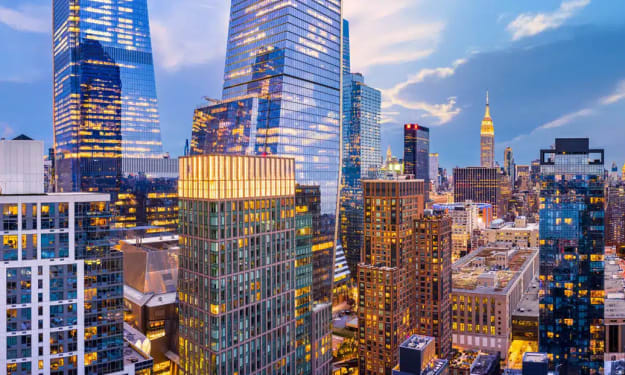
Saudi Arabia Commercial Real Estate Market: Vision 2030 Projects & Investment Growth
According to IMARC Group's latest research publication, Saudi Arabia commercial real estate market size reached USD 67.5 Billion in 2024. The market is projected to reach USD 90.9 Billion by 2033, exhibiting a growth rate of 3.35% during 2025-2033.
By Faisal Al-Harbiabout 2 hours ago in Futurism
About Binding Prometheus
I want to start actively advocating on behalf of my own work, and the most valuable part of my canon is, without a doubt, Binding Prometheus, the play I have been working on since 2019 and only finished in 2023 as part of my MA. The play itself is an amalgamation of a million different inspirations. On one end, it evokes the Ancient Greek myth-play, deriving its own title from the earliest extant work of Western drama we have, Aeschylus’s Prometheus Bound. On the other end, it borrows significantly from the sci-fi bulwarks from over the years, namely Mary Shelley’s Frankenstein and Karel Capek’s Rossum’s Universal Robots. The play could be an episode of Black Mirror, I fear. I don’t know. I’ve only ever seen one episode of Black Mirror.
By Steven Christopher McKnight27 days ago in Futurism
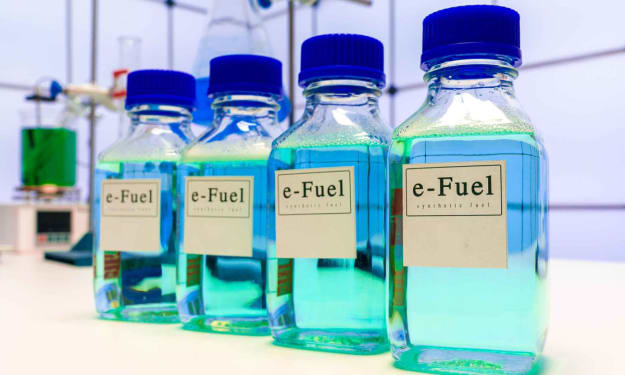
E-Fuel Market: Renewable Energy Integration, Power-to-Liquid Technology & Market Forecast
According to IMARC Group's latest research publication, the global e-fuel market size is projected to exhibit a growth rate (CAGR) of 29.43% during 2025-2033. The increasing demand for renewable energy solutions, technological advancements and innovations, introduction of favorable government policies and incentives, and the growing automotive industry emphasis on clean energy represent some of the factors that are propelling the market.
By sujeet. imarcgroupa day ago in Futurism


Comments
There are no comments for this story
Be the first to respond and start the conversation.