
Saudi Arabia Construction Robots Market: Automation in Mega Projects, Smart Building & Growth Outlook
How automation-driven site operations, AI-enabled precision robotics, and rising mega infrastructure projects are improving safety, productivity, and project efficiency across the Saudi Arabia construction robots market.

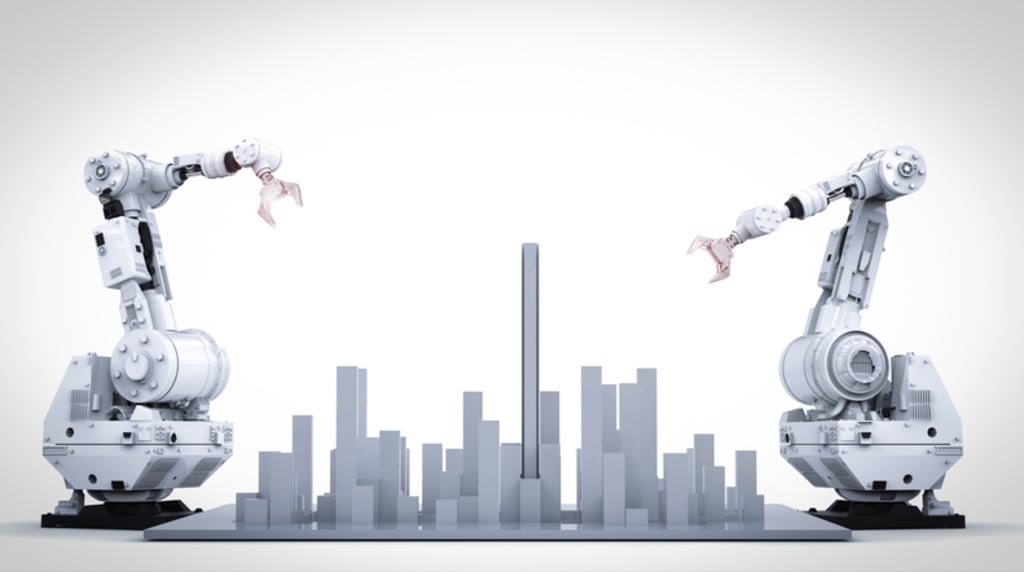
Saudi Arabia's construction industry is witnessing a technological transformation as robots take center stage. Driven by massive infrastructure projects under Vision 2030, mounting labor challenges, and a push for efficiency and safety, the construction robotics sector is experiencing explosive growth. The integration of automation, 3D printing, and robotic material handling is simplifying complex construction workflows while cutting operational costs. According to IMARC Group's latest data, the Saudi Arabia construction robots market size reached USD 1,802.2 Million in 2025. Looking forward, IMARC Group expects the market to reach USD 5,254.4 Million by 2034, exhibiting a growth rate of 12.63% from 2026-2034.
Construction robots are reshaping how Saudi Arabia builds its future. From automated bricklaying and rebar assembly to 3D-printed structures and precision finishing work, these machines are tackling labor-intensive tasks with remarkable speed and accuracy. The market covers various functions including demolition, bricklaying, 3D printing, concrete structural erection, finishing work, and doors and windows installation. In terms of robot types, the sector utilizes traditional robots, robotic arms, and exoskeletons across industrial, residential, and commercial end-use segments. Robots are no longer just novelties on construction sites; they're becoming essential tools addressing real-world challenges like worker shortages, extreme heat conditions, and the need for faster project completion.
Saudi Arabia Construction Robots Market Growth Drivers:
- Vision 2030 Mega-Projects Fueling Demand
Saudi Arabia's ambitious Vision 2030 program is driving unprecedented construction activity across the Kingdom. Projects like NEOM, The Line, Qiddiya, and the Red Sea Development represent over $1.5 trillion in active construction developments. NEOM alone, valued at $500 billion, is pioneering robotic integration through partnerships with companies like GMT Robotics and Samsung C&T. In December 2024, NEOM signed a joint venture worth over 1.3 billion Saudi riyals with Samsung C&T to automate rebar cage assembly, creating more than 2,000 skilled jobs. These giga-projects demand speed, precision, and scale that traditional construction methods struggle to deliver, making robotics not just beneficial but essential for meeting ambitious timelines and quality standards.
- Acute Labor Shortages and Workforce Constraints
The Kingdom faces significant skilled labor shortages as construction activity accelerates. Saudi Arabia plans to recruit over 175,000 professionals across various sectors by 2030, but the construction industry struggles to fill specialized roles. The extreme climate, with summer temperatures averaging 106 degrees Fahrenheit, creates additional challenges for human workers. Robotics offers a practical solution by handling physically demanding and repetitive tasks like material handling, rebar tying, and structural assembly. Automated systems can reduce onsite workforce requirements by up to 90% through offsite prefabrication, addressing both the labor shortage and the harsh working conditions that make construction particularly challenging in the region.
- Enhanced Safety and Cost Efficiency
Construction robotics significantly improves workplace safety while reducing costs. By automating high-risk tasks like working at heights, handling heavy materials, and operating in hazardous environments, robots minimize worker exposure to dangerous conditions. The economic benefits are substantial, with automation reducing manual labor hours by up to 80% and cutting costs by as much as 40% compared to traditional methods. Studies indicate that robotics and artificial intelligence could add over $135 billion to Saudi Arabia's economy by 2030 through improved productivity and reduced operational expenses. For contractors managing complex projects under tight budgets, these efficiency gains make robotics an increasingly attractive investment despite initial setup costs.
Saudi Arabia Construction Robots Market Trends:
- Localized Manufacturing and Technology Transfer
Saudi Arabia is moving beyond simply importing construction robots to establishing domestic manufacturing capabilities. The partnership between NEOM and GMT Robotics involves localizing robotic rebar cage assembly technology in NEOM-based factories, providing Saudi engineers with hands-on experience in construction robotics. This approach aligns with Vision 2030's economic diversification goals by developing high-tech manufacturing sectors within the Kingdom. The strategy creates sustainable employment opportunities while building local expertise in advanced robotics. By 2025, the number of robotics companies registered in Saudi Arabia jumped by over 50%, demonstrating the sector's rapid expansion. This localization trend reduces dependence on imports, ensures readily available robotic systems, and positions the Kingdom as a regional hub for construction technology innovation.
- AI-Powered Project Management Integration
The construction sector is embracing artificial intelligence alongside robotics to optimize project delivery. According to industry reports, 57% of construction professionals in Saudi Arabia identify AI as the most significant trend shaping the industry, with 60% already integrating AI-powered project management tools. These systems work in tandem with construction robots to improve scheduling, resource allocation, and predictive maintenance. Projects like Qiddiya are setting new standards by combining AI-powered management tools with Building Information Modeling to enable real-time progress tracking and optimized resource planning. The synergy between robotic execution and AI-driven oversight creates a more connected, efficient, and responsive construction ecosystem that can adapt quickly to challenges and opportunities.
- Expansion Beyond Traditional Applications
Construction robotics in Saudi Arabia is evolving from basic material handling to sophisticated applications across the entire building lifecycle. Robots now perform precision tasks like MEP drilling, painting facade walls, automated site inspections, and modular construction assembly. The use of drones for surveying and monitoring is becoming standard practice, while 3D printing technology is being explored for creating entire structural components. Advanced robotic systems equipped with real-time sensors can respond to obstacles and adjust movements, improving both safety and accuracy. Through 2025 and beyond, the industry is expected to expand into nascent technologies like autonomous equipment operation and collaborative robots that work safely alongside human workers, fundamentally changing how construction sites operate.
Recent News and Developments in Saudi Arabia Construction Robots Market
- December 2024: NEOM's investment arm, the NEOM Investment Fund, announced a strategic partnership with GMT Robotics to localize robotic rebar cage assembly technology. The collaboration aims to integrate advanced robotic systems into the region's construction projects, with rebar cages fabricated in NEOM-based factories. This investment reflects NEOM's commitment to driving transformative technologies, reducing onsite workforce demands by up to 90%, and providing Saudi engineers with hands-on robotics experience.
- December 2024: NEOM signed a joint venture agreement with Samsung C&T Corporation to unlock an initial investment exceeding 1.3 billion Saudi riyals ($350 million) in construction robotics. The partnership focuses on automating rebar cage assembly through advanced robotic welding and tying techniques, establishing factories in NEOM that will create more than 2,000 highly skilled jobs. The automation is expected to reduce manual workforce hours by up to 80% and lower cage assembly costs by 40%, setting new standards for efficient and sustainable construction.
- 2025: Industry reports revealed that over $50 billion is flowing into construction software and automation investments across Saudi Arabia's mega-projects. The Kingdom's construction sector, valued at $1.5 trillion in active developments, is increasingly adopting digital transformation tools including AI-powered platforms, robotics, and cloud-based construction management software. These investments are accelerating the rollout of digital infrastructure and amplifying the use of automated systems across priority sectors.
Note: If you require specific details, data, or insights that are not currently included in the scope of this report, we are happy to accommodate your request. As part of our customization service, we will gather and provide the additional information you need, tailored to your specific requirements. Please let us know your exact needs, and we will ensure the report is updated accordingly to meet your expectations.
About the Creator
Faisal Al-Harbi
Market research professional based in Saudi Arabia (KSA), focused on industry trends, market growth, and economic insights.
Writing data-driven articles on Saudi markets, business outlook, and Vision 2030–driven sectors.
Keep reading
More stories from Faisal Al-Harbi and writers in Futurism and other communities.
Saudi Arabia Telecom Market: 5G Expansion, Digital Transformation & Growth Outlook
According to IMARC Group's latest research publication, Saudi Arabia telecom market size reached USD 16.8 Billion in 2024. The market is projected to reach USD 22.7 Billion by 2033, exhibiting a growth rate (CAGR) of 3.4% during 2025-2033.
By Faisal Al-Harbi6 days ago in Futurism
Pouches Market Outlook: Flexible Packaging Demand and Sustainable Growth Opportunities
According to IMARC Group's latest research publication, The global pouches market size reached USD 54.7 Billion in 2024. Looking forward, IMARC Group expects the market to reach USD 83.2 Billion by 2033, exhibiting a growth rate (CAGR) of 4.53% during 2025-2033.
By James Whitmana day ago in Futurism
The Digital Labeler – How I Organize Chaos in the World of AI 🏷️💻
As a freelancer, I take on various income-generating tasks across many categories. Most often, I find myself working on projects related to AI and machine learning. In today’s article, I wanted to explain one of the tasks I perform very frequently and show you why this work is so vital in today’s world. 🌍 Once, in one of my previous posts, I said that I "stick labels in the digital world." The comparison came from the fact that I used to physically label products in a factory. This article will show you the similarities between physical and digital labeling. Take a look! 🎧
By Piotr Nowaka day ago in Futurism




Comments
There are no comments for this story
Be the first to respond and start the conversation.