
Saudi Arabia Agritech Market: Smart Farming, Water Efficiency & Growth Outlook
How precision farming technologies, smart irrigation systems, and data-driven crop management solutions are improving yield efficiency, resource optimization, and sustainable agricultural development across the Saudi Arabia agritech market.

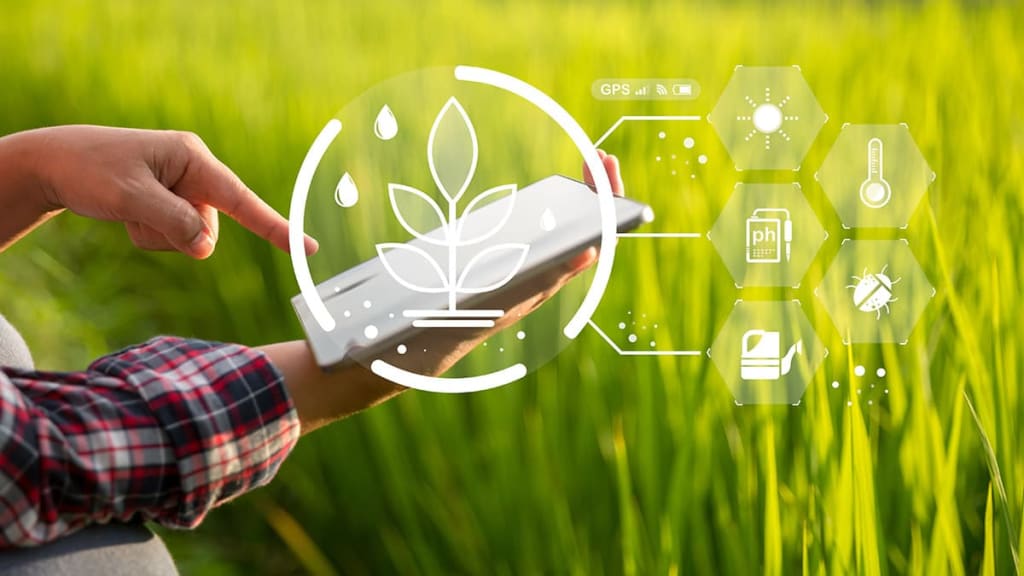
According to IMARC Group's latest research publication, Saudi Arabia agritech market size reached USD 274.0 Million in 2025. The market is projected to reach USD 667.1 Million by 2034, exhibiting a growth rate of 10.39% during 2026-2034.
How AI is Reshaping the Future of Saudi Arabia Agritech Market
- Precision Crop Monitoring: AI-powered satellite imagery and drone technology analyze vegetation health, soil conditions, and pest infestations across thousands of hectares, enabling farmers to target interventions precisely, reducing pesticide use by up to 30% while increasing yields in the Kingdom's challenging climate.
- Smart Irrigation Systems: Machine learning algorithms process real-time data from IoT sensors measuring soil moisture, weather patterns, and crop water requirements, automatically adjusting drip irrigation schedules to cut water consumption by 40% while maintaining optimal growing conditions in arid regions.
- Automated Greenhouse Control: AI systems in vertical farms and controlled-environment facilities automatically regulate temperature, humidity, lighting, and CO2 levels based on crop growth stages, optimizing resource use and enabling year-round production of high-value vegetables with 90% less water than traditional methods.
- Predictive Yield Forecasting: Advanced analytics combine historical data, weather forecasts, and real-time field sensors to predict harvest volumes with 85% accuracy, helping farmers plan logistics, negotiate prices, and reduce post-harvest losses while improving supply chain efficiency across Saudi Arabia's agricultural sector.
- Robotic Harvesting Solutions: AI-enabled robots identify ripe produce using computer vision, performing selective harvesting tasks with speed and consistency. These systems address labor shortages affecting Saudi agriculture while ensuring premium quality and reducing crop damage during harvest operations.
How Vision 2030 is Revolutionizing Saudi Arabia Agritech Industry
Vision 2030 is transforming Saudi agriculture through unprecedented investments exceeding SAR 20 billion annually in controlled-environment farming, desalination infrastructure, and advanced technologies. The initiative targets doubling agricultural GDP—which reached SAR 114 billion in recent achievements—while reducing import dependency from the current 80-85% reliance on foreign produce. Flagship projects include Topian's advanced greenhouse in NEOM's Oxagon spanning four hectares, testing sustainable localized production through cutting-edge systems. The National Water Strategy achieves 100% wastewater reuse for irrigation, processing 2 billion cubic meters annually through facilities like Jeddah's treatment plant handling 150 million cubic meters. The Agricultural Development Fund provides low-interest loans supporting over 63,000 projects, while the Jeddah Food Cluster contributes SAR 8 billion to exports over the coming decade. Saudi Arabia achieved remarkable food waste reduction of 16% from baseline levels, progressing toward the 50% reduction target, with current losses valued at SAR 40 billion annually. The Kingdom planted 115 million trees, rehabilitated 118,000 hectares, and launched the world's first solar-powered desalination plant, integrating sustainability across the entire agricultural value chain.
Saudi Arabia Agritech Market Trends & Drivers:
Water scarcity drives aggressive adoption of hydroponics, vertical farming, and precision irrigation as Saudi Arabia leverages technology to overcome its most critical agricultural constraint. The hydroponics market alone reached USD 132.6 million, demonstrating strong momentum in water-efficient cultivation. Drip irrigation systems, precision water scheduling, and controlled-environment agriculture reduce consumption while enabling higher productivity on limited arable land. NEOM's vertical farming projects produce 2,000 tons annually using innovative systems that require 90% less water than conventional methods. Desalination and treated wastewater integration provides reliable irrigation sources, with the Kingdom processing nearly 2 billion cubic meters yearly. Greenhouses covering over 1,500 hectares demonstrate scalability, producing fruits and vegetables year-round closer to urban centers. This shortens supply chains, lowers transportation losses, and reduces the 33% post-harvest waste currently costing the economy SAR 40 billion annually. Advanced packaging technologies and cold chain logistics, incorporating IoT and AI systems, further minimize spoilage. Water-efficient agritech attracts substantial public and private investment as farmers recognize the economic benefits of producing high-value crops like herbs and specialty vegetables with dramatically lower resource inputs.
Digital farming tools revolutionize decision-making through IoT sensors, satellite imagery, and data analytics that enable precision agriculture across Saudi Arabia's diverse growing regions. The Kingdom's IoT market reached USD 2.9 billion with strong annual growth, supporting deployment of connected devices measuring soil moisture, nutrient content, and crop conditions in real-time. Farmers apply fertilizers and water only where needed, reducing waste and costs while improving yields. Mobile platforms and farm management software enhance traceability, ensuring compliance with food safety standards established by the Saudi Food and Drug Authority. Remote sensing combined with machine learning identifies plant stress early, optimizes harvest timing, and enhances forecasting accuracy by over 85%. These technologies support financial inclusion through improved credit assessments and insurance models based on verifiable production data. The integration of AI-powered automation addresses chronic labor challenges—robotic harvesters, automated transplanting systems, and mechanized operations reduce dependence on seasonal workers while maintaining consistent quality. Training programs build local capacity to operate sophisticated machinery, creating skilled jobs aligned with Vision 2030's employment objectives and supporting the shift toward a knowledge-based agricultural economy.
Government support through strategic funding, subsidies, and policy frameworks accelerates agritech commercialization and farmer adoption across the Kingdom. The Agricultural Development Fund extends substantial loans for barley, maize, soybean, and date production, supporting farmers in transitioning to advanced technologies. Programs like the Sustainable Agricultural Rural Development initiative promote self-sufficiency in fruits and coffee, reducing reliance on imports that currently constitute 80-85% of fresh produce. Tax incentives and streamlined approvals for greenhouse construction and protected cultivation encourage private sector participation, with public-private partnerships enabling infrastructure development. The General Food Security Authority's National Platform for Reducing Food Loss and Waste coordinates stakeholders across government, international organizations, and industry to achieve sustainability targets. Regulatory improvements by the Ministry of Environment, Water, and Agriculture modernize agricultural practices, while the Saudi Standards, Metrology and Quality Organization establishes certification standards for premium market positioning. Recent achievements include self-sufficiency in fresh milk, dates, certain vegetables, and eggs—agriculture now ranks as the third-largest GDP contributor. These coordinated efforts, backed by USD 10 billion in food security investments, minimize barriers to scaling agritech while catalyzing demand for precision irrigation, greenhouse systems, and digital platforms that transform Saudi agriculture into a technology-driven, globally competitive sector.
Saudi Arabia Agritech Market Industry Segmentation:
The report has segmented the market into the following categories:
Type Insights:
- Biotechnology and Biochemical
- Big Data and Analytics
- Sensors and Connected Devices
- Mobility
- Others
Application Insights:
- Irrigation
- Production and Maintenance
- Supply Chain
- Marketplace
Regional Insights:
- Northern and Central Region
- Western Region
- Eastern Region
- Southern Region
Competitive Landscape:
The market research report has also provided a comprehensive analysis of the competitive landscape. Competitive analysis such as market structure, key player positioning, top winning strategies, competitive dashboard, and company evaluation quadrant has been covered in the report. Also, detailed profiles of all major companies have been provided.
Recent News and Developments in Saudi Arabia Agritech Market
- May 2025: Saudi Arabia and South Korea initiated a joint effort to advance modern agriculture by launching a smart farming facility in Riyadh. The new plant represented Saudi Arabia's agricultural ambitions to bolster the farming industry while improving food security and production capabilities through collaborative innovation.
- February 2025: Saudi Arabia finalized its biggest indoor vertical farming initiative in Riyadh, signaling a crucial advancement in the nation's agricultural industry. The project, a collaborative endeavor involving Vertical Farms Company (VFCo), Mowreq Specialized Agriculture, and YesHealth Group, features a 20,000-square-meter cultivation area with automated and AI-based monitoring technologies.
- January 2025: Saudi Arabian agritech startup Arable announced successful completion of a USD 2.55 million seed funding round. The investment round attracted attention from both private and institutional firms, with 90% of capital coming from overseas supporters to foster development of the country's agricultural sector.
- December 2024: Topian, NEOM's food business, launched its inaugural advanced greenhouse in Oxagon, the industrial center along Saudi Arabia's Red Sea shoreline. The facility, spanning four hectares, aimed to test sustainable and localized food production through cutting-edge agricultural technologies.
- September 2025: The General Food Security Authority launched the National Platform for Reducing Food Loss and Waste, announcing the Kingdom achieved a 16% reduction in food loss and waste since baseline measurements, progressing toward Sustainable Development Goal 12.3's target of 50% reduction by 2030.
Note: If you require specific details, data, or insights that are not currently included in the scope of this report, we are happy to accommodate your request. As part of our customization service, we will gather and provide the additional information you need, tailored to your specific requirements. Please let us know your exact needs, and we will ensure the report is updated accordingly to meet your expectations.
About the Creator
Faisal Al-Harbi
Market research professional based in Saudi Arabia (KSA), focused on industry trends, market growth, and economic insights.
Writing data-driven articles on Saudi markets, business outlook, and Vision 2030–driven sectors.
Keep reading
More stories from Faisal Al-Harbi and writers in Futurism and other communities.
Saudi Arabia Portable Power Tools Market Construction Activity, DIY Adoption & Growth Outlook
According to IMARC Group's latest research publication, Saudi Arabia portable power tools market size reached USD 288.1 Million in 2024. The market is projected to reach USD 433.9 Million by 2033, exhibiting a growth rate of 4.70% during 2025-2033.
By Faisal Al-Harbiabout 14 hours ago in Futurism
Payment Monitoring Market Outlook: Fraud Prevention and Growth Opportunities
According to IMARC Group's latest research publication, The global payment monitoring market size was valued at USD 20.36 Billion in 2024. Looking forward, IMARC Group estimates the market to reach USD 68.49 Billion by 2033, exhibiting a CAGR of 14.43% from 2025-2033.
By Michael Richard6 days ago in Futurism
Usage-Based Insurance Market Analysis: Risk Assessment Models & Revenue Forecast
Advancements in telematics technology, growing consumer demand for personalized insurance models, and expanding integration of connected vehicle platforms are fueling the usage-based insurance market. According to IMARC Group's latest data, The global usage-based insurance market size was valued at USD 62.35 Billion in 2024. Looking forward, IMARC Group estimates the market to reach USD 355.45 Billion by 2033, exhibiting a CAGR of 20.27% from 2025-2033. North America currently dominates the market, holding a market share of 40.6% in 2024.
By sujeet. imarcgroup3 days ago in Futurism
When True Love Never Questions Your Soul
“And she’s going to learn that this life will hit you, hard, in the face, wait for you to get back up, just so it can kick you in the stomach but getting the wind knocked out of you is the only way to remind your lungs how much they like the taste of air.” — Sarah Kay’s Poem — If I Should Have a Daughter
By Chantal Christie Weiss4 days ago in Humans




Comments
There are no comments for this story
Be the first to respond and start the conversation.