
Russian Ship Quits Attempt to Load Sanctioned LNG Due to Ice
Russian LNG tanker halts Arctic loading as ice conditions and sanctions create obstacles.

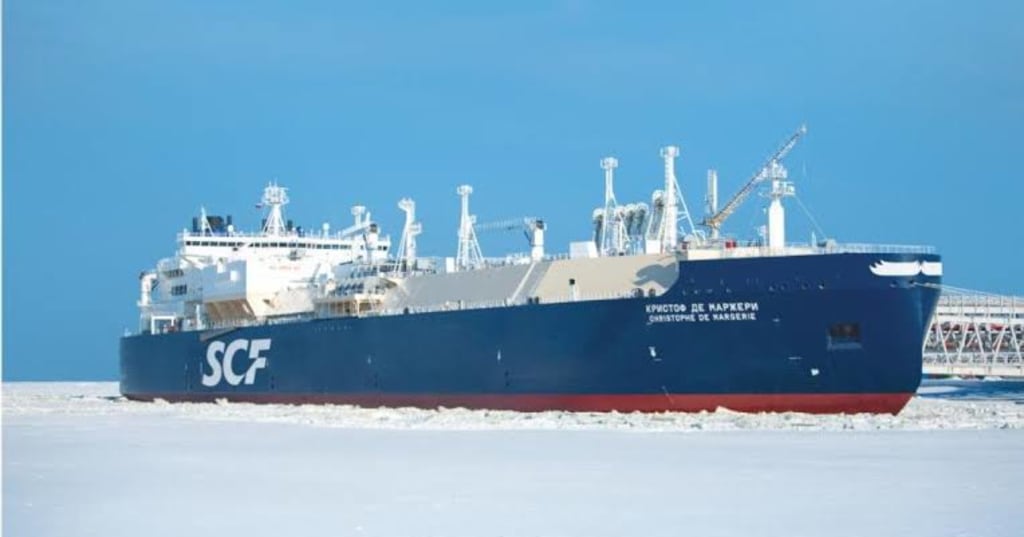
In a setback for Russia’s energy exports, a Russian liquefied natural gas (LNG) tanker recently abandoned its attempt to load cargo at a key Arctic terminal, citing heavy ice conditions. The incident highlights the dual challenges facing Russia: harsh environmental conditions in the Arctic and the ongoing impact of Western sanctions on its energy sector.
The vessel, part of Russia’s network of LNG shipments to international markets, was reportedly unable to dock safely due to thick sea ice at the terminal. Russian authorities confirmed that operations were temporarily suspended until conditions improve. The disruption comes at a time when Moscow is already facing scrutiny over its sanctioned exports, raising questions about both the viability of Arctic LNG operations and the broader implications for global energy markets.
The Arctic Challenge
The Arctic region, home to some of the world’s largest untapped gas reserves, presents unique logistical difficulties. Ice conditions in winter months can prevent tankers from reaching terminals, forcing delays or cancellations. Despite technological advances in ice-class ships and navigation systems, extreme weather often disrupts schedules.
Experts note that Russia’s reliance on Arctic LNG exports, particularly from ports like Sabetta and Yamal, is fraught with risk. “Even icebreakers can only do so much,” said one maritime analyst. “A combination of thick ice, low temperatures, and high winds can make docking operations impossible, especially when transporting large volumes of LNG.”
The recent incident demonstrates that natural obstacles remain a serious factor, even as Moscow seeks to expand its Arctic energy footprint.
Sanctions and Global Scrutiny
Adding to Russia’s challenges are Western sanctions targeting its energy sector, imposed in response to geopolitical conflicts and alleged violations of international norms. Sanctions have restricted the sale, transport, and financing of Russian LNG, forcing Moscow to navigate a complex international legal landscape.
The sanctioned status of the LNG cargo on the affected ship complicates matters further. Some international buyers have refused to engage with vessels linked to restricted exports, while insurers are wary of covering shipments. This has forced Russia to seek alternative buyers in countries willing to circumvent restrictions, often at discounted rates.
Kremlin spokespersons maintain that Russia is committed to fulfilling its LNG contracts but acknowledge that operational challenges and sanctions create obstacles.
Impact on Global Energy Markets
The failure to load LNG has potential repercussions for global energy supply and pricing. Europe, in particular, relies on stable LNG imports to supplement pipeline gas, especially during the colder months. Any disruption to Russian shipments could tighten supply and increase prices, though some analysts argue that alternative sources, such as the United States and Qatar, may help mitigate shortages.
Traders have already noted increased volatility in LNG futures following news of the aborted loading. “Markets are sensitive to both geopolitical and environmental factors,” explained an energy economist. “Russia’s Arctic challenges, combined with sanctions, can amplify uncertainty and affect contracts far beyond the region.”
Russia’s Strategic Response
Moscow is not standing idle. Russian authorities are reportedly considering enhanced icebreaking support, schedule adjustments, and alternative ports to minimize future disruptions. Investments in LNG infrastructure, ice-class tankers, and port modernization are also part of a long-term strategy to secure Arctic shipments.
At the same time, officials are exploring ways to navigate sanctions without violating international law. This includes negotiating with friendly nations and exploring domestic storage solutions to buffer supply disruptions.
Experts caution, however, that these measures cannot fully eliminate the dual risks of natural conditions and international restrictions. Even the most sophisticated Arctic infrastructure cannot fully offset ice-related delays or geopolitical constraints.
A Broader Picture
The aborted LNG loading serves as a microcosm of the challenges facing Russia’s energy sector. It underscores the vulnerability of Arctic logistics, the influence of international sanctions, and the broader interplay between environment, economics, and geopolitics.
While Russia remains a major player in the global LNG market, incidents like this highlight the fragility of supply chains and the importance of contingency planning. For global markets, these disruptions emphasize the need for diversification of energy sources to mitigate the effects of unexpected interruptions.
Conclusion
The incident involving the Russian LNG tanker may seem minor, but its implications are far-reaching. It reflects the complex realities of Arctic energy operations, the ongoing challenges posed by sanctions, and the broader geopolitical context in which Russia operates.
As winter continues in the Arctic and global energy demand remains high, the world will be watching how Russia adapts to these obstacles. Whether through technological solutions, diplomatic maneuvers, or market adjustments, Moscow’s ability to maintain LNG exports will have a direct impact on international energy stability and pricing for months to come.
About the Creator
Fiaz Ahmed Brohi
I am a passionate writer with a love for exploring and creating content on trending topics. Always curious, always sharing stories that engage and inspire.
Keep reading
More stories from Fiaz Ahmed Brohi and writers in Futurism and other communities.
Abundance of Caution’: How Flight Hit by Solar Flare Sparked Rush for Airbus Fix
When passengers boarded a routine international flight earlier this month, no one expected it to become the center of a global aviation alert. Yet, within hours, what was supposed to be an ordinary journey turned into an unprecedented safety concern—one triggered not by turbulence, engine trouble, or bad weather, but by something far more distant: a solar flare erupting from the sun.
By Fiaz Ahmed Brohi4 months ago in Futurism
AI Inference Server Market to Hit Nearly USD 133.2 Billion By 2034
AI Inference Server Market Overview The global AI Inference Server Market is projected to reach approximately USD 133.2 Billion by 2034, rising from about USD 24.6 Billion in 2024. This expansion represents a strong CAGR of 18.40% during the forecast period from 2025 to 2034. Market growth is being driven by the rapid adoption of artificial intelligence workloads across enterprises, cloud platforms, and edge computing environments.
By Roberto Crum6 days ago in Futurism
AI in Workplace Market to Exceed USD 2,299.1 Billion by 2033
AI in Workplace Market Overview The global AI in Workplace Market is projected to reach approximately USD 2,299.1 Billion by 2033, increasing from nearly USD 113.5 Billion in 2023. This expansion represents a strong CAGR of 35.1% during the forecast period from 2024 to 2033. Market growth is being driven by the rapid integration of artificial intelligence technologies into workplace operations, including productivity tools, collaboration platforms, workforce analytics systems, and automated decision support solutions.
By Roberto Crum6 days ago in Futurism
Top tipple tricks
Been thinking a lot about drinking, lately. Not least because of a recent episode of over-indulgence and the inevitable after effects. Some readers may recall the earlier articles I wrote about beating the booze. Here I set out an experiment in techniques for cutting down on my alcohol intake. The experiment was successful, the techniques worked, and I have armed myself with an arsenal of weapons in the war against the demon drink. I have yet to fire the first round however. It's all a question of timing (perhaps procrastination).
By Raymond G. Taylor6 days ago in Psyche



Comments
There are no comments for this story
Be the first to respond and start the conversation.