
Robotic Vacuum Cleaner Market Analysis: IoT Connectivity, Mapping Technology & Industry Forecast to 2034
How IoT connectivity, voice assistant compatibility, and autonomous operation are reshaping product innovation in the robotic vacuum cleaner market

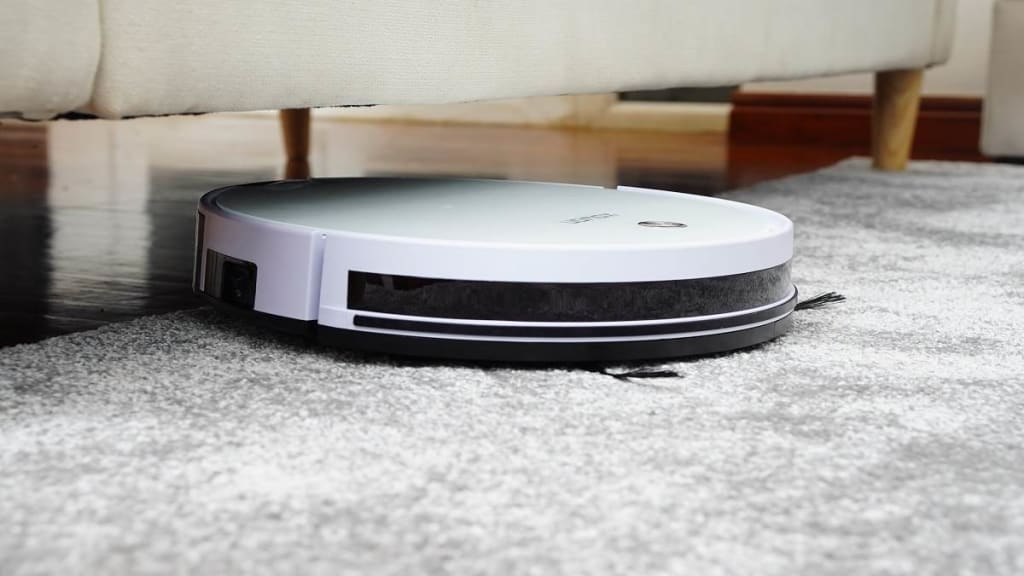
Global automation trends, busy lifestyles, and growing demand for smart home technologies are driving robust expansion in the robotic vacuum cleaner market, supported by innovations in AI navigation, obstacle detection, and expanding online and offline retail channels. According to IMARC Group’s latest data, the global robotic vacuum cleaner market size was valued at USD 10.6 Billion in 2025. Looking forward, IMARC Group estimates the market to reach USD 40.7 Billion by 2034.
Robotic vacuum cleaners have evolved from novelty items to essential household appliances across urban markets worldwide. What started as basic automated cleaning tools has transformed into sophisticated AI-powered devices capable of mapping entire homes, avoiding obstacles in real-time, and even mopping floors. The industry now encompasses multiple product categories from basic floor vacuums to hybrid vacuum-mop combinations and specialized pool cleaners. Major brands compete not just on suction power but on smart features like smartphone integration, voice control compatibility, and self-emptying capabilities.
Start with a Free “Robotic Vacuum Cleaner Market” Analysis Sample
Robotic Vacuum Cleaner Market Growth Drivers:
- Smart Home Integration and IoT Adoption
The explosive growth of smart home ecosystems has positioned robotic vacuums as cornerstone devices in connected households. Modern units seamlessly integrate with voice assistants, allowing users to start cleaning with simple commands or schedule operations from anywhere through mobile apps. Industry data shows that over 70% of American homes own at least one smart home device, creating a ready market for connected cleaning solutions. These devices can now communicate with other smart appliances, automatically initiating cleaning cycles when residents leave home or pausing when video calls begin. The ability to receive maintenance alerts, view cleaning maps, and customize settings remotely has transformed these machines from simple tools into intelligent home management partners.
- Dual-Income Households and Time Scarcity
Time has become the ultimate luxury for modern families, particularly in dual-income households which represent over half of married families in major markets. More than half of robotic vacuum owners cite time-saving as their primary purchase motivation, according to recent consumer surveys. Urban professionals working long hours and managing childcare simply lack the time for traditional vacuum cleaning routines. These automated devices handle daily floor maintenance while families focus on work, leisure, or quality time together. The convenience factor extends beyond basic cleaning self-emptying models can operate for weeks without user intervention, while advanced scheduling ensures floors stay clean without anyone needing to remember or execute the task.
- Pet Ownership and Specialized Cleaning Needs
With approximately 70% of American households keeping pets, specialized cleaning challenges have created strong demand for robotic solutions designed to handle pet hair and dander. Traditional vacuuming struggles to keep pace with the constant shedding from dogs and cats, making automated daily cleaning essential for many pet owners. Manufacturers have responded with enhanced suction systems, tangle-free brush designs, and HEPA filtration targeting allergens. Some models now feature specific pet modes that increase cleaning frequency in high-traffic areas. The devices prove particularly valuable during shedding seasons when manual cleaning becomes overwhelming.
Robotic Vacuum Cleaner Market Trends:
- AI-Powered Robotic Arms and Obstacle Manipulation
Revolutionary robotic arm technology is transforming how autonomous cleaners interact with their environment. Leading manufacturers have unveiled models equipped with articulating arms capable of moving lightweight obstacles like socks, small towels, and children's toys weighing up to 400 grams. These AI-driven appendages don't just avoid obstacles—they actively clear cleaning paths by relocating items to designated areas. The technology uses computer vision to identify objects, assess their weight, and determine whether they can be safely moved. This breakthrough addresses one of the most common user frustrations: interrupted cleaning cycles due to scattered items.
- Retractable LiDAR and Low-Profile Navigation
The traditional LiDAR sensor tower has long prevented robot vacuums from accessing low-clearance areas under furniture. Breakthrough retractable sensor technology now allows the navigation tower to automatically lower when approaching low sofas, beds, and cabinets, slimming devices down to approximately eight centimeters in height. Once clear of obstacles, the tower extends again for normal navigation. This innovation opens up previously inaccessible cleaning zones where dust accumulates unnoticed. Flagship models incorporating this technology can clean comprehensive floor areas without manual furniture moving, addressing a key limitation that forced users to either accept partial coverage or manually lift furniture.
- Roller Mop Technology and Hybrid Cleaning Systems
High-speed roller mop systems are redefining floor cleaning by actively scrubbing rather than simply wiping surfaces. Unlike traditional spinning pads that can smear heavy grime, roller mops continuously apply fresh water while scraping dirty water into sealed tanks, delivering restaurant-kitchen-level cleaning for sticky spills and grease. This technology addresses the long-standing criticism that robotic mops couldn't match manual mopping effectiveness. Advanced models feature extending arms that reach baseboards and corners, zones previously missed by round robot designs. The systems integrate seamlessly with vacuum functions, allowing a single device to handle complete floor care. Market data indicates hybrid vacuum-mop models are experiencing particularly strong growth as consumers seek consolidated solutions rather than maintaining separate cleaning devices.
Recent News and Developments in Robotic Vacuum Cleaner Market
- January 2025: Dreame Technology publicly announced its development of a robotic hand attachment at CES 2025, capable of handling loads up to 400 grams. The innovation positions Dreame as a key competitor in the emerging multitasking vacuum robot segment, demonstrating the industry's rapid advancement toward fully autonomous home maintenance solutions.
- September 2025: ECOVACS introduced the DEEBOT X11 at IFA 2025, featuring groundbreaking PowerBoost Technology for perpetual runtime—the world's first robotic vacuum with this capability. The company also expanded into outdoor robotics with the ULTRAMARINE pool cleaner, reinforcing its commitment to comprehensive multi-scenario home service robotics and strengthening its position as a full-category service robotics leader.
- December 2025: iRobot Corporation, the pioneer that popularized household robotics through its Roomba line, filed for Chapter 11 bankruptcy and announced that Shenzhen-based Picea Robotics would acquire the company through a court-supervised restructuring. The transaction aims to strengthen iRobot's financial foundation while enabling continued innovation in its industry-leading portfolio of smart home robotics technologies.
Note: If you require specific details, data, or insights that are not currently included in the scope of this report, we are happy to accommodate your request. As part of our customization service, we will gather and provide the additional information you need, tailored to your specific requirements. Please let us know your exact needs, and we will ensure the report is updated accordingly to meet your expectations.
About the Creator
Andrew Sullivan
Hello, I’m Andrew Sullivan. I have over 9+ years of experience as a market research specialist.
Keep reading
More stories from Andrew Sullivan and writers in Futurism and other communities.
Automotive Infotainment Market Trends: Connected Cars, AI Interfaces & Forecast to 2033
The automotive infotainment market is experiencing robust growth driven by increasing consumer demand for advanced in-vehicle entertainment and connectivity solutions. According to IMARC Group's latest data, the global automotive infotainment market size was valued at USD 21.1 Billion in 2024. Looking forward, IMARC Group estimates the market to reach USD 41.2 Billion by 2033, exhibiting a CAGR of 6.93% from 2025-2033.
By Andrew Sullivanabout 7 hours ago in Futurism
How to Vet Mobile App Developers in Indianapolis?
I used to believe that hiring app developers was mostly about checking technical credentials. You compare portfolios, review pricing, scan testimonials, and choose whoever feels safest. That approach felt logical until I watched a project stall despite working with a team that looked perfect on paper.
By Mike Pichaiabout 5 hours ago in Futurism
Egypt Aquafeed Market Analysis: Industry Overview, Key Players & Growth Outlook
According to IMARC Group's latest research publication, the Egypt aquafeed market size reached 2.2 Billion Tons in 2024. The market is projected to reach 5.0 Billion Tons by 2033, exhibiting a growth rate (CAGR) of 8.5% during 2025-2033.
By Abhay Rajputabout 5 hours ago in Futurism


Comments
There are no comments for this story
Be the first to respond and start the conversation.