
Recycled Plastics Market in Saudi Arabia: Waste Reduction, Green Innovation & Demand Expansion
How circular economy initiatives, advanced recycling technologies, and sustainability regulations are accelerating waste recovery, material reuse, and long-term growth in the Saudi Arabia recycled plastics market.

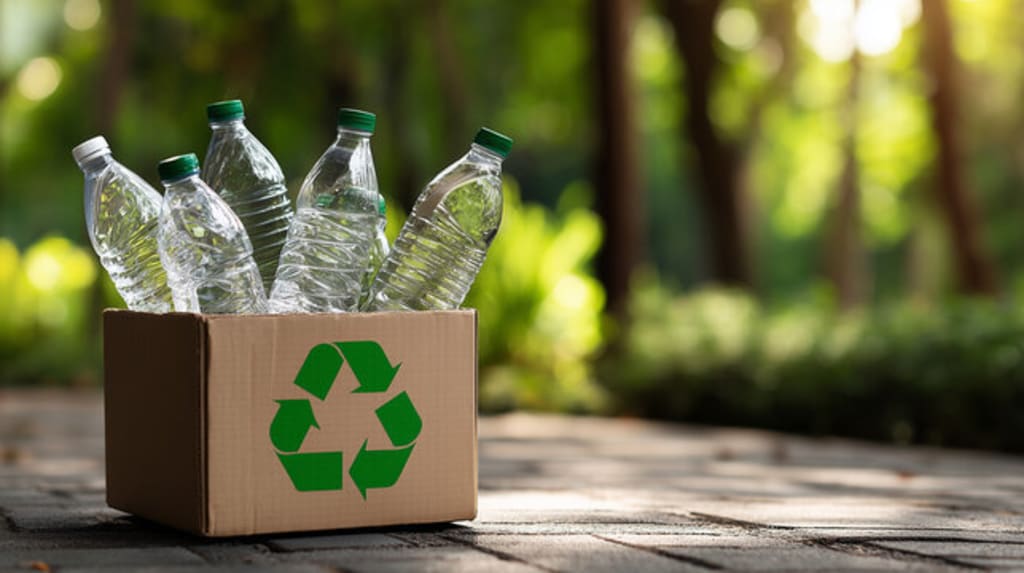
Saudi Arabia's recycled plastics market advances through SASO bans on oxo-degradable materials, promoting compostable alternatives and rPET for packaging, backed by Vision 2030's circular economy push to cut waste. Saudi Arabia recycled plastics market size reached USD 431.5 Million in 2025. Looking forward, IMARC Group expects the market to reach USD 728.4 Million by 2034, exhibiting a growth rate (CAGR) of 5.99% during 2026-2034.
How AI is Reshaping the Future of Saudi Arabia Recycled Plastics Market
- Automated Sorting and Classification: KAUST researchers deployed AI models detecting PET, HDPE, and PP with 95% accuracy, cutting manual sorting errors and supporting Vision 2030's recycling target of 95%.
- Optimized Collection Routes: Plastic Bank Saudi Arabia uses AI algorithms to optimize collection routes, achieving 25% higher recycling rates across the Kingdom's 3 million tons of annual plastic waste.
- Smart Waste Management: AI-powered smart bins monitor fill levels in real-time and predict pickups, reducing fuel consumption and emissions in urban waste management as part of national sustainability plans.
- Enhanced Material Recovery: Machine learning systems improve purity in recycling streams, enabling facilities to process complex materials like multi-layer films previously handled only through mechanical methods.
- Predictive Resource Allocation: AI-driven analytics identify waste patterns, helping SIRC allocate resources efficiently across operations handling 7 million tons annually while supporting circular economy goals.

How Vision 2030 is Revolutionizing Saudi Arabia Recycled Plastics Industry
Vision 2030 is fundamentally transforming Saudi Arabia's recycled plastics sector through massive investments and ambitious waste diversion targets. The Kingdom currently generates nearly 7 million tons of plastic waste yearly, with per capita generation at 1.7 kg daily. To address this, the National Waste Management Center aims to divert 90% of waste from landfills by 2035. Saudi Investment Recycling Company (SIRC), backed by the Public Investment Fund, is spearheading this transformation with projects across 65 cities, projected to process 35 million tons per annum by 2030 while composting 1.3 million tons of biodegradable waste and reducing CO2 emissions by 4.1 million tons. SABIC's TRUCIRCLE program launched the Kingdom's first circular packaging initiative, producing certified polymers from plastic pyrolysis oil through advanced chemical recycling at the SATORP refinery in partnership with Aramco and TotalEnergies. The government has allocated SAR 12 billion for waste management infrastructure, establishing state-of-the-art recycling facilities in Riyadh and Jeddah that collectively process over 2 million tons annually while creating thousands of jobs for engineers and technicians, positioning Saudi Arabia as a regional hub for circular economy innovation.
Saudi Arabia Recycled Plastics Market Trends & Drivers
Government policy is the primary force reshaping Saudi Arabia's recycled plastics landscape. Vision 2030's sustainability framework has unleashed bold initiatives channeling substantial funding into waste management infrastructure. The government's SAR 12 billion allocation for recycling facilities demonstrates serious commitment to circular economy principles. SIRC's expansion across 65 cities represents the largest coordinated recycling effort in the region, targeting 35 million tons processing capacity by 2030. Regulatory measures including bans on single-use plastics and mandates for waste segregation at source are compelling industries to adopt sustainable practices. The Green Building Code (SBC 601) now requires sustainable materials in public projects, giving recycled plastics regulatory advantage. Extended Producer Responsibility schemes are being developed to hold manufacturers accountable for product end-of-life management. These policy interventions have elevated recycling from optional sustainability initiative to core business requirement, fundamentally altering industrial behavior across packaging, construction, automotive, and consumer goods sectors.
Technological innovation is revolutionizing how Saudi Arabia processes plastic waste. SABIC's TRUCIRCLE program successfully produces certified circular polymers from plastic pyrolysis oil through advanced chemical recycling, processing feedstock at the SATORP refinery in collaboration with Aramco and TotalEnergies. This breakthrough enables recycling of mixed and contaminated plastics previously destined for landfills. Chemical recycling through pyrolysis currently generates 12.33 thousand barrels per day of oil equivalent, with projections reaching 124.31 thousand barrels daily by 2060. Companies like Petrokemya are deploying innovations that process unsorted plastics beyond mechanical recycling's reach. AI-powered sorting systems using machine learning achieve 98% purity in recycled output, dramatically improving material quality. NEOM's circular economy hub features cutting-edge automated facilities setting new industry benchmarks. Investment in research and development is accelerating adoption of advanced technologies including chemical depolymerization, automated sorting machinery, and blockchain-based waste tracking systems that add transparency throughout the value chain from collection to final product.
Consumer awareness and industrial demand are creating powerful market momentum. Research indicates 87% of Saudi consumers are willing to pay premium prices for sustainable packaging, fundamentally shifting retail and manufacturing strategies. Major food and beverage companies like Almarai are committing to 100% recyclable packaging by 2026, driving substantial demand for high-quality recycled materials. The rapid expansion of e-commerce and urbanization is amplifying packaging requirements while simultaneously increasing pressure for sustainable solutions. Industrial sectors including construction, automotive, and consumer goods are integrating recycled content to meet both regulatory requirements and stakeholder expectations for environmental responsibility. The construction boom from megaprojects like NEOM, Qiddiya, and Red Sea Development requires enormous volumes of materials, with recycled plastics gaining traction in applications from building composites to infrastructure components. Public awareness campaigns and environmental education initiatives have elevated recycling consciousness, changing behavior at individual and corporate levels and establishing recycled plastics as preferred choice over virgin materials across multiple applications.
Saudi Arabia Recycled Plastics Market Industry Segmentation
The report has segmented the market into the following categories:
Plastic Type Insights:
- Polyethylene Terephthalate (PET)
- High Density Polyethylene (HDPE)
- Polypropylene (PP)
- Low Density Polyethylene (LDPE)
- Others
Application Insights:
- Non-Food Contact Packaging
- Food Contact Packaging
- Construction
- Automotive
- Others
Raw Material Insights:
- Plastic Bottles
- Plastic Films
- Rigid Plastic and Foam
- Fibres
- Others
Regional Insights:
- Northern and Central Region
- Western Region
- Eastern Region
- Southern Region
Recent News and Developments in Saudi Arabia Recycled Plastics Market
- January 2026: Saudi manufacturers launched recycled wood-plastic composites for NEOM projects, reducing plastic waste by 40% through advanced extrusion technology while providing UV-resistant materials for desert environments.
- September 2025: Saudi Arabia's plastics economy accelerated toward a circular and decarbonized model with rising government regulations mandating sustainability practices across industrial sectors.
- July 2025: King Saud University researchers developed AI-enabled biodegradable peptides that bind microplastics 34% more efficiently, representing breakthrough pollution control technology for wastewater treatment applications.
- May 2025: Saudi Investment Recycling Company signed USD 625 million MoU to develop advanced recycling and green energy infrastructure, expanding circular economy capabilities nationwide.
Note: If you require specific details, data, or insights that are not currently included in the scope of this report, we are happy to accommodate your request. As part of our customization service, we will gather and provide the additional information you need, tailored to your specific requirements. Please let us know your exact needs, and we will ensure the report is updated accordingly to meet your expectations.
About the Creator
Jeffrey Wilson
Hello, I’m Jeffrey Wilson, a market research specialist with over 9 years of experience in uncovering consumer insights and driving data-backed strategies.
Keep reading
More stories from Jeffrey Wilson and writers in Futurism and other communities.
Food Packaging Market in Saudi Arabia: Innovation, Shelf-Life Enhancement & Demand Growth
Saudi Arabia's food packaging market emphasizes sustainable, recyclable materials under MEWA's new rules, mandating food-grade, durable designs for fruits and vegetables that ensure freshness and clear labeling with origin details. According to IMARC Group's latest research publication, Saudi Arabia food packaging market size reached USD 1,741.4 Million in 2024. The market is projected to reach USD 2,552.5 Million by 2033, exhibiting a growth rate (CAGR) of 4.25% during 2025-2033.
By Jeffrey Wilson4 days ago in Futurism
About Binding Prometheus
I want to start actively advocating on behalf of my own work, and the most valuable part of my canon is, without a doubt, Binding Prometheus, the play I have been working on since 2019 and only finished in 2023 as part of my MA. The play itself is an amalgamation of a million different inspirations. On one end, it evokes the Ancient Greek myth-play, deriving its own title from the earliest extant work of Western drama we have, Aeschylus’s Prometheus Bound. On the other end, it borrows significantly from the sci-fi bulwarks from over the years, namely Mary Shelley’s Frankenstein and Karel Capek’s Rossum’s Universal Robots. The play could be an episode of Black Mirror, I fear. I don’t know. I’ve only ever seen one episode of Black Mirror.
By Steven Christopher McKnight18 days ago in Futurism
GCC Home Healthcare Market: Medical Device Integration, Skilled Care Demand
According to IMARC Group's latest research publication, GCC Home Healthcare Market size reached USD 8.8 Billion in 2025. Looking forward, IMARC Group expects the market to reach USD 19.0 Billion by 2034, exhibiting a growth rate (CAGR) of 8.98% during 2026-2034.
By Abhay Rajput7 days ago in Futurism


Comments
There are no comments for this story
Be the first to respond and start the conversation.