
Qatar Real Estate Market: Urban Expansion, Luxury Demand & Growth Outlook
How infrastructure expansion, foreign ownership reforms, and economic diversification are driving investment flows and pricing trends in the Qatar real estate market.


According to IMARC Group's latest research publication, Qatar real estate market size reached USD 14,988.18 Million in 2024. The market is projected to reach USD 17,583.08 Million by 2033, exhibiting a growth rate (CAGR) of 1.79% during 2025-2033.
How AI is Reshaping the Future of Qatar Real Estate Market
- More than 70% of real estate companies in Qatar have implemented PropTech solutions using AI-based property management and smart building technologies that help in daily operations and reduce costs for developers and property owners․
- AI-powered virtual tours make it easier, faster, and more confident for buyers to view homes for sale and surrounding neighborhood amenities from anywhere․
- Platforms have embedded AI in their sites for workflows, bilingual chatbots, and property valuations, which have increased organic page views by 187% for companies and provided better transaction transparency․
Qatar Real Estate Market Trends & Drivers:
The Qatar real estate market continues to benefit from the economic diversification initiatives being implemented by the government under the National Vision 2030 and the Third National Development Strategy, which focus on strengthening non-hydrocarbon sectors, attracting foreign investment and talent, and improving infrastructure in Doha, Lusail and other key districts of the country․ Liberalized foreign ownership laws, residency through real estate purchases, and expatriate stay patterns drive demand for residential and mixed-use developments․ Population growth from business expansion and livability improvements form a transaction base․ Investor interest focuses on quality assets and sustainable developments, minimizing exposure to short-term speculation․
The tourism sector and functioning hospitality sector are catalysts for growth, as increased airlift, events, and promotional calendars drive visitation, increasing hotel occupancy and stimulating development within the accommodation sector․ Strong performance in the hospitality sector has a positive impact on retail, commercial and mixed-use development, as overall market confidence improves․ In the residential market, demand from home-owners remains resilient, particularly in locations with good connectivity and lifestyle offerings․ In the office sector, there is only a modest recovery in tenant demand․ In the residential and office segments, sector and asset quality are increasingly becoming the differentiating factors․
Infrastructure development and events like the Asian Games have increased sentiment, supporting the development of premium villas, smart communities and waterfront precincts, which are aligned with evolving occupier preferences․ Investor sentiment recovers in light of improved competitiveness, attractive yields and better policies clarifying overseas ownership, driving improved demand from end-users and long-haul investors․ The mature market focuses on the balance between supply and demand and value-driven decisions that improve Qatar's appeal as a regional housing and business destination․
Qatar Real Estate Industry Segmentation:
The report has segmented the market into the following categories:
Property Insights:
- Residential
- Commercial
- Industrial
- Land
Business Insights:
- Sales
- Rental
Mode Insights:
- Online
- Offline
Regional Insights:
- Ad Dawhah
- Al Rayyan
- Al Wakrah
- Others
Competitive Landscape:
The competitive landscape of the industry has also been examined along with the profiles of the key players.
Recent News and Developments in Qatar Real Estate Market
- November 2025: QRDI Council and Qatari Diar sign an MoU to position Lusail City as a living innovation testbed, expanding its smart infrastructure to pilot technologies in artificial intelligence, mobility, advanced digital infrastructure, and sustainable urban systems for enhanced urban intelligence.
- 2025: Electronic real estate registration accelerates under Law No. (5) of 2024 and related 2025 ministerial decisions, enabling secure online platforms for ownership verification, contract finalization, and transactions to boost transparency, reduce processing times, and minimize disputes through digital and blockchain-supported processes.
- 2025: Proptech adoption rises with digitization of property listings, exploration of blockchain-backed sales models, and real estate tokenization initiatives by developers and startups, increasing market liquidity and accessibility for investors while integrating smart contract capabilities.
Note: If you require specific details, data, or insights that are not currently included in the scope of this report, we are happy to accommodate your request. As part of our customization service, we will gather and provide the additional information you need, tailored to your specific requirements. Please let us know your exact needs, and we will ensure the report is updated accordingly to meet your expectations.
About the Creator
Fatimah
Market research writer at IMARC Group, turning data into engaging stories. Passionate about trends, insights & real-world impact. Join me on Vocal!
Systemic Lupus Erythematosus (SLE) Drugs Market Outlook: Autoimmune Therapy Advancements and Growth Opportunities
According to IMARC Group's latest research publication, The global systemic lupus erythematosus (SLE) drugs market size reached USD 2.8 Billion in 2024. Looking forward, IMARC Group expects the market to reach USD 4.7 Billion by 2033, exhibiting a growth rate (CAGR) of 5.54% during 2025-2033.
By James Whitman5 days ago in Futurism
Australia Toaster Market: Household Demand, Design Innovation & Retail Channels
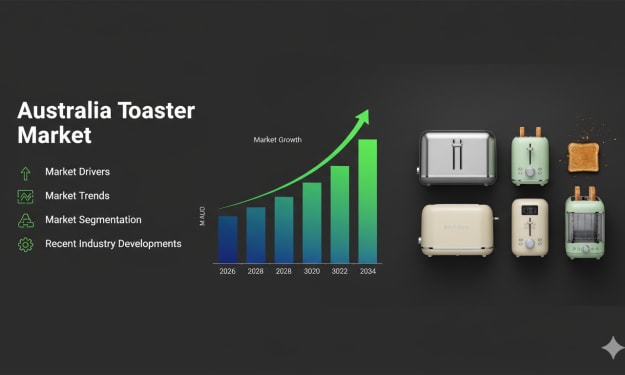
According to IMARC Group, the Australia toaster market reached USD 89.6 Million in 2025 and is projected to expand to USD 126.9 Million by 2034, exhibiting a compound annual growth rate (CAGR) of 3.94% during 2026–2034. This steady growth reflects evolving household consumption habits and the continued relevance of small kitchen appliances across Australia. Once viewed as a basic countertop device, the toaster has evolved into a design-led, feature-rich appliance aligned with modern kitchen aesthetics and lifestyle efficiency. As urban households prioritize convenience and energy efficiency, toaster manufacturers are integrating advanced controls, premium finishes and smart functionalities to meet consumer expectations.
By Kevin Cooper7 days ago in Futurism



Comments
There are no comments for this story
Be the first to respond and start the conversation.