
Qatar Construction Market: Infrastructure Expansion, Mega Projects & Growth Outlook
How large-scale infrastructure projects, urban expansion, and government investment are driving growth and innovation across the Qatar construction market.

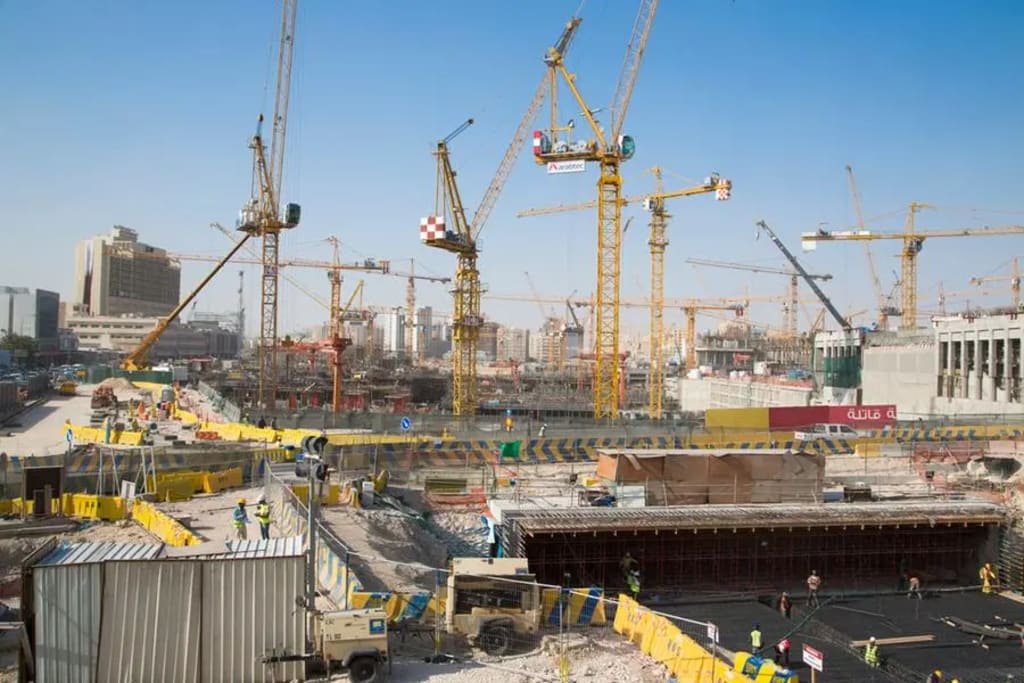
According to IMARC Group's latest research publication, The Qatar construction market size reached USD 70.1 Billion in 2025. Looking forward, IMARC Group expects the market to reach USD 167.5 Billion by 2034, exhibiting a growth rate (CAGR) of 10.17% during 2026-2034.
How AI is Reshaping the Future of Qatar Construction Market
- Advancing Smart City Development: Qatar's smart city initiatives like Lusail City integrate AI-powered systems for building management, with over $250 billion in construction projects planned incorporating intelligent infrastructure solutions.
- Enhancing Project Management Efficiency: AI-driven Building Information Modeling (BIM) and digital construction technologies are streamlining project delivery, with Qatar's Public Works Authority (Ashghal) implementing digital solutions across its QR81 billion ($22.2 billion) five-year infrastructure plan.
- Optimizing Energy Performance: AI-enabled smart building systems are being integrated into Qatar's National Vision 2030 projects, improving energy efficiency and sustainability across residential and commercial developments.
Unlock the Latest 2026 Data, Insights & Outlook
Market Growth Factors
The Qatar construction sector is benefiting from sustained public sector investment in infrastructure and economic diversification as part of National Vision 2030. Transport projects such as roads, expressways and Metro extensions, urban developments, and mega energy schemes are creating demand for civil engineering, building materials and niche contracting which will continue into the medium term. Increased public investment is likely to support large scale projects that improve connectivity and livability of urban areas, where sustainable and climate-resilient development goals are pursued. This is likely to provide opportunities related to the residential, commercial and utility sectors as the demand for improved infrastructure and resources becomes more popular.
Pursuant to this, there are many important continuing or future programs to expand the capacity of solar and other low-carbon energy generation technologies. Efforts include investments in solar energy plants, distributed generation systems and related infrastructure throughout the TGA to help the TGA achieve emissions reduction and energy transition targets. The ambition of advanced engineering combined with grid connection and sustainable construction entails a search for local and foreign expertise to meet national commitments to wider environmental agendas. As such, architecture and building strategies in the sector deploy advanced technology and utilize green construction technologies, continuing a trend in energy-related markets.
Trends in construction technology including modular and offsite construction are becoming more commonplace as developers look to deliver projects faster, more cost-effective, and with greater sustainability. Modular and offsite technologies can also reduce disruption on the construction site, improve quality, and help meet the goal of being environmentally friendly while still being fast. The increasing use of prefabricated elements in residential, commercial and infrastructure construction projects will ease the rapid delivery of projects given supply chain limitations and labor shortages. The adoption of these techniques, combined with digital and climate-resilient technologies, will raise productivity and the competitiveness of Qatar's construction sector in a diversified economy.
Market Segmentation
Sector Insights:
- Residential
- Commercial
- Industrial
- Infrastructure (Transportation)
- Energy and Utilities Construction
Regional Insights:
- Ad Dawhah
- Al Rayyan
- Al Wakrah
- Others
Recent Developement & News
- May 2025: Project Qatar 2025 exhibition opened at DECC, featuring 200 companies highlighting smart manufacturing, sustainable construction, and digital innovation, demonstrating the industry's shift toward technology-driven solutions and environmental sustainability.
- February 2025: Lusail City announced a $250 billion construction pipeline, representing one of the world's largest smart city development projects, incorporating advanced AI systems, sustainable building practices, and comprehensive urban planning solutions.
- January 2025: Qatar's construction sector projections indicate market value reaching $68.7 billion in 2025, with continued growth trajectory toward $106.33 billion by 2030, driven by National Vision 2030 initiatives and World Cup legacy infrastructure projects.
Note: If you require specific details, data, or insights that are not currently included in the scope of this report, we are happy to accommodate your request. As part of our customization service, we will gather and provide the additional information you need, tailored to your specific requirements. Please let us know your exact needs, and we will ensure the report is updated accordingly to meet your expectations.
About the Creator
Fatimah
Market research writer at IMARC Group, turning data into engaging stories. Passionate about trends, insights & real-world impact. Join me on Vocal!
About Binding Prometheus
I want to start actively advocating on behalf of my own work, and the most valuable part of my canon is, without a doubt, Binding Prometheus, the play I have been working on since 2019 and only finished in 2023 as part of my MA. The play itself is an amalgamation of a million different inspirations. On one end, it evokes the Ancient Greek myth-play, deriving its own title from the earliest extant work of Western drama we have, Aeschylus’s Prometheus Bound. On the other end, it borrows significantly from the sci-fi bulwarks from over the years, namely Mary Shelley’s Frankenstein and Karel Capek’s Rossum’s Universal Robots. The play could be an episode of Black Mirror, I fear. I don’t know. I’ve only ever seen one episode of Black Mirror.
By Steven Christopher McKnight19 days ago in Futurism
GCC Construction Flooring Chemical Market: Demand Trends & Growth Opportunities
According to IMARC Group's latest research publication, GCC Construction Flooring Chemical Market size was valued at USD 89.23 Million in 2025 and is projected to reach USD 129.05 Million by 2034, growing at a compound annual growth rate of 4.19% during the 2026-2034.
By Abhay Rajput4 days ago in Futurism




Comments
There are no comments for this story
Be the first to respond and start the conversation.