
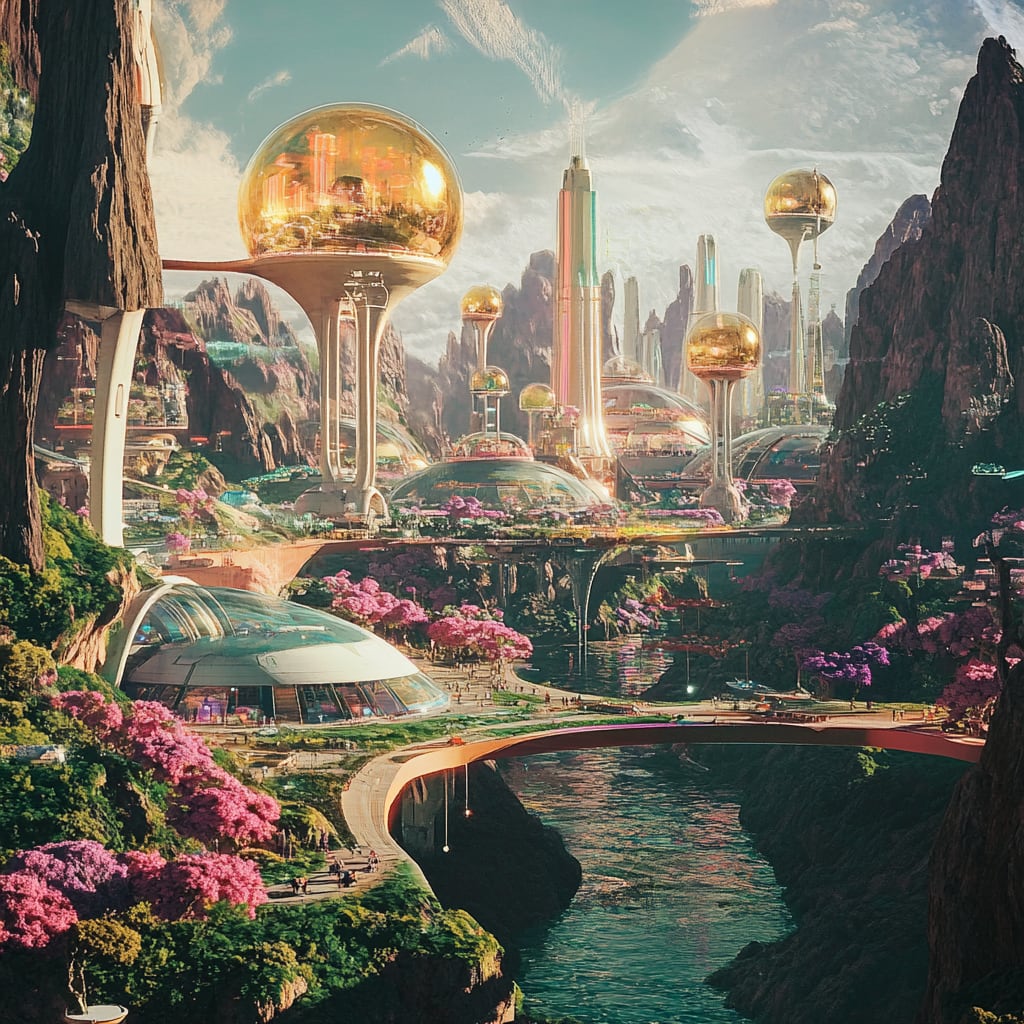
In the shimmering city of Elysium, dreams danced along gleaming spires that pierced the heavens. An era of unparalleled innovation had birthed a society seemingly without fault, where technology intertwined with life in a harmonious symphony. The past's afflictions—hunger, disease, and conflict—had been eradicated. Yet beneath this gilded veneer, the cracks of an unexpected reality began to form.
Sora, an architect of the future, found himself at the crux of this unfolding enigma. As he strolled through the pristine streets, the rhythmic hum of harmony resonated in the air. Around him, citizens donned Lumos, a wearable technology that amplified emotions, painting the world in vivid colors that reflected collective joy.
But today, the vibrant hues seemed to dim as whispers of disquiet rippled through the city. A paradox had emerged: the more perfect Elysium became, the more its citizens felt a strange emptiness. An increasing number of people, including Sora, felt an unsettling disconnect from their own emotions.
Sora's work revolved around designing structures that catered to the ever-changing needs of the populace. With every innovation, he aimed to enhance the quality of life, yet the nagging sensation of hollowness persisted. The very technology meant to amplify emotions was inadvertently muting them, as people relied more on Lumos to experience feelings rather than their own hearts and minds.
A breakthrough in his work led Sora to develop "Nexus," an advanced version of Lumos. It promised to bring people closer by not only amplifying emotions but synchronizing them as well. In theory, Nexus would allow individuals to truly understand one another's feelings, further strengthening the bonds within this utopia.
The unveiling of Nexus was met with fanfare. As Sora donned the device, a euphoric wave washed over him—but the feeling was short-lived. While everyone was indeed connected, the collective joy felt manufactured and sterile. The unintended consequence of synchronizing emotions was an alarming erosion of individuality.
Sora realized that the pursuit of perfection had compromised the essence of humanity itself. They had been chasing a flawless society at the expense of their own identities. The irony of their pursuit was clear: the very innovations that promised to uplift humanity ended up stripping away the core of their being.
A council meeting was convened, and Sora presented his findings. He urged the citizens of Elysium to reconsider their path. After much deliberation, it was decided that while technology would continue to play a vital role in shaping their society, they must preserve the human experience.
And so, the people of Elysium learned to embrace imperfection as a necessary part of life. They discovered that true progress lay not only in refining their surroundings but also in nurturing their individuality and emotions. Sora's cautionary tale reshaped the trajectory of Elysium, and together they forged a future that valued both the wonders of technology and the inherent beauty of human imperfection.
In the wake of this profound realization, Sora embarked on a new mission: to restore the essence of humanity within the technologically advanced society of Elysium. He believed that the key to achieving a balanced utopia lay in the harmonious coexistence of innovation and human individuality.
Sora's first initiative was the establishment of the "Humanity Conservatory," an institution dedicated to nurturing creativity, emotion, and self-expression. Here, citizens could engage in various activities—such as art, music, and literature—that encouraged them to explore their unique identities and emotions. The conservatory became a sanctuary for those seeking refuge from the synthetic emotions created by Nexus and a reminder of the rich, diverse tapestry of human experience.
Simultaneously, Sora sought to redefine the role of technology in their society. He believed that technology should serve as a tool for enhancing life rather than dictating it. Thus, he introduced the concept of "Empathic Technology," a revolutionary approach that prioritized emotional well-being and personal autonomy.
Empathic Technology revolved around creating devices that responded to users' emotions rather than controlling them. These devices were programmed to sense the emotional state of their users and adapt accordingly, providing support without intruding on personal experiences. This new technology allowed citizens to maintain their individuality while still reaping the benefits of advanced innovations.
Sora also recognized the need to foster emotional intelligence among the citizens of Elysium. He collaborated with educators to integrate emotional learning into the curriculum, ensuring that future generations would have the tools to navigate their emotions and maintain their unique identities amidst the rapid advancements in technology.
As Sora's initiatives took root, Elysium began to transform. The city's landscape evolved from a sterile environment governed by technology into a vibrant tapestry of innovation and human spirit. The once monochromatic streets were now adorned with colorful murals, reflecting the diverse emotions and experiences of its citizens.
Moreover, the people of Elysium embraced their imperfections, understanding that they were an inherent part of the human experience. They learned to appreciate the beauty in vulnerability and the strength in acknowledging their limitations. Through this newfound acceptance, the residents discovered a deeper connection with one another, fostering a sense of community that had been absent in their quest for perfection.
In time, Sora's vision of a balanced utopia became a reality. The citizens of Elysium had found a way to reconcile the wonders of technology with the sanctity of the human experience. By valuing both innovation and individuality, they had created a society that was not flawless but rather perfectly imperfect—a testament to the power of progress and the resilience of the human spirit.
The transformation of Elysium caught the attention of other cities that had been grappling with similar challenges. Leaders and visionaries from around the world flocked to Sora's utopia, eager to learn from his innovative approach to harmonizing technology and humanity.
Sora welcomed these visitors with open arms, sharing his experiences and insights on how to create a society that valued both progress and individuality. His philosophy of "Balanced Utopianism" began to spread across the globe, inspiring a new wave of thinkers and innovators to rethink the relationship between technology and the human experience.
This exchange of ideas led to the formation of the "Global Council for Balanced Utopianism," an international platform that facilitated dialogue on the development of empathetic technology and the preservation of human values in an increasingly digital world. Sora was appointed as the council's inaugural chairman, and under his leadership, the council launched numerous initiatives to promote emotional intelligence and individual expression in technologically advanced societies.
As the world embraced Balanced Utopianism, a new era of innovation emerged. Advancements in technology no longer came at the expense of human emotions and identity but rather complemented them, creating a harmonious blend of progress and authenticity.
Sora's journey served as a guiding light for generations to come, demonstrating the importance of questioning the pursuit of perfection and recognizing the inherent value of imperfection. His story became a timeless reminder that true progress lies not in eradicating flaws but in embracing them as a fundamental aspect of the human experience.
About the Creator
Faceless Lim
Our anonymous writer uses storytelling to share their life experiences, giving voice to the unheard.
Keep reading
More stories from Faceless Lim and writers in Futurism and other communities.
The Future in Harmony
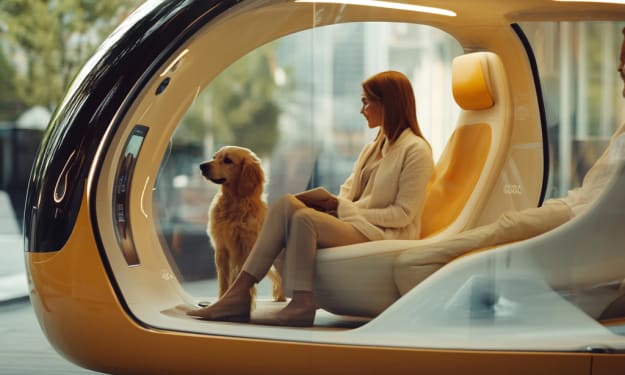
In the year 2050, the city of Los Angeles was unlike anything Elara had imagined as a child. Skyscrapers gleamed with eco-friendly materials, sidewalks were lined with greenery that filtered the air, and everywhere, self-driving vehicles flowed like a peaceful river, with no honking, no road rage, no rush. The city’s streets had become as serene as any countryside road, thanks to the advancements in technology and a shift in cultural values. Gone were the days of frenetic traffic jams and noise pollution. Instead, this was a world of connection and ease, where people were free to focus on each other, their surroundings, or simply themselves.
By Faceless Limabout a year ago in Futurism
Samsung Galaxy S26 Ultra Review: Why the "Stealth Upgrade" is 2026's Most Important Flagship
If you are suffering from smartphone upgrade fatigue, you are not alone. Over the past few years, the tech industry has settled into a predictable rhythm. Every January, a new slab of glass is unveiled, boasting slightly faster chips, an extra megapixel or two, and a marketing campaign that promises to revolutionize your life. When the Samsung Galaxy S26 Ultra leaked, many tech enthusiasts looked at the renders, saw a device that looked nearly identical to the Galaxy S25 Ultra, and collectively sighed.
By Tech Horizons2 days ago in Futurism
Samsung Galaxy S27 Ultra: Everything We Know About the Ultimate 6G Bridge
Let’s be honest: for the past few years, the smartphone industry has felt a little stagnant. We’ve grown accustomed to the annual cycle of slightly better cameras, marginally brighter displays, and battery life improvements that you barely notice in your day-to-day life. But every once in a while, a device comes along that shifts the paradigm, forcing us to rethink what a piece of glass and metal in our pockets can actually do. Enter the Samsung Galaxy S27 Ultra.
By Mohammad Hamida day ago in Futurism


Comments
There are no comments for this story
Be the first to respond and start the conversation.