
Newborn Screening Market Outlook: Early Disease Detection Expansion and Growth Opportunities
The newborn screening market is witnessing steady growth, driven by increasing awareness of early disease detection and rising government initiatives supporting neonatal healthcare programs.

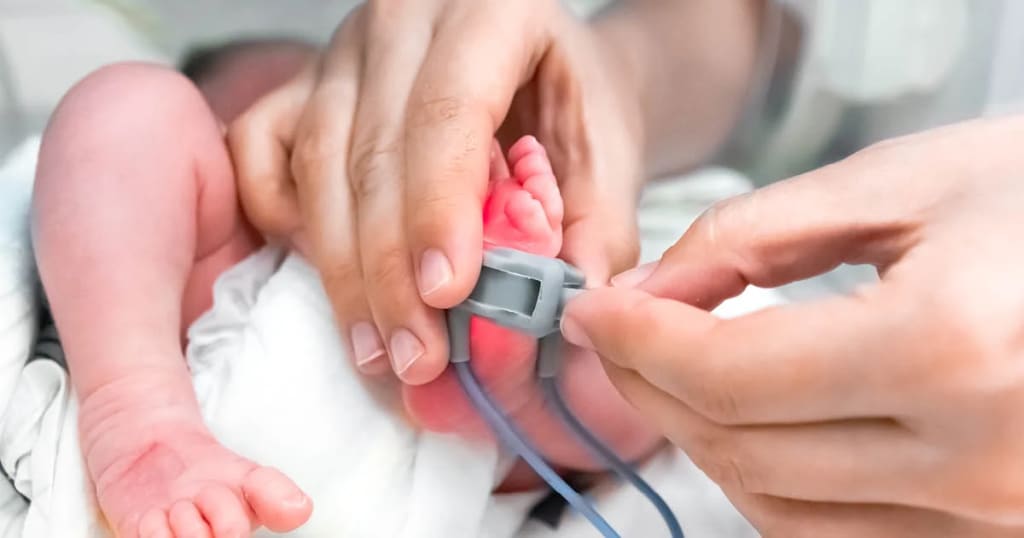
According to IMARC Group's latest research publication, The global newborn screening market size was valued at USD 1,089.3 Million in 2024. Looking forward, IMARC Group estimates the market to reach USD 1,818.1 Million by 2033, exhibiting a CAGR of 5.9% from 2025-2033
How AI is Reshaping the Future of Newborn Screening Market
- Enhanced Metabolic Disorder Detection: Machine learning algorithms analyze dried blood samples with improved precision, increasing positive predictive values from 16.2% to 71.9% for phenylketonuria and from 54.6% to 88.4% for MCADD, significantly reducing false positives while maintaining diagnostic accuracy.
- Automated Genome Sequencing Analysis: AI-powered platforms process newborn genome data within two weeks, achieving 97% reduction in false positives through hyperselection methods that identify disease-causing variants while maintaining over 99% sensitivity compared to traditional rapid diagnostic sequencing.
- Real-Time Image Analysis for Defect Detection: Deep learning models analyze ultrasound and neuroimaging with 92-96% accuracy, enabling early identification of congenital heart defects, brain abnormalities, and meningitis through automated classification, detection, and segmentation of medical images.

Newborn Screening Industry Overview:
On December 16, 2025, the Department of Health and Human Services Secretary added Duchenne Muscular Dystrophy and Metachromatic Leukodystrophy to the Recommended Uniform Screening Panel for newborns, expanding national guidelines. New York State's Newborn Screening Program tested more than 205,000 babies annually for over 50 conditions, with 671 infants confirmed to have screened conditions in 2024. New York became the first state implementing universal screening for metachromatic leukodystrophy in September 2025, funded by NICHD, anticipating 200,000 infants screened during the one-year pilot, while gene therapy approved in March 2024 enables life-saving early interventions.
Newborn Screening Market Trends & Drivers
Government-led screening initiatives in countries such as India and China have strengthened early detection programs across Asia Pacific, while mandatory policies drive comprehensive testing. The Centers for Disease Control and Prevention indicates that all U.S. states conduct screening for more than 30 core conditions, ensuring standardized care nationwide. Minnesota added Duchenne muscular dystrophy to its screening panel following advisory committee recommendation, with Commissioner Cunningham directing implementation steps including test method validation and clinical guideline development. Public health agencies coordinate with hospitals and pediatricians to provide follow-up testing, counseling, and treatment, creating robust screening ecosystems that connect families with specialized care immediately after positive results.
A National Academies report released in spring 2025 recommended systematic and nationally coordinated approaches for newborn blood spot screening after conducting comprehensive landscape analysis of systems, processes, and research, providing actionable guidance to policymakers. The Newborn Screening Saves Lives Reauthorization Act of 2025 promotes standardizing data collection through electronic health records for real-time tracking from initial positive screens through long-term care management. Congressional funding supports research programs developing new screening tests and performance evaluation services to enhance disease detection. Federal initiatives focus on surveillance activities coordination, helping states implement expanded panels while maintaining quality standards through technical assistance and data-driven quality improvement platforms like CDC's ED3N pilot program.
Clinical trials at Rady Children's Hospital demonstrated that nearly 30% of NICU babies not initially suspected of genetic diseases actually had detectable conditions through BeginNGS genomic screening, revealing unmet diagnostic needs. WHO introduced regional guidance in March 2024 to advance universal newborn screening across South-East Asia, emphasizing hearing impairment, eye abnormalities, and neonatal jaundice screening through standardized protocols. Next-generation sequencing costs continue declining while detection capabilities expand, enabling broader implementation across resource-limited settings. Advances in tandem mass spectrometry, enzyme-linked immunoassays, and DNA analyzers improve test sensitivity and specificity, while point-of-care technologies reduce diagnostic delays by enabling bedside screening before hospital discharge.
Leading Companies Operating in the Global Newborn Screening Industry:
- Agilent Technologies Inc.
- Baebies Inc.
- Bio-RAD Laboratories Inc.
- Chromsystems Instruments & Chemicals GmbH
- Danaher Corporation
- Masimo Corporation
- Medtronic plc
- Natus Medical Incorporated
- Perkinelmer Inc.
- RECIPE Chemicals + Instruments GmbH
- Thermo Fisher Scientific Inc.
- Trivitron Healthcare
- Waters Corporation
Newborn Screening Market Report Segmentation:
By Product:
- Instruments
- Reagents
Instruments represent the largest segment, accounting for around 77.6% of the market, as they play crucial roles in sample collection, analysis, and result interpretation including DNA analyzers, automated screening platforms, and mass spectrometry systems.
By Technology:
- Tandem Mass Spectrometry
- Pulse Oximetry
- Enzyme Based Assay
- DNA Assay
- Electrophoresis
- Others
Tandem mass spectrometry leads the market with around 23.8% share, as this analytical technique identifies multiple metabolic disorders simultaneously with improved accuracy and speed compared to traditional methods.
By Test Type:
- Dry Blood Spot Test
- CCHD
- Hearing Screen
Dry blood spot test dominates with around 46.5% market share, preferred for its non-invasive sample collection, ease of transportation, convenience, and ability to simultaneously screen for various conditions from a single heel-prick blood sample.
Regional Insights:
- North America (United States, Canada)
- Asia Pacific (China, Japan, India, South Korea, Australia, Indonesia, Others)
- Europe (Germany, France, United Kingdom, Italy, Spain, Russia, Others)
- Latin America (Brazil, Mexico, Others)
- Middle East and Africa
North America exhibits clear dominance in the newborn screening market, holding over 33.2% market share, due to mandatory screening policies, advanced healthcare infrastructure, comprehensive insurance coverage, and strong public health agency involvement.
Recent News and Developments in Newborn Screening Market
- December 2025: U.S. Department of Health and Human Services added Duchenne Muscular Dystrophy and Metachromatic Leukodystrophy to the Recommended Uniform Screening Panel, providing national guidance for states to implement screening for these rare genetic conditions affecting muscle function and nervous system development.
- November 2025: New York State Department of Health became the first in the nation to implement universal newborn screening for metachromatic leukodystrophy through a one-year pilot study funded by NICHD, screening approximately 200,000 infants to enable early gene therapy interventions.
- October 2025: New York State's Newborn Screening Program reported identifying 671 infants with serious conditions from over 205,000 babies tested, demonstrating the program's critical role in early detection of metabolic, endocrine, genetic, and infectious disorders preventing developmental delays and mortality.
- March 2024: World Health Organization launched implementation guidance for universal newborn screening in South-East Asia Region, focusing on hearing impairment, eye abnormalities, and neonatal jaundice detection through standardized protocols to reduce preventable disabilities.
- March 2024: Niloufer Hospital in Hyderabad launched comprehensive newborn screening program for rare genetic conditions including congenital hypothyroidism, congenital adrenal hyperplasia, G6PD deficiency, galactosemia, and biotinidase deficiency, expanding access to early detection services.
Note: If you require specific details, data, or insights that are not currently included in the scope of this report, we are happy to accommodate your request. As part of our customization service, we will gather and provide the additional information you need, tailored to your specific requirements. Please let us know your exact needs, and we will ensure the report is updated accordingly to meet your expectations.
About the Creator
Michael Richard
Michael Richard is a Market Research Expert specializing in market intelligence, competitive analysis, and data-driven insights. He helps organizations understand trends and emerging opportunities through in-depth research.
Keep reading
More stories from Michael Richard and writers in Futurism and other communities.
Hyperspectral Imaging Systems (HSI) Market Outlook: Advanced Imaging Applications and Growth Opportunities
According to IMARC Group's latest research publication, The global hyperspectral imaging systems market size was valued at USD 22.04 Billion in 2024. Looking forward, IMARC Group estimates the market to reach USD 80.87 Billion by 2033, exhibiting a CAGR of 14.76% from 2025-2033.
By Michael Richardabout 12 hours ago in Futurism
Nanocoatings Market: Oil & Gas Applications, Harsh Environment Protection & Growth Outlook
According to IMARC Group's latest research publication, global nanocoatings market size reached USD 14.2 Billion in 2024. Looking forward, IMARC Group expects the market to reach USD 58.2 Billion by 2033, exhibiting a growth rate (CAGR) of 16.09% during 2025-2033.
By sujeet. imarcgroupabout 7 hours ago in Futurism
Stanislav Kondrashov Oligarch Series: Rethinking Oligarchy in a Post-Stellar Civilisation
What happens to leadership when humanity no longer belongs to one planet, but to many star systems? It’s easy to get lost in images of advanced spacecraft and distant colonies. But here’s the uncomfortable truth: none of that exists without structure. Someone plans it. Someone funds it. Someone decides which risks are worth taking.
By Stanislav Kondrashov 6 days ago in Futurism




Comments
There are no comments for this story
Be the first to respond and start the conversation.