
NASA is sending us back to the Moon–to live
A lunar habitat is in our future

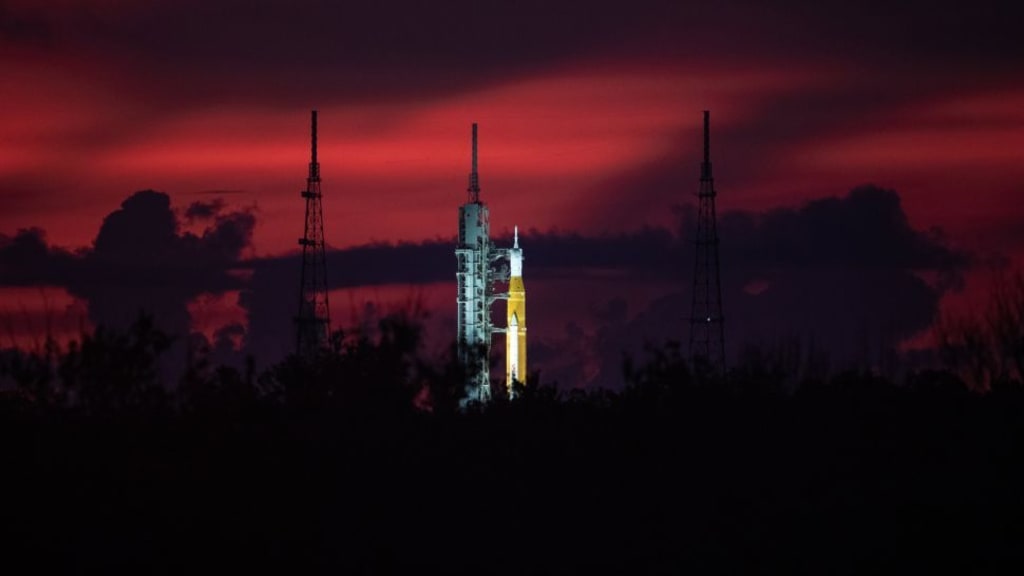
On Monday, August 29, 2022, NASA planned to launch the first rocket in the Artemis program. This first launch is unmanned. It is designed to prove the launch vehicle and its orbital characteristics, get to the Moon and safely return.
U nfortunately due to technical difficulties, the launch was scrubbed twice as of 29SEP2022. They moved the rocket back inside the Vehicle Assembly Building–VAB as a precaution as Hurricane Ian approached Florida. Adding to the bad luck, there was a small fire in the VAB. The fire did not affect the space vehicle.
The program’s long-term mission is to provide transportation of humans and needed supplies to build and sustain an outpost on the Moon. It essentially serves as a testbed for a human-crewed mission to Mars.
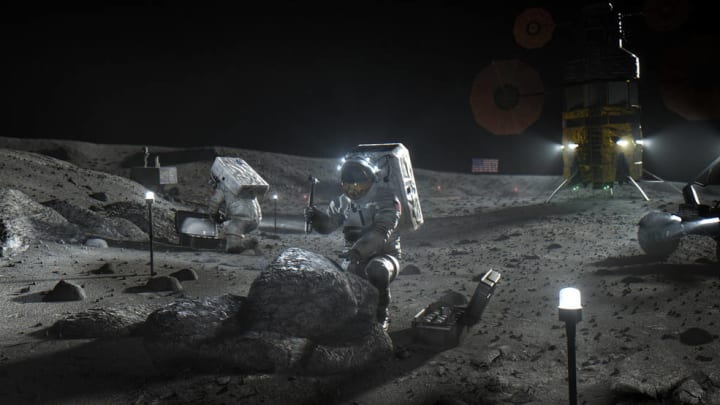
Illustration of Artemis astronauts on the Moon. NASA’s Artemis mission will establish a sustainable presence on the Moon to prepare for missions to Mars. Credit: NASA
“The value of a manned base on the Moon is to better understand our technologies in low-g as well as (more importantly) how the non-Earth g environment affects human physiology and psychology over various time scales. We cannot do this on Earth, and the ISS only gives us an extreme microgravity data point,” Haym Benaroya, Distinguished Professor, Mechanical & Aerospace Engineering, Rutgers, told t he author.
The lunar base is the third step in a plan to prepare humans to survive in space.
NASA proposes to mimic the space environment on Earth, prove extended life in space on the ISS, and then establish a base on the Moon to research how living in a deep-space environment affects the astronauts.
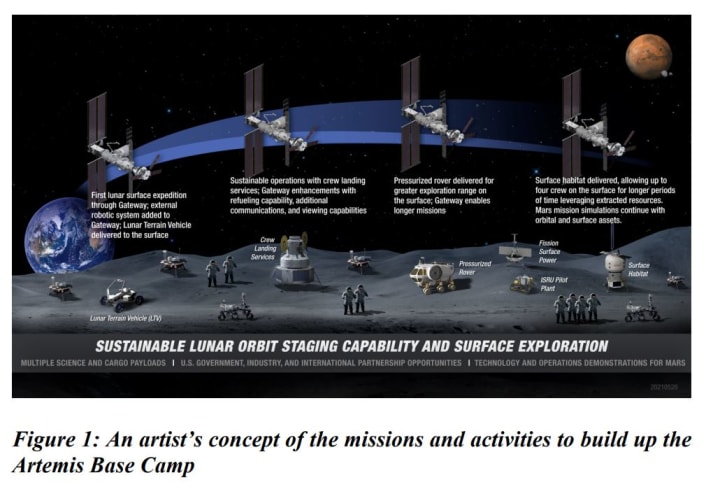
A NASA paper, “Artemis Deep Space Habitation: Enabling a SustainedHuman Presence on the Moon and Beyond," describes the physical layout of the habitat, including the base camp core elements–the Lunar Terrain Vehicle (LTV), Pressurized Rover (PR), Surface Habitat (SH), power systems, and in-situ resource utilization (ISRU) systems.
When will the moon base be a reality?
“Semi-permanent basing (is) likely about 2030, assuming we keep going without major disruptions,” said Benaroya
The moon base won’t be ready for a couple of years after landing humans on the Moon. The first habitat will be an ISS-like habitat on the lunar surface.
The habitat will be sustainable if given enough energy, infrastructure, robotics, manufacturing (3D and other), and engineering reliability/maintainability of all these, plus continuous human presence, yes. Many elements we need to live (oxygen, hydrogen, magnesium, silicon) are on the moon, but they need to be extracted.
We must answer the challenge of keeping humans healthy in the deeper space environment of the Moon.
Living on the moon is not a trivial task
Radiation protection will be an important factor in the design of the habitat. Humans must be protected against the ravages of space radiation. The ionizing energy can corrupt DNA as well as cause slow destruction of tissue and organs.
Dust can contaminate systems and play havoc with the ventilation. Airlock seals and living quarters can become covered in fine lunar dust.
During the 100-hour period of darkness, temperatures will have to be maintained during the lunar night. Human comfort and critical systems need to be protected against freezing and condensation.
Like any home, the exterior will require maintenance. This will require operations outside of the habitat. crew members must be able to do the excursions but also have the skills to complete repairs.
Be sure to read Jim Delillo's other featured stories on Vocal
You can write for Vocal, too– Join Here
About the Creator
Jim DeLillo
Jim DeLillo writes about tech, science, and travel. He is also an adventure photographer specializing in transporting imagery and descriptive narrative.
Keep reading
More stories from Jim DeLillo and writers in Futurism and other communities.
Arcosanti
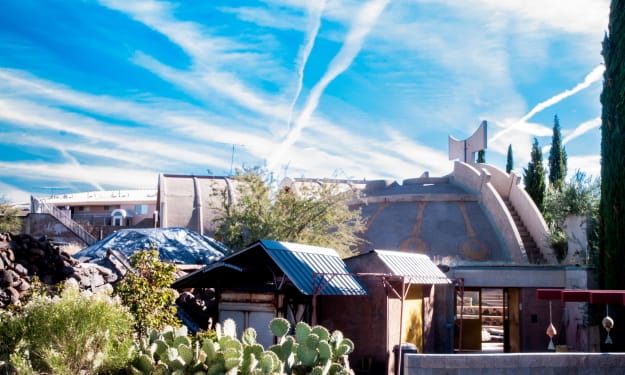
Driving through the desert of central Arizona, I came across a rather futuristic-looking structure. From the road, it looks like a habitat on Mars. Upon closer inspection, the ultramodern structures are part of an urban experiment– in arcology, the blending of architecture with ecology.
By Jim DeLillo4 years ago in Futurism
Alternative Fuels Market Insights: USD 688.2 Billion by 2034
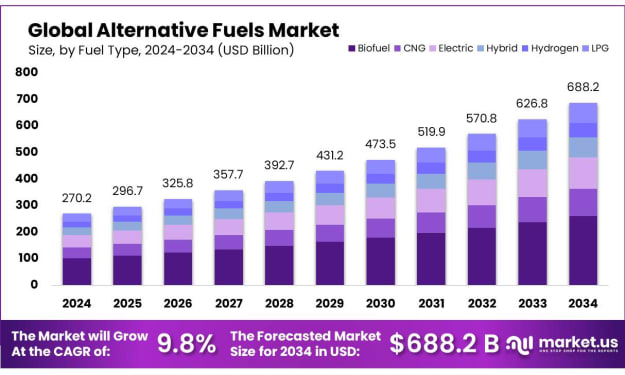
Overview The Global Alternative Fuels Market is on a strong growth trajectory, projected to expand from USD 270.2 billion in 2024 to USD 688.2 billion by 2034, representing a compound annual growth rate of 9.8% over the forecast period. North America currently leads the market, accounting for a 43.2% share of global revenue in 2024.
By Hayden Kulas4 days ago in Futurism
Smart Home Technology: What Life Looks Like When Your Home Can Actually Think
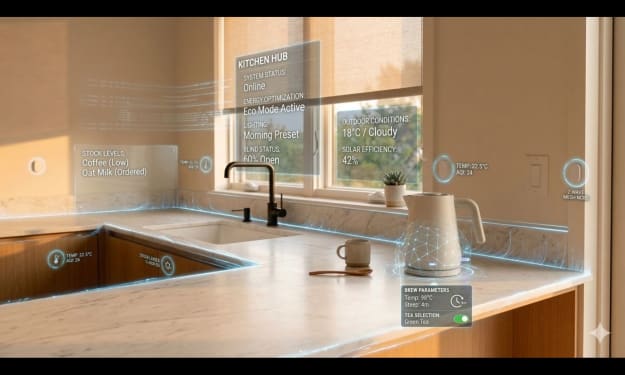
It is seven in the morning and the kitchen already knows. The blinds have lifted just enough to let in soft light without waking anyone who is still sleeping. The kettle began heating two minutes ago.
By CurlsAndCommas5 days ago in Futurism

Comments
There are no comments for this story
Be the first to respond and start the conversation.