
Mushroom Market Report: USD 136 Billion by 2032 at 9.5% CAGR
Global Mushroom Market Outlook 2023–2032: Size, Share, Growth Trends, and Forecast

Overview
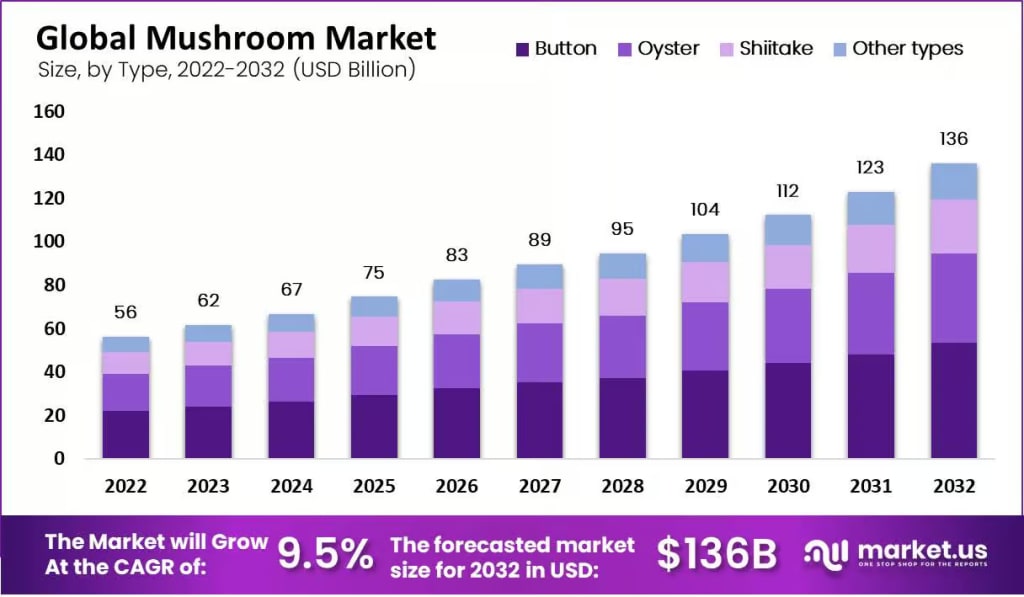
The Global Mushroom Market was valued at approximately USD 56 billion in 2022 and is projected to reach around USD 136 billion by 2032, expanding at a compound annual growth rate (CAGR) of 9.5% from 2023 to 2032. Although fungi rather than true plants, mushrooms (including edible varieties from classes such as Agaricomycetes and Ascomycota) are widely categorized as vegetables in culinary contexts.
Mushrooms are low-calorie foods offering moderate fiber along with an array of essential nutrients. Their standout value stems from bioactive, non-nutritive compounds—including polysaccharides, polyphenols, carotenoids, and indoles—that demonstrate antioxidant, anti-inflammatory, and potential anticancer properties in laboratory and animal research.
Hailed as a superfood, mushrooms deliver key nutrients like selenium, vitamin D, glutathione, and ergothioneine, which help counter oxidative stress and lower risks of chronic illnesses such as cancer, cardiovascular disease, and cognitive decline. Their intense umami taste also enables a 30–40% reduction in added salt in recipes, supporting lower-sodium, healthier diets.
Key Takeaways
- The Global Mushroom Market is projected to more than double from USD 56 billion in 2022 to USD 136 billion by 2032.
- Button mushrooms lead the market due to their low cost, nutritional value, and short incubation time.
- The oyster mushroom segment is poised for significant growth, driven by culinary popularity in Asia and pharmaceutical applications.
- Supermarkets and hypermarkets currently dominate sales, but online stores are the fastest-growing distribution channel.
- The food sector holds the largest market share, fueled by demand for healthy, nutrient-rich ingredients in restaurants and households.
- Mushrooms are increasingly used in functional foods and beverages, aligning with consumer trends toward natural wellness products.
- The Asia Pacific region is projected to account for 40% of the market, supported by traditional medicine systems like Ayurveda.
Key Market Segments
By Type
Button mushrooms maintain market leadership, thanks to their strong nutritional profile, faster production cycles (shorter spore incubation), and cost-effectiveness relative to other varieties, sustaining steady growth. The oyster mushroom category is set for robust expansion, driven by its tender texture, subtle savory taste favored in East Asian cuisines (e.g., China, Japan, Korea), and natural antibacterial elements like benzaldehyde, boosting appeal in pharmaceutical and health product development.
By Form
Fresh mushrooms command the top position, as consumers favor organic, minimally processed options for optimal nutrient retention. Although shelf life poses challenges, innovations in modified atmosphere packaging have extended viability and spurred demand. Processed forms—such as dried, frozen, canned, pickled, and powdered—are experiencing accelerated growth, offering longer storage and rising incorporation into foods, beverages, and cosmetics via powders and extracts.
By Distribution Channel
Supermarkets and hypermarkets capture the biggest portion, especially in mature markets like Europe and North America, due to broad selection and shopping convenience. Online retail is poised for the fastest rise, propelled by ease of access, competitive prices, and increasing comfort with purchasing fresh produce digitally worldwide.
By End-User
The food industry holds the primary share, with mushrooms integrated fresh or processed into household cooking, restaurant menus, and foodservice. Their low content of salt, gluten, cholesterol, and fat—paired with high protein, vitamins, and minerals—attracts health-focused buyers amid the push for natural, nutrient-dense foods. Companies are innovating with mushroom-enhanced functional drinks and meals.
The pharmaceutical segment shows strong potential, harnessing bioactive elements (e.g., triterpenes, polysaccharides, polyphenols) for applications in diabetes, cancer support, and immune health. In cosmetics, mushrooms' antioxidant, anti-aging, and brightening effects are driving adoption in clean beauty formulations.
Regional Analysis
The Asia Pacific region is expected to represent about 40% or more of the global market (with some estimates showing dominance around 75–80% in production and share), supported by longstanding use in systems like Traditional Chinese Medicine and Ayurveda for nutrition and immune enhancement.
Europe depends significantly on imports (e.g., around USD 183 million noted in earlier data) and sees demand boosted by high disposable incomes and interest in premium, exotic varieties. North America anticipates solid gains, fueled by growing enthusiasm for organic, premium, and natural items, plus vegan trends favoring mushrooms as meat alternatives in foods and supplements.
Top Use Cases
- Culinary Applications: Mushrooms remain a staple ingredient in everyday cooking, offered fresh or processed (dried, canned). They deliver deep flavors and nutrients while substituting meat in vegan recipes like burgers and stews. This continues as the leading application, supported by consistent demand from households, eateries, and manufacturers.
- Functional Foods and Beverages: Incorporating mushrooms into everyday drinks and snacks provides effortless health advantages—lion's mane for cognitive support in coffee, or cordyceps for energy in bars. Consumers appreciate these convenient, flavorful ways to boost wellness alongside meals, fueling rapid segment growth.
- Dietary Supplements: Extracts in capsules or powders deliver immune and adaptogenic benefits—reishi for relaxation, chaga for vitality. Popular for straightforward daily routines, this category surges with interest in natural, preventive plant-based options.
- Pharmaceutical Applications: Bioactive mushroom compounds contribute to developing therapies for immunity, inflammation, and specific conditions. Ongoing research highlights their promise for safer, nature-derived treatments, presenting substantial future opportunities in medicine.
Recent Developments
- Costa Group has invested in a modern facility in Guyra, NSW, Australia, to scale up production of both standard and specialty mushrooms using cutting-edge technology for better efficiency and output, reinforcing its role in meeting Australian fresh produce needs.
- Drinkwater Mushrooms This UK grower emphasizes sustainability through investments in energy-efficient systems for its mushroom tunnels, cutting emissions while ensuring a reliable year-round fresh supply to retail and foodservice clients.
- Bonduelle Group Under its Hello Future 2027 strategy, Bonduelle advances plant-based innovation, likely expanding mushroom use in value-added, ready-to-eat, and canned products to match trends in healthy, sustainable consumption.
- CMP Mushrooms As a leading Canadian player, CMP pursues capacity growth via improved composting and advanced farming methods, enhancing production to address North American demand for fresh and processed mushrooms.
- Monterey Mushroom, Inc. (noting common spelling variation from "Menterey"). This U.S. specialty producer expands gourmet offerings like lion's mane and maitake, targeting upscale restaurants and markets with organic, locally sourced practices to satisfy demand for distinctive, functional varieties.
Conclusion
The mushroom market is experiencing dynamic growth across food, wellness, sustainability, and personal care sectors. Heightened consumer recognition of nutritional and medicinal advantages, combined with preferences for plant-based and environmentally conscious choices, propels expansion. Advances in growing techniques and innovative products continue to unlock potential, establishing mushrooms as a versatile cornerstone in diverse industries.
About the Creator
Hayden Kulas
I am blogger, digital marketing pro since 5 years and writes for Market.us. Computer Engineer by profession. I love to find new ideas that improve websites' SEO. He enjoys sharing knowledge and information about many topics.
Keep reading
More stories from Hayden Kulas and writers in Futurism and other communities.
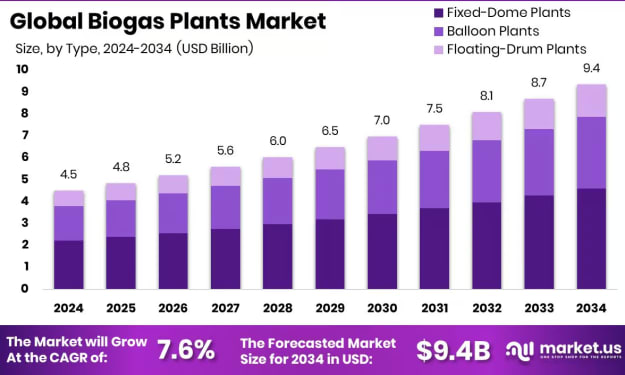
Biogas Plants Market To Reach USD 9.4 Billion by 2034 at 7.6% CAGR
Overview The Biogas Plants Market is projected to experience steady growth over the coming decade, driven by increasing demand for renewable energy and sustainable waste management solutions. The market is expected to be worth around USD 9.4 billion by 2034, up from USD 4.5 billion in 2024, growing at a compound annual growth rate (CAGR) of 7.6% from 2025 to 2034. Biogas plants convert organic waste such as agricultural residues, food waste, and animal manure into renewable energy in the form of biogas, which can be used for electricity generation, heating, and transportation fuel.
By Hayden Kulas3 days ago in Futurism
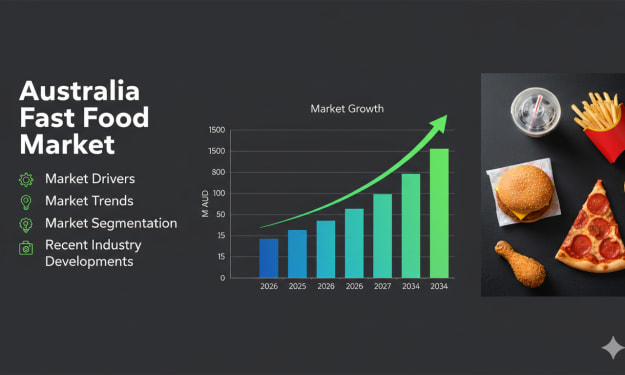
Australia Fast Food Market: Digital Ordering Ecosystems, Health-Focused Menu Innovation & Quick Service Expansion
According to IMARC Group, the Australia fast food market reached a value of USD 18.8 Billion in 2025 and is projected to reach USD 26.5 Billion by 2034, growing at a compound annual growth rate (CAGR) of 3.80% during 2026–2034. The market continues to expand as consumers increasingly prioritize convenience, quick service and accessible dining options that fit busy lifestyles. Fast food restaurants offer affordable and time-efficient meal solutions for urban populations, students and working professionals. Rising disposable incomes and changing food preferences are also encouraging consumers to explore a wider variety of cuisines offered by fast food brands. At the same time, digital transformation within the foodservice industry is enabling restaurants to adopt mobile ordering systems, delivery applications and automated kitchen operations. As competition intensifies among international fast food chains and domestic brands, companies are introducing menu innovations, healthier food options and enhanced digital ordering experiences to attract customers.
By Shrestha Roy3 days ago in Futurism
The Death of Trust: Can AI Mimic Your Soul?
I recently watched a video of an old friend of mine. In the clip, he was sobbing, confessing to a betrayal that seemed completely out of character. I almost reached for my phone to call him, my heart heavy with a mix of anger and confusion.
By Alex Sterling 7 days ago in Futurism
A Transparent Look at Vocal Challenges and Top Stories
Almost three years ago, we shared a resource article that served as a place for people to suggest new challenge prompts. We thought it would be a good idea to refresh that thread, and take the opportunity to answer a few common questions about top stories, how challenges are judged and how submissions are reviewed.
By Vocal Curation Team4 days ago in Resources


Comments
There are no comments for this story
Be the first to respond and start the conversation.