
Mini Exoplanet
A shortlist of planets possibly inhabited with life


Most are aware of how vast the universe is. Endless and unfathomable, a thought most people become overwhelmed by and try to suppress in their minds. We like to become ignorant and assume we are a lone superior species. The galaxy is aged at around 14 billion years, with humanity maxing out at 200,000 years. To believe we are the sole proprietors of the universe, is blasphemy to science itself. Below I have created a list, of other (possibly) inhabitable planets, within our universe.

Kepler-22B, named after being discovered by the Kepler Science Team. Kepler-22b is the first exoplanet, that the Kepler Space Telescope found in 2011, the habitable zone of its star. The habitable zone is the distance of the planet from the star it is orbiting. At 600 light-years from Earth, stronger telescopes would be needed to assess the surface of the planet better. It is estimated to be 2.4 times larger than Earth. The surface temperature average is around 72 degrees. The only problem that faces our inhabitance of this planet is the entirety of the surface appears to be ocean. The distance makes follow-ups difficult.

A much more attainable goal, Teegarden B is the fourth closest habitable exoplanet to Earth. It was discovered in 2019 and is 1.05x the size of Earth. Despite the unique similarities Teegarden shares with Earth, there is a large flaw that takes it off of the 'we should live there' list. Teegarden's sun is a red dwarf. This means that its sun is 8 billion years older than Earths', and with an aging dying sun, it destabilizes the atmosphere. Leaving Teegraden prone to harsh flares, which can strip the atmosphere and kill all life currently on the planet. Once, billions of years ago, Teegarden may have been home to aliens like us.

Rocks rain prevalent on this exoplanet. It was discovered in early 2020 by TESS (Transiting Exoplanet Survey Satellite). The planet is estimated to be almost identical to Earth's size, and with the planet being in a very similar habitable zone, it is thought that TOI 700d has a stable atmosphere. It orbits around the star TOI 700 (which also appears to be a red dwarf) This red dwarf has not aged to the point of destabilizing its planet's atmosphere.

This planet holds the nickname "Super Earth" within the habitable zone of its star. A mere 31 light-years from our Solar System. TESS also discovered this planet in 2019. GJ 357b is 20% closer to its parent star which is significantly smaller than our sun, creating a cooler atmosphere. The average temperature is thought to be around -64F. If the atmosphere is thicker than Earth's, it would raise the overall temperature. But, -64F is still human habitable.
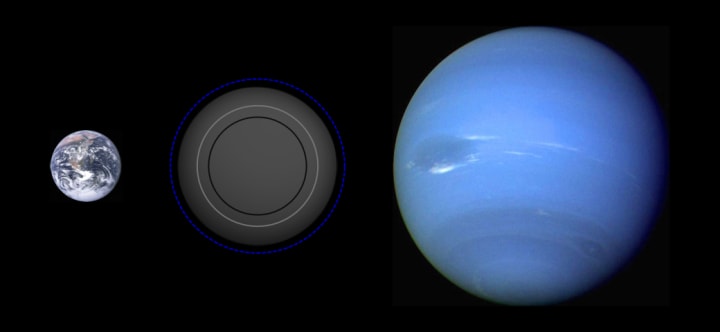
Gliese 581d is 20.4 light-years away from earth, located in the Libra constellation. It is over 6x larger than Earth but has not been confirmed yet as terrestrial. This is the first exoplanet of this size that could be inhabited. Since Gliese is significantly closer to its parent star, with water present, the planet would have to be much larger than Earth, the maximum size assumed to be 13.6x the size of our planet.
The five planets listed above are simply some of the billions scattered across our universe. The universe is endlessly expanding day by day, planets are being created and destroyed over the course of millions of years. We are ignorant to believe we are the only life forms in the galaxy.
Thank you for reading my shortlist of planets I personally found interesting! If you'd like to read more in-depth about each individual planet I'd love your feedback
About the Creator
Christen
Think logically. I know you can do it!
Office Furniture Market 2026–2034: Trends Reshaping Modern Work Environments
The Office Furniture Market Is Changing, and So Is the Way We Work There's something quietly fascinating about office furniture․ It's not the kind of thing most people think about until they've sat in the wrong chair for the fifth hour in a row and the back's starting its quiet protest․ But behind that awkward moment is a multibillion-dollar industry undergoing one of the most drastic transformations it has seen in its history․
By Frank Morgan4 days ago in Futurism
Supply Chain Analytics Market Overview: Digital Transformation, Cost Efficiency & Industry Outlook to 2033
Integrating advanced data tools into logistics operations is no longer just a luxury for tech giants; it’s a survival requirement in today’s volatile global economy. By turning massive amounts of raw data into clear, actionable insights, businesses are moving away from reactive firefighting toward proactive, resilient planning. According to IMARC Group’s latest data, The global supply chain analytics market size was valued at USD 9.39 Billion in 2025. Looking forward, IMARC Group estimates the market to reach USD 32.27 Billion by 2033, exhibiting a CAGR of 16.69% from 2025-2033.
By Andrew Sullivan5 days ago in Futurism



Comments
There are no comments for this story
Be the first to respond and start the conversation.