
Mastering Email Marketing: A Comprehensive Guide to Strategy, Growth, and ROI
Strategies to Build Your List, Boost Engagement, and Drive Sales


In the ever-evolving landscape of digital communication, where platforms emerge and recede with dizzying speed, one channel consistently proves its enduring power and effectiveness: email marketing. Far from being an outdated tactic, email remains a cornerstone of digital strategy, offering a direct, reliable, and highly personal way to connect with your audience, nurture leads, drive sales, and cultivate lasting customer loyalty. For businesses and marketers aiming for sustainable growth and a strong return on investment (ROI), mastering email marketing isn't optional – it's essential.
This comprehensive guide is designed to be your roadmap to building a powerful email marketing strategy. We'll explore everything from the fundamental principles to advanced tactics, helping you understand how to leverage this channel to build meaningful connections and achieve measurable business objectives.
Understanding the Core of Email Marketing
At its heart, email marketing is the practice of sending targeted commercial messages to a group of people via email. However, its true power lies in its ability to facilitate one-to-one or one-to-many communication at scale, fostering relationships built on trust and value. Effective email marketing isn't just about sending promotional blasts; it's about using email to:
- Cultivate Relationships: Build rapport and trust with prospects and customers over time.
- Drive Engagement: Encourage interaction with your brand, website, and content.
- Promote Offers: Announce new products, services, discounts, or events.
- Share Value: Deliver useful information, educational content, and insights.
- Increase Traffic: Direct subscribers to specific pages on your website.
- Gather Feedback: Conduct surveys and better understand your audience's needs.
While other channels like social media offer broad reach, email marketing provides a direct line to a highly interested audience – people who have explicitly chosen to hear from you. This makes the channel incredibly powerful for driving conversions.
The Proven Benefits: Why Email Delivers High ROI
The continued relevance of email marketing is strongly supported by its impressive performance metrics. It consistently boasts one of the highest ROIs among all digital marketing channels. While figures vary by industry, many businesses report earning $30-$40 or more for every dollar spent on email marketing.
[Suggested Visual: Infographic showing "Email Marketing ROI Stacked Against Other Channels"]
Key benefits contributing to this high return include:
- Direct Audience Reach: Your message lands directly in a subscriber's inbox, bypassing algorithm filters that limit reach on platforms like social media.
- Cost-Effectiveness: Compared to paid advertising, the cost per message sent is typically very low, making it highly scalable.
- Ownership of Your Audience: Your email list is an asset you own, independent of external platforms.
- Segmentation and Personalization: Easily divide your audience into segments and tailor messages for maximum relevance, significantly boosting engagement and conversion rates. Emails with personalized subject lines, for example, see significantly higher open rates (often cited around 26% higher).
- Measurable Results: Robust analytics provided by email platforms allow for precise tracking of performance, enabling data-driven optimization.
- Driving Conversions: Email is highly effective for prompting desired actions, whether it's a purchase, a download, or a sign-up. The average conversion rate for email is higher than many other channels.
- Fostering Loyalty: Regular, valuable communication keeps your brand top-of-mind and helps turn first-time buyers into repeat customers and brand advocates.
These compelling advantages underscore why email marketing remains a cornerstone strategy for businesses looking to connect deeply with their audience and achieve sustainable growth.
Building and Maintaining a High-Quality Email List
Your email list is the lifeblood of your email marketing efforts. The focus should always be on quality over quantity – a smaller list of engaged subscribers is far more valuable than a large list of uninterested contacts. Building a healthy list requires ethical practices and strategic effort.
Ethical List Building Strategies
- Permission is Paramount: Never add someone to your list without their explicit consent. This is not only a legal requirement in many regions (like under GDPR in Europe or CAN-SPAM in the US) but also fundamental to building trust and ensuring high deliverability. Buying email lists is unethical, illegal, and detrimental to your sender reputation.
- Transparency: Be clear about what subscribers will receive and how often you'll contact them when they sign up.
The Importance of Opt-in Methods
- Single Opt-in: A user is added to your list immediately after submitting their email address. This is faster but carries a higher risk of typos or fake addresses, potentially impacting deliverability.
- Double Opt-in: After submitting their email, the user receives a confirmation email with a link they must click to verify their subscription. This method is highly recommended as it confirms genuine interest, reduces spam complaints, and improves list quality and deliverability.
[Suggested Visual: Flowchart showing the Double Opt-in process]
List Segmentation for Maximum Impact
Sending the same generic email to everyone on your list is a common pitfall. Segmentation is key to increasing relevance and engagement. Divide your list based on criteria such as:
- Demographics: Location, age, job title, etc.
- Purchase History: First-time buyers, repeat customers, customers of specific products.
- Engagement Level: Active subscribers (recent opens/clicks), inactive subscribers.
- Interests: Based on the content they've consumed or preferences they've indicated.
- Lead Source: How they signed up (e.g., blog subscriber, webinar attendee, free trial user).
- Stage in Customer Journey: Prospect, new customer, loyal customer.
Segmenting allows you to send highly targeted messages, leading to significantly higher open rates, click-through rates, and conversions.
Maintaining List Hygiene
Regularly cleaning your email list is crucial for maintaining good deliverability and a healthy sender reputation.
- Remove Hard Bounces: These are permanent delivery failures (e.g., invalid email address). Your email service provider (ESP) usually handles this automatically, but it's good practice to monitor.
- Address Soft Bounces: These are temporary delivery issues (e.g., full inbox). If an address consistently soft bounces, consider removing it.
- Re-engage or Remove Inactive Subscribers: Subscribers who haven't opened or clicked emails in a long time can signal disinterest and negatively impact your engagement metrics. Run targeted re-engagement campaigns, and if they still don't respond, remove them from your active list.
Crafting High-Converting Email Campaigns
Sending emails is one thing; sending emails that achieve your goals is another. Crafting effective campaigns involves several interconnected elements.
Subject Lines & Preheaders That Get Opened
Your subject line is the gatekeeper to your email's content. It needs to be compelling enough to stand out in a crowded inbox.
- Keep it Concise: Aim for around 6-10 words, as longer subject lines can get cut off, especially on mobile.
- Be Clear and Relevant: Subscribers should have a good idea of what the email is about.
- Spark Curiosity (without being clickbait): Pose a question, hint at a benefit, or create a sense of urgency (use urgency honestly).
- Personalize: Including the subscriber's name can increase open rates.
- Use Emojis Sparingly: Can increase visibility but use relevant ones and test how they appear on different devices.
The preheader text is the short line visible next to or below the subject line. Use this valuable space to complement the subject line and provide further incentive to open.
Writing Engaging Email Body Content
Once opened, your email content must hold the reader's attention and guide them towards your goal.
- Focus on Value: What's in it for the reader? Highlight the benefits of your offer or the value of the information you're sharing.
- Be Concise and Scannable: People often skim emails. Use short paragraphs, bullet points, numbered lists, and bold text to make key information easy to find.
- Maintain Brand Voice: Ensure the tone and style align with your overall brand identity.
- Tell a Story: Stories are engaging and can make your message more memorable.
- Mobile-Friendly Copy: Write shorter sentences and paragraphs that are easy to read on small screens.
Designing for Readability and Mobile
Email design plays a significant role in user experience and engagement.
- Responsive Design: Your email must look good and function correctly on all devices (desktops, tablets, smartphones). Most modern ESPs offer responsive templates.
- Clean Layout: Use plenty of white space. Avoid clutter. Focus on a clear hierarchy of information.
- Image Use: Use images strategically to enhance the message, but don't rely solely on them (images can be blocked). Ensure images are optimized for fast loading. Use alt text for all images for accessibility and in case images don't load.
- Alt text suggestion: "Example of a mobile-responsive email template."
- Alt text suggestion: "Infographic showing email engagement statistics by industry."
- Branding: Include your logo and consistent branding elements.
Calls to Action (CTAs) That Drive Results
Every marketing email should have a clear objective and a prominent call to action.
- Make it Obvious: Use a button (preferred over text links) with contrasting colors.
- Use Action-Oriented Text: Instead of "Click Here," use phrases like "Shop the Sale," "Download Now," "Learn More," "Register Today," or "Get Your Free Trial."
- Place Prominently: Your primary CTA should be easy to find, often "above the fold" (visible without scrolling) and potentially repeated lower in the email.
- Single Primary CTA (Usually): While you might have secondary links, focus on driving traffic to one main action per email for clarity.
Types of Email Campaigns
Different goals require different campaign types:
- Welcome Emails: Sent to new subscribers. Introduce your brand, set expectations, and deliver any lead magnets. Welcome sequences have some of the highest open rates.
- Newsletters: Regular updates sharing valuable content, news, or insights.
- Promotional Emails: Announcing sales, new products, or special offers.
- Abandoned Cart Emails: Sent to users who left items in their online shopping cart. Highly effective for recovering lost sales.
- Re-engagement Campaigns: Aimed at winning back inactive subscribers.
- Transactional Emails: Sent in response to a user action (e.g., order confirmation, shipping notification, password reset). These have very high open rates and can include subtle marketing messages.
Essential Email Marketing Metrics to Track
Analyzing your email performance data is critical for optimization. Your ESP's analytics dashboard is your best friend.
Understanding Open Rates
- What it is: The percentage of subscribers who opened your email.
- What it tells you: Effectiveness of your subject line, preheader, and sender name/reputation.
- Benchmarking: Average open rates vary significantly by industry (ranging from 15% to over 25%). Aim to beat industry averages.
Analyzing Click-Through Rates (CTR)
- What it is: The percentage of subscribers who clicked on at least one link in your email (usually reported as unique clicks).
- What it tells you: How engaging your email content, design, and CTAs are, and how relevant the offer is to the segment.
- Benchmarking: Average CTRs also vary by industry (often ranging from 1% to 5%+).
Measuring Conversion Rates
What it is: The percentage of subscribers who completed a desired action (e.g., purchase, download, sign-up) after clicking a link in the email.
What it tells you: The ultimate success of your email campaign in driving business results. Requires tracking beyond the email platform, often using analytics tools like Google Analytics with UTM parameters.
Bounce and Unsubscribe Rates
- Bounce Rate: Percentage of emails that couldn't be delivered. Monitor hard bounces (permanent) and soft bounces (temporary). High bounce rates hurt deliverability.
- Unsubscribe Rate: Percentage of subscribers who opted out. A low rate is good (<0.5%). A high rate indicates issues with targeting, content, or frequency.
Spam Complaint Rate
- What it is: Percentage of subscribers who marked your email as spam.
- What it tells you: A critical metric. High rates (even above 0.1%) severely damage your sender reputation and ability to reach the inbox. Usually caused by sending to uninterested lists, lack of permission, or irrelevant content.
Calculating Email Marketing ROI
- Formula: (Revenue from Email Campaigns - Cost of Email Marketing) / Cost of Email Marketing
- What it tells you: The financial return generated by your email efforts. Requires tracking revenue directly attributed to email campaigns.
[Suggested Visual: Simple chart showing benchmark average open and click rates across a few common industries]
Analyzing these metrics helps you understand what's working and what's not, guiding your optimization efforts.
Leveraging Email Marketing Automation
Email automation is a powerful tool for delivering timely, relevant messages without manual intervention for every subscriber. It involves setting up automated email sequences or single emails triggered by specific user actions or predefined schedules.
Welcome Sequences
Triggered immediately after someone subscribes. This is your chance to make a great first impression, deliver promised lead magnets, introduce your brand story, and set expectations. A typical welcome sequence might be 3-5 emails sent over a week.
Abandoned Cart Flows
Sent to users who add items to their online cart but leave before purchasing. These are highly effective reminders and can significantly boost recovered revenue. Often a series of 1-3 emails sent within 24-48 hours of abandonment.
Lead Nurturing Campaigns
Designed to educate prospects and move them down the sales funnel. Content focuses on building trust, addressing pain points, and showcasing how your solution can help.
Re-engagement Workflows
Automated sequences sent to inactive subscribers to try and rekindle their interest before removing them from the list.
Automation saves time, ensures consistency, and delivers more personalized experiences at scale. [Suggested Internal Link: Link to a blog post specifically about "Setting Up Email Marketing Automation Workflows"]
Advanced Email Marketing Strategies
Once you have the fundamentals down, explore more advanced tactics:
- A/B Testing Your Campaigns: Don't guess what works. Test variations of subject lines, CTAs, email copy, layout, and sending times on a portion of your audience before sending the winning version to the rest.
- Personalization Beyond the First Name: Use dynamic content based on subscriber data (location, preferences, past purchases, website activity) to make emails highly relevant.
- Integrating Email with Other Marketing Channels: Connect your email list with social media for targeted ads, use email sign-ups in paid campaigns, and align your email content with your blog and website.
- Transactional Emails: More Than Just Receipts: While their primary purpose is functional, transactional emails (like order confirmations or shipping updates) have incredibly high engagement. Use them subtly to reinforce branding, suggest related products, or encourage social shares.
Key Best Practices for Long-Term Success
Consistently applying these best practices is key to maximizing the effectiveness of your email marketing:
- Always Prioritize Permission: Never send unsolicited emails.
- Make Unsubscribing Easy: A clear, one-click unsubscribe link is mandatory and builds trust.
- Respect Privacy: Be compliant with data protection regulations.
- Maintain Consistency (But Don't Spam): Send emails often enough to stay top-of-mind, but not so often that you annoy subscribers.
- Provide Genuine Value: Every email should offer something worthwhile to the reader.
- Segment Your Audience Ruthlessly: The more targeted your emails, the better the results.
- Analyze Your Data and Iterate: Use metrics to inform your strategy and constantly test improvements.
- Ensure Mobile-Friendliness: Design and content must be optimized for mobile.
- Monitor Deliverability: Use tools to check where your emails are landing.
- Clean Your List Regularly: Remove inactive subscribers.
[Suggested External Link: Link to a reputable source on email marketing best practices or regulations (e.g., Mailchimp guide, Constant Contact resources, or a government privacy law site like GDPR info)]
Powering Your Business with Email
Email marketing is a dynamic and incredibly powerful tool for connecting with your audience, nurturing leads, and driving significant ROI. It offers a level of directness, personalization, and measurability that is hard to match. By focusing on building a high-quality list through ethical practices, segmenting your audience, crafting compelling and valuable content, leveraging automation, and continuously analyzing your performance, you can build an email marketing strategy that fuels sustainable business growth.
Start implementing these strategies today and harness the enduring power of email to build stronger connections and achieve your marketing goals.
Ready to transform your customer communication? Start building your email list and crafting your first campaign today!
About the Creator
About Binding Prometheus
I want to start actively advocating on behalf of my own work, and the most valuable part of my canon is, without a doubt, Binding Prometheus, the play I have been working on since 2019 and only finished in 2023 as part of my MA. The play itself is an amalgamation of a million different inspirations. On one end, it evokes the Ancient Greek myth-play, deriving its own title from the earliest extant work of Western drama we have, Aeschylus’s Prometheus Bound. On the other end, it borrows significantly from the sci-fi bulwarks from over the years, namely Mary Shelley’s Frankenstein and Karel Capek’s Rossum’s Universal Robots. The play could be an episode of Black Mirror, I fear. I don’t know. I’ve only ever seen one episode of Black Mirror.
By Steven Christopher McKnight15 days ago in Futurism
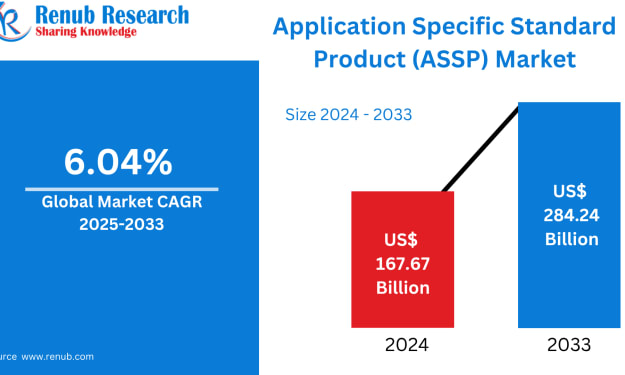
Application Specific Standard Product (ASSP) Market Size and Forecast 2025–2033
Introduction: A Market Built for Precision The global semiconductor industry is undergoing a profound transformation as demand shifts from general-purpose processing toward specialized, application-focused solutions. At the heart of this shift lies the Application Specific Standard Product (ASSP)—a category of integrated circuits that blends the efficiency of custom chips with the scalability of standard semiconductor products. Designed to perform specific functions across multiple applications, ASSPs offer a powerful balance of performance, cost-effectiveness, and time-to-market.
By Renub Research4 days ago in Futurism



Comments
There are no comments for this story
Be the first to respond and start the conversation.