
Magnet Market: Emerging Applications, Customization Trends & Competitive Strategies
How defense modernization, aerospace applications, and advanced engineering needs are driving specialized magnet demand

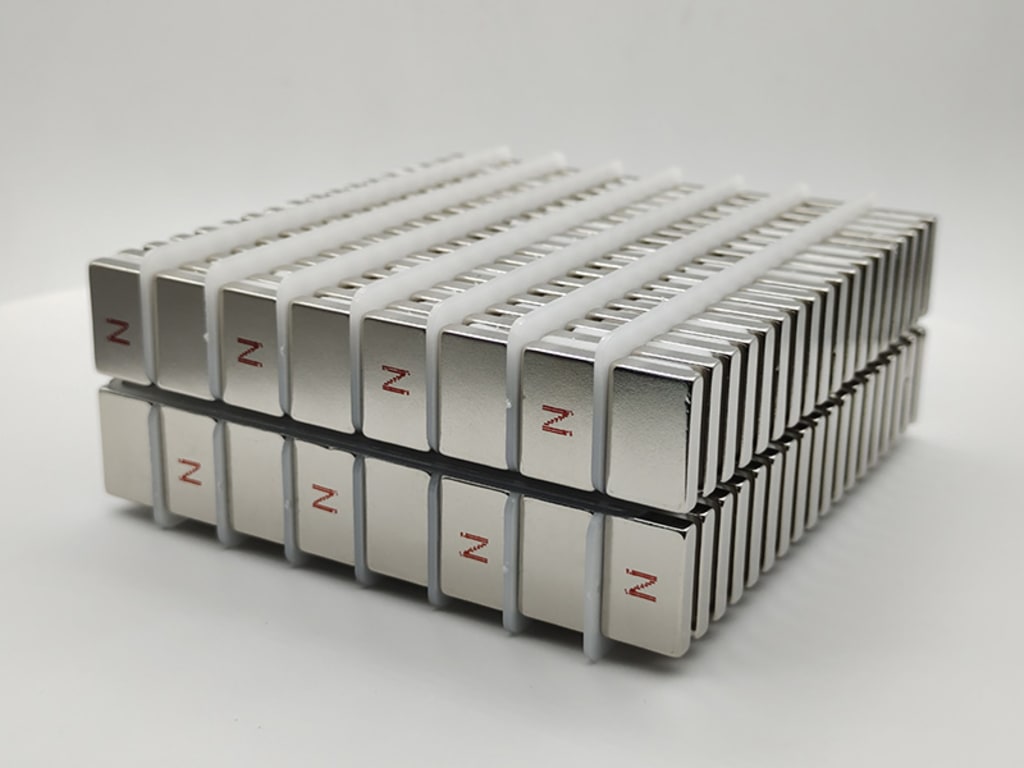
Rising electric vehicle adoption, renewable energy installations, industrial automation, and demand for high-efficiency motors are accelerating magnet usage across automotive, energy, electronics, and manufacturing sectors worldwide. According to IMARC Group's latest research publication, global magnet market size reached USD 41.75 Billion in 2024. Looking forward, IMARC Group expects the market to reach USD 58.7 Billion by 2033, exhibiting a growth rate (CAGR) of 3.82% during 2025-2033.
How AI is Reshaping the Future of Magnet Market
- Predictive Manufacturing Optimization: AI systems analyze production data to optimize magnetic field strength and coating quality, reducing defects by 35% while improving energy efficiency across sintering processes.
- Supply Chain Risk Management: Machine learning models monitor rare earth element availability and geopolitical factors, helping manufacturers secure alternative suppliers and adjust procurement strategies to mitigate disruption risks.
- Quality Control and Performance Testing: Computer vision systems inspect magnet surface defects and measure magnetic properties with 99% accuracy, ensuring only high-performance magnets reach automotive and electronics manufacturers.
The magnet industry is experiencing robust growth driven by electric vehicle adoption and renewable energy expansion. Neodymium iron boron magnets dominate with superior magnetic strength, capturing the largest market share across automotive and wind turbine applications. China controls approximately 90% of global rare earth magnet production, prompting Western nations to invest heavily in domestic manufacturing facilities. New plants in Estonia and Texas aim to supply 1-2 million EVs annually by 2026, supported by policies like the EU Critical Raw Materials Act and US Inflation Reduction Act.
Magnet Market Trends & Drivers
Electric vehicle proliferation is the primary growth catalyst for the magnet market. EV motor demand reached 37 kilotons of rare earth magnets in 2024 and is projected to hit 43 kilotons in 2025, driven by permanent magnet synchronous motors used in 86% of electric vehicles. Each EV requires approximately 1.5 kg of neodymium magnets, translating to substantial volume as global EV sales surge 25% annually. Major automakers including Tesla, BYD, and General Motors have secured long-term supply agreements with magnet manufacturers to support production targets exceeding 40 million EVs outside China by 2035, creating sustained demand worth an estimated USD 5 billion in Western markets alone.
Renewable energy expansion, particularly offshore wind installations, is accelerating magnet consumption for power generation. Wind turbines require several kilograms of high-performance magnets per unit, with direct-drive generators favoring neodymium magnets for superior efficiency and reduced maintenance requirements. Government commitments to carbon neutrality targets are fueling wind capacity additions globally, with the IEA projecting renewable energy to account for 35% of global electricity by 2030. This transition creates substantial magnet demand as wind farms scale operations, while manufacturers simultaneously invest in recycling technologies to recover rare earth elements from decommissioned turbines and electronic waste, establishing circular supply chains.
Technological innovation in magnet composition is addressing cost and supply challenges while expanding application possibilities. Researchers at Lawrence Livermore National Laboratory developed energy-efficient neodymium production methods reducing costs from USD 14 to USD 5 per kilogram, making domestic manufacturing economically viable. Toyota pioneered neodymium-reduced magnets using lanthanum and cerium, cutting rare earth content by 50% while maintaining heat resistance for high-performance motors. Companies like Proterial are advancing neodymium-free motor technologies for mass production, while emerging applications in robotics, medical devices, and data center cooling systems diversify demand beyond traditional automotive and industrial sectors, ensuring sustained market growth.
Leading Companies Operating in the Global Magnet Industry:
- Adams Magnetic Products, LLC
- Arnold Magnetic Technologies
- BGRIMM Technology Group
- Daido Kogyo Co., Ltd.
- DMEGC
- Electron Energy Corporation
- Goudsmit Magnetics
- Lynas Rare Earths Ltd
- Magnequench International, LLC
- Proterial, Ltd
- Shin-Etsu Chemical Co., Ltd.
- TDK Corporation
- Yantai Dongxing Magnetic Materials Inc
Magnet Market Report Segmentation:
By Magnet Type:
- Ferrite
- Neodymium Iron Boron (NdFeB)
- Aluminium Nickel Cobalt (AlNiCo)
- Samarium Cobalt (SmCo)
The permanent magnet market is segmented by magnet type, with NdFeB dominating due to its superior strength, followed by ferrite for cost-effectiveness, AlNiCo for temperature stability, and SmCo for extreme conditions.
By Application:
- Computer Hard Disk Drives (HDD), CD, DVD
- Hybrid Electric Vehicles
- Electric Bicycles
- Heating, Ventilating and Air Conditioners (HVAC)
- Wind Turbines
- Other Applications
- Transducers and Loudspeakers
- Magnetic Separation Equipment and Sorters
- Magnetic Resonance Imaging (MRI)
- Magnetic Braking Systems
- Magnetically Levitated Transportation Systems
- Medicine and Health
- Credit Cards and other ID Cards
- Traveling Waves Tubes (TWT)
- Advertising and Promotional Products
- Magnetic Refrigeration system
- Nanotechnology
- Military and Aerospace
- Energy Storage Systems
The permanent magnet market is dominated by computer hard disk drives (HDD), CD, DVD applications, with significant growth in hybrid/electric vehicles, e-bikes, HVAC, and wind turbines, driven by demand for efficient, reliable, and high-performance magnetic solutions.
Regional Insights:
- China
- Japan
- USA
- Europe
- Other Regions
China leads the permanent magnet market due to its manufacturing capacity and rare earth dominance, while Japan, the USA, and Europe emphasize technological innovation and sustainable applications.
Recent News and Developments in Magnet Market
- June 2025: The Ministry of Heavy Industries and Department of Atomic Energy in India prepared to conclude a plan for producing rare earth magnets. The government intended to launch a new initiative with an investment of INR 1,000 Crore aimed at enhancing domestic production of rare earth magnets, crucial components for electric vehicles, electronics, and defense sectors.
- April 2025: ITER completed the world's largest and most powerful pulsed magnet system, with key components built by the USA, Russia, Europe, and China. The system functions as the electromagnetic core of ITER's donut-shaped Tokamak reactor for fusion energy research.
- February 2025: GE HealthCare introduced Freelium, a groundbreaking sealed magnet system designed to facilitate high-quality magnetic resonance imaging while using under 1% of helium relative to traditional magnet technology, with over 2,000 installations globally at 1.5T and 3.0T magnetic fields.
Note: If you require specific details, data, or insights that are not currently included in the scope of this report, we are happy to accommodate your request. As part of our customization service, we will gather and provide the additional information you need, tailored to your specific requirements. Please let us know your exact needs, and we will ensure the report is updated accordingly to meet your expectations.
About the Creator
Andrew Sullivan
Hello, I’m Andrew Sullivan. I have over 9+ years of experience as a market research specialist.
Keep reading
More stories from Andrew Sullivan and writers in Futurism and other communities.
Washing Machine Market: Water-Saving Technologies, Consumer Preferences & Outlook
Rising urbanization, increasing disposable incomes, expanding nuclear households, and growing adoption of energy-efficient, smart appliances are accelerating demand across residential and rental housing segments globally. According to IMARC Group's latest research publication, global washing machine market size reached USD 58.8 Billion in 2025. Looking forward, IMARC Group expects the market to reach USD 81.7 Billion by 2034, exhibiting a growth rate (CAGR) of 3.72% during 2026-2034.
By Andrew Sullivana day ago in Futurism
About Binding Prometheus
I want to start actively advocating on behalf of my own work, and the most valuable part of my canon is, without a doubt, Binding Prometheus, the play I have been working on since 2019 and only finished in 2023 as part of my MA. The play itself is an amalgamation of a million different inspirations. On one end, it evokes the Ancient Greek myth-play, deriving its own title from the earliest extant work of Western drama we have, Aeschylus’s Prometheus Bound. On the other end, it borrows significantly from the sci-fi bulwarks from over the years, namely Mary Shelley’s Frankenstein and Karel Capek’s Rossum’s Universal Robots. The play could be an episode of Black Mirror, I fear. I don’t know. I’ve only ever seen one episode of Black Mirror.
By Steven Christopher McKnight27 days ago in Futurism




Comments
There are no comments for this story
Be the first to respond and start the conversation.