
Kitchen Appliances Industry: Smart Homes, Sustainability & Product Innovation Trends
How smart connectivity, AI-enabled appliances, and connected home ecosystems are transforming kitchen functionality and consumer expectations

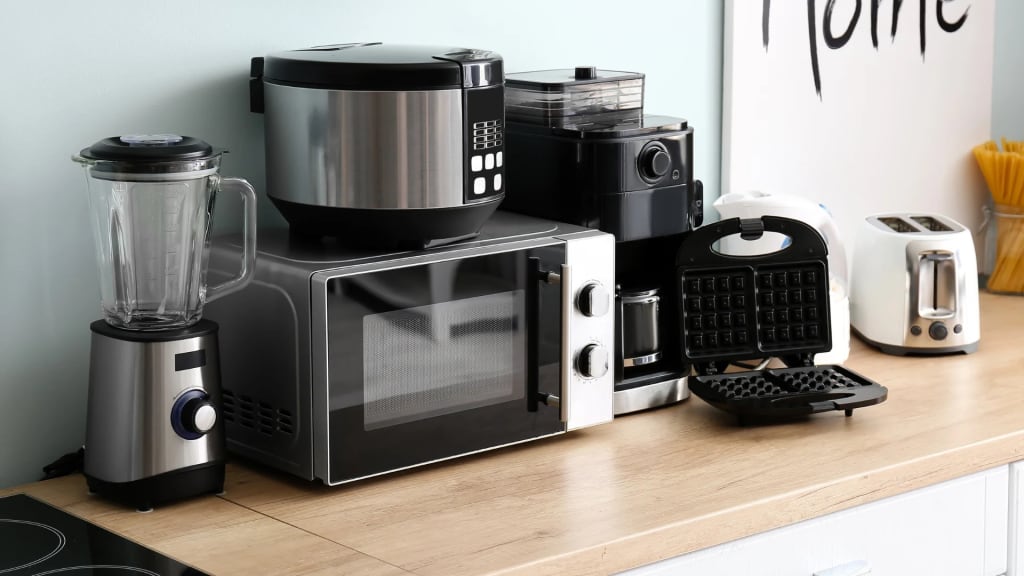
According to IMARC Group's latest research publication, global kitchen appliances market size reached USD 242.96 Billion in 2024. Looking forward, IMARC Group expects the market to reach USD 353.96 Billion by 2033, exhibiting a growth rate (CAGR) of 4.82% during 2025-2033.
How AI is Reshaping the Future of Kitchen Appliances Market
- Smart Refrigerators with Grocery Recognition: AI-powered fridges identify over 30 grocery types, suggest personalized meal plans, and use machine learning to analyze usage patterns for optimized energy consumption and reduced waste.
- Intelligent Cooking Assistance Systems: Smart ovens provide real-time cooking guidance, automatically adjust settings based on food detection, and offer step-by-step instructions for restaurant-quality results through built-in AI technology.
- Voice-Controlled Automation with Predictive Maintenance: Integration with Alexa and Google Assistant enables hands-free operation, while predictive algorithms monitor appliance performance metrics to prevent failures before they occur.
- Conversational AI for Meal Planning: Natural language processing understands dietary preferences, suggests ingredient substitutions, creates shopping lists, and syncs with grocery delivery apps for seamless meal preparation and planning.
Kitchen Appliances Industry Overview
The kitchen appliances industry is transforming rapidly as smart home technology becomes mainstream. Over 60% of U.S. consumers now use connected devices, pushing major brands to invest heavily in AI-powered innovations. With IoT devices expected to surpass 25 billion connections, kitchen appliances are central to this ecosystem. Smart refrigerators now identify groceries, track expiration dates, and reduce food waste through intelligent management. Energy efficiency has become crucial, with ENERGY STAR-certified appliances using up to 15% less energy than conventional models. The Inflation Reduction Act provides up to $840 in rebates for electric cooking appliances, encouraging the shift from gas to more efficient electric and induction technologies. While premium smart fridges can exceed $3,000, the market is moving toward mainstream adoption as interfaces improve and prices gradually decline.
Explore the “Kitchen Appliances Market” Report with a Free Sample
Kitchen Appliances Market Trends & Drivers
The explosive growth of online retail has transformed kitchen appliance purchasing behavior across the globe. E-commerce is now a USD 6.8 trillion sector expected to hit USD 8 trillion, with over 33% of the global population shopping online. U.S. e-commerce sales increased 7.2% compared to the previous year, driven by competitive pricing, detailed product comparisons, and convenient home delivery. Direct-to-consumer brands are leveraging exclusive online launches and virtual showrooms with AI-driven recommendations to enhance engagement. Subscription services and flexible financing options encourage consumers to upgrade their existing setups. The online shift has particularly benefited specialty stores, which maintain 34.2% of distribution channel share by combining expert knowledge with digital convenience. This accessibility allows customers to explore everything from basic refrigerators to innovative smart appliances, with attractive discounts enticing budget-conscious shoppers to make purchasing decisions from home.
Technological innovation is fundamentally reshaping kitchen experiences through AI and IoT connectivity. The global smartphone market grew 10% year-on-year reaching 296.2 million units, creating a vast ecosystem for connected appliance control. Voice recognition enables effortless command issuing, while machine learning algorithms adapt to preferences and optimize cooking processes automatically. Samsung's Bespoke AI Family Hub+ refrigerator recognizes groceries and suggests meal plans, while LG's ThinQ ecosystem creates interconnected experiences across multiple appliances. GE Appliances introduced AI-powered features in its SmartHQ app, including visual recognition that turns photos into personalized recipes with automatic grocery shopping via Instacart integration. The Smart Appliances market is expected to generate $68.7 billion in revenue. These innovations address modern consumers' demands for convenience, automation, and smart home integration, though manufacturers continue working to simplify interfaces for broader adoption.
Sustainability has shifted from marketing buzzword to essential product feature as consumers prioritize energy-efficient appliances. Federal efficiency standards are projected to reduce national energy consumption by 10%, eliminating the need for new fossil-fuel power plants. The Inflation Reduction Act allocates $4.5 billion in state funding for electric cooking appliance rebates, offering up to $840 for ENERGY STAR-certified stoves, cooktops, and ovens. Homeowners can access a 30% tax credit up to $2,000 annually for qualified improvements. States have implemented efficiency rules for 22 appliance types, with 18 states leading these initiatives. Energy-efficient refrigerators reduce electricity bills by over $100 annually, while electric stoves operate three times more efficiently than gas alternatives. This combination of environmental consciousness and financial incentives is accelerating market transformation toward cleaner, more efficient kitchen solutions that benefit both household budgets and environmental sustainability goals.
Leading Companies Operating in the Global Kitchen Appliances Industry:
- Whirlpool Corporation
- AB Electrolux
- Samsung Electronics Co. Ltd.
- LG Electronics
- Winia Daewoo Electronics
- Panasonic Corporation
- Haier Group Corporation
- BSH Hausgeräte GmbH
- Miele & Cie. KG
- Sub-Zero Group, Inc.
Kitchen Appliances Market Report Segmentation:
By Product Type:
- Refrigerators
- Microwave Ovens
- Induction Stoves
- Dishwasher
- Water Purifiers
- Others
The kitchen appliances market includes refrigerators, microwave ovens, induction stoves, dishwashers, water purifiers, and others, with refrigerators holding around 35.0% of the market share in 2024 due to their essential role in preserving food and convenience in both residential and commercial settings.
By Structure:
- Built-In
- Free Stand
The market is segmented into built-in and free-standing appliances, with free-standing products leading at around 70.0% market share in 2024, thanks to their flexibility, ease of installation, and budget-friendly options appealing to both consumers and businesses.
By Fuel Type:
- Cooking Gas
- Electricity
- Others
The kitchen appliances market includes cooking gas, electricity, and others, with cooking gas being favored for its convenience, efficiency, and precise heat control, which enhances cooking performance and reduces environmental impact.
By Application:
- Residential
- Commercial
The market is divided into residential and commercial applications, with residential leading at approximately 78.9% market share in 2024, driven by the demand for efficient cooking tools and the trend towards healthier home-cooked meals.
By Distribution Channel:
- Supermarkets and Hypermarkets
- Specialty Stores
- Online Stores
- Departmental Stores
- Others
The kitchen appliances market comprises supermarkets and hypermarkets, specialty stores, online stores, departmental stores, and others, with specialty stores leading at around 34.2% market share in 2024, offering specialized knowledge and a wide range of products that enhance customer confidence and satisfaction.
Regional Insights:
- North America (United States, Canada)
- Asia Pacific (China, Japan, India, South Korea, Australia, Indonesia, Others)
- Europe (Germany, France, United Kingdom, Italy, Spain, Russia, Others)
- Latin America (Brazil, Mexico, Others)
- Middle East and Africa
The kitchen appliances market analysis covers North America, Asia Pacific, Europe, Latin America, and the Middle East and Africa, with North America accounting for over 42.2% market share in 2024, driven by economic growth, health-conscious consumers, and the introduction of innovative technologies by leading brands.
Recent News and Developments in Kitchen Appliances Market
- April 2025: Geek, an Indian digital-first kitchen appliance brand, secured INR 4 Crore funding via 'Startup Singam' to develop AI/IoT-powered kitchen solutions like Geek ARIA. Their products including Robocook and Airocook address India's high kitchen time consumption (13.5+ weekly hours) with tech-driven efficiency. With 4.3 lakh units sold, 1,200+ influencer partnerships, and 5M+ YouTube views, they're disrupting India's appliance market through smart, healthy solutions and digital-first strategies.
- February 2025: LG Electronics presented its expanded "Fit & Max" kitchen lineup at Kitchen and Bath Industry Show (KBIS) 2025, featuring Zero Clearance™ technology for minimal space wastage and flexible installation. The refrigerators include slimmer Thin Door designs (55mm) without compromising insulation, enhanced storage capacity, and Dual Ice Solution. The Flush Depth dishwasher integrates QuadWash™ Pro and Dynamic Heat Dry™ for efficient 1-hour cycles.
- February 2025: JennAir unveiled its latest luxury kitchen innovations, highlighting cutting-edge design and performance. Key features include the JennAir 36" Downdraft Induction Cooktop with powerful, space-saving ventilation; the Gallery of Leather Cuts showcasing tactile, ethical design panels with SlimTech™ Insulation technology in refrigerators; and the Defiant Lounge, featuring professional-style induction ranges and advanced wine columns.
- February 2025: Samsung showcased its advanced Bespoke AI home appliances, featuring the Bespoke 4-Door Flex™ Refrigerator with AI Family Hub™+, AI Laundry Combo™, and Slide-in Induction Range. These appliances integrate AI and LCD screens to enhance connectivity and personalize user experiences. The premium 2025 Dacor Induction Range offers powerful, efficient cooking with innovative features like a 7" Sync Burner and Dual Four-part Pure Convection™ system.
- February 2025: Midea introduced an innovative Easy to Install Over-the-Range Microwave designed to simplify kitchen upgrades by allowing easy, one-person installation using a unique "push and snap" mechanism, eliminating the need for professional installers and reducing installation costs significantly.
- January 2025: BSH, Bosch Group's home appliance division showcased the Bosch 100 Series French Door Bottom Mount refrigerator—the first Matter-enabled appliance available globally at CES 2025. BSH highlights innovations like AI-powered ovens, smart espresso machines, and integrated Home Connect platform, promoting seamless device interoperability and consumer flexibility in smart home ecosystems.
Note: If you require specific details, data, or insights that are not currently included in the scope of this report, we are happy to accommodate your request. As part of our customization service, we will gather and provide the additional information you need, tailored to your specific requirements. Please let us know your exact needs, and we will ensure the report is updated accordingly to meet your expectations.
About the Creator
Andrew Sullivan
Hello, I’m Andrew Sullivan. I have over 9+ years of experience as a market research specialist.
Keep reading
More stories from Andrew Sullivan and writers in Futurism and other communities.
Corrugated Boxes Market: Global Trade Growth & Protective Packaging Demand
According to IMARC Group's latest research publication, the global corrugated boxes market size reached USD 208.1 Billion in 2025. Looking forward, IMARC Group expects the market to reach USD 254.4 Billion by 2034, exhibiting a growth rate (CAGR) of 2.03% during 2026-2034.
By Andrew Sullivan11 days ago in Futurism
About Binding Prometheus
I want to start actively advocating on behalf of my own work, and the most valuable part of my canon is, without a doubt, Binding Prometheus, the play I have been working on since 2019 and only finished in 2023 as part of my MA. The play itself is an amalgamation of a million different inspirations. On one end, it evokes the Ancient Greek myth-play, deriving its own title from the earliest extant work of Western drama we have, Aeschylus’s Prometheus Bound. On the other end, it borrows significantly from the sci-fi bulwarks from over the years, namely Mary Shelley’s Frankenstein and Karel Capek’s Rossum’s Universal Robots. The play could be an episode of Black Mirror, I fear. I don’t know. I’ve only ever seen one episode of Black Mirror.
By Steven Christopher McKnight18 days ago in Futurism
UAE PVC Pipes Market: Residential Construction Growth, Utility Projects & Industry Trends
According to IMARC Group's latest research publication, UAE PVC pipes market size reached USD 280.0 Million in 2024. The market is projected to reach USD 384.0 Million by 2033, exhibiting a growth rate of 3.6% during 2025-2033.
By Abhay Rajput4 days ago in Futurism
How to Succeed at the Benson Directory®
Congratulations and welcome to the Benson Directory® employee #22391! As our newest call handler, you will have the privilege of speaking with dozens of unique and interesting people on a daily basis as well as the opportunity to earn bonuses for high performance. Contained within this handbook you will find a set of ease to follow instructions designed to help you settle in to your new role and begin paving the way to success.
By S. A. Crawford2 days ago in Fiction



Comments
There are no comments for this story
Be the first to respond and start the conversation.