
Key Executives Leave OpenAI as Company Plans Transition to For-Profit Model
"Top Executives Depart OpenAI Amid Transition to For-Profit Model and Leadership Reshuffle"
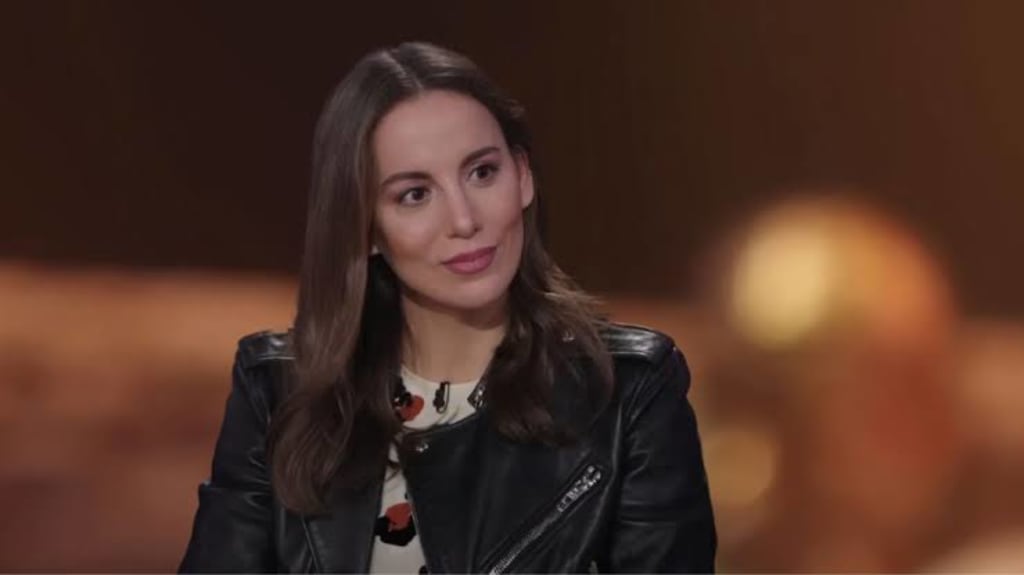
In a major shake-up at OpenAI, three senior executives, including Chief Technology Officer Mira Murati, have announced their departure as the company undergoes a transformation. OpenAI, the artificial intelligence (AI) start-up that has made headlines with its cutting-edge AI technology like ChatGPT, is reportedly moving towards becoming a for-profit company. This shift is expected to happen next year under the leadership of CEO Sam Altman.
Mira Murati, who worked at OpenAI for over six years, shared her decision to leave in a memo to employees and on the social media platform X (formerly Twitter). She explained that she was stepping down to make time for personal exploration, though she didn’t specify her next career move. “For now, my primary focus is doing everything in my power to ensure a smooth transition, maintaining the momentum we’ve built,” Murati said.
Murati’s exit was followed by the announcements of two other top executives. Bob McGrew, OpenAI’s chief research officer, and Barret Zoph, vice president of research, also shared their plans to leave the company. Zoph mentioned he was exploring new opportunities, while McGrew said he needed a break after years of work in the demanding AI field.
The departures come at a time when Sam Altman and the leadership at OpenAI are pushing to transition the company from its current structure—a non-profit controlled by a board of directors—into a more traditional for-profit organization. The company is also in talks with potential investors for a new funding round that could value OpenAI at up to $150 billion. This would be a significant leap from its last valuation of $80 billion. Some of the potential investors include Microsoft, Nvidia, Apple, and the United Arab Emirates' tech investment firm, MGX.
A Need for Cash and Restructuring
Despite its success and popularity, OpenAI’s financial situation is challenging. The company’s expenses far exceed its revenue. According to sources, OpenAI generates over $3 billion annually but spends around $7 billion. This significant gap is driving the company to seek additional investments to continue its operations and fuel its rapid growth.
The shift to a for-profit model is seen as a way to make OpenAI more sustainable in the long run. By positioning itself as a traditional tech company, OpenAI hopes to attract more investors and become a stronger player in the competitive AI industry. However, the move has caused internal tension, leading to high-profile departures of executives and researchers over the past several months.
This latest wave of departures follows what has already been a turbulent year for OpenAI. Sam Altman himself was ousted as CEO earlier in the year, only to be reinstated five days later. During that time, Mira Murati briefly stepped in to lead the company but decided to reject the role after just two days. Despite this, Murati has been a public face for OpenAI, representing the company in various appearances and events.
Executive Departures: A Changing of the Guard
While Altman downplayed the connection between the departures, saying they were unrelated to each other, the sudden exit of three key leaders has raised questions about the company's internal stability. Altman stated that it made sense to handle these transitions all at once to ensure a smooth handover to the next generation of leadership.
In a message on X, Altman expressed his gratitude to Murati, saying, “It’s hard to overstate how much Mira has meant to OpenAI, our mission, and to us all personally.”
Bob McGrew and Barret Zoph’s departures further emphasize the changes within OpenAI’s leadership. McGrew was a strategic project manager who oversaw much of the company’s research efforts, while Zoph was a hands-on researcher involved in some of the company’s most advanced AI technologies. Their exits follow the departure of John Schulman, a co-founder who left OpenAI earlier this year.
As OpenAI moves towards a for-profit model, it has been bringing in new executives to handle different aspects of its rapidly growing business. The company has added a new chief financial officer, heads of product, and a global policy leader to manage its relations with governments and regulators.
OpenAI has grown considerably, now employing over 1,700 people, and it has doubled in size in just the past nine months. Along with this expansion, the company has repeatedly emphasized its commitment to making AI technology safe for widespread use.

Challenges and Opportunities Ahead
The shift in leadership comes as OpenAI faces mounting challenges in balancing its ambitious goals with the realities of the AI industry. While the company continues to innovate, producing new AI models that reduce errors and improve reasoning skills, the road ahead is uncertain. OpenAI’s latest technology, called OpenAI o1, is designed to handle complex tasks involving math, science, and computer programming, and it aims to reduce the "hallucinations" or made-up information often generated by its earlier models.
The transition to a for-profit company and the upcoming round of investment could be crucial steps for OpenAI as it aims to remain a leader in artificial intelligence. However, with many of its original founders and key researchers leaving, the company faces the challenge of ensuring it can maintain its innovative edge while managing the costs of scaling up its operations.
As OpenAI evolves, it will be interesting to see how it balances its mission of creating artificial general intelligence (AGI) with the demands of becoming a more traditional tech company. With just three of the original 13 founders still at the company, the next phase of leadership will have to prove it can keep OpenAI at the forefront of the AI revolution.
About the Creator
About Binding Prometheus
I want to start actively advocating on behalf of my own work, and the most valuable part of my canon is, without a doubt, Binding Prometheus, the play I have been working on since 2019 and only finished in 2023 as part of my MA. The play itself is an amalgamation of a million different inspirations. On one end, it evokes the Ancient Greek myth-play, deriving its own title from the earliest extant work of Western drama we have, Aeschylus’s Prometheus Bound. On the other end, it borrows significantly from the sci-fi bulwarks from over the years, namely Mary Shelley’s Frankenstein and Karel Capek’s Rossum’s Universal Robots. The play could be an episode of Black Mirror, I fear. I don’t know. I’ve only ever seen one episode of Black Mirror.
By Steven Christopher McKnight17 days ago in Futurism
Saudi Arabia Cancer Immunotherapy Market Advancing Treatment Adoption and Healthcare Innovation
According to IMARC Group's latest research publication, Saudi Arabia cancer immunotherapy market size reached USD 1,303.4 Million in 2025. The market is projected to reach USD 2,611.6 Million by 2034, exhibiting a growth rate (CAGR) of 8.03% during 2026-2034.
By Suhaira Yusuf2 days ago in Futurism




Comments
There are no comments for this story
Be the first to respond and start the conversation.