
Kernel Flow: The Portable, Real-Time Brain Imaging Device That Could Change the Future of Neuroscience
This new device could make it possible to study brain function in ways that were never before possible, and it could lead to new treatments for brain disorders.

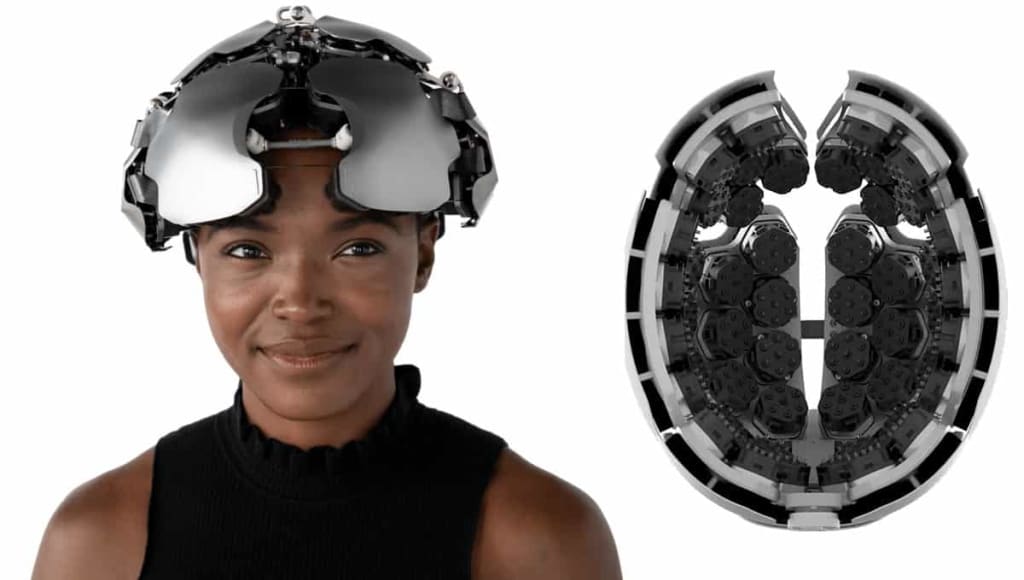
KERNAL FLOW:
Hey there, I've got an interesting piece for you to read over here and it's all about "Kernel Flow," a cutting-edge wearable device that's making waves in the world of non-invasive optical brain imaging.
Imagine a helmet-shaped headset that can measure brain activity through noninvasive optical imaging, all by tracking changes in blood oxygenation. Well, that's exactly what Kernel Flow does. It's designed to capture the brain's electrical activity and translate it into real-time insights.
Now, while Kernel Flow is still in its development phase, it's already showing promise in transforming how we approach brain disorders. This versatile device has the potential to do a lot. For instance, it could revolutionize the diagnosis and monitoring of conditions like Alzheimer's disease, schizophrenia, and epilepsy. Moreover, it might open doors to entirely new therapies for these challenging disorders.
But its applications don't stop there. Kernel Flow has the potential to deepen our understanding of the brain itself. Researchers could use it to explore how the brain functions in healthy individuals and even investigate the effects of various drugs and treatments on brain activity.
The bottom line? Kernel Flow is a game-changer in the field of neuroscience. While it's still in its early stages, it holds immense promise for revolutionizing our approach to studying and treating brain disorders.
A Closer Look at Kernel Flow's Inner Workings
Wondering how Kernel Flow does its magic? It all comes down to a technique called diffuse optical tomography (DOT). This non-invasive imaging method uses light to measure changes in blood oxygenation. The headset emits light, which gets scattered by the brain's tissues. Then, a detector measures how much of that light is scattered.
The changes in blood oxygenation are the key here. When your neurons fire, they consume oxygen, which results in reduced blood oxygenation in the surrounding tissues. Kernel Flow detects these changes and translates them into meaningful data about brain activity.
Diverse Applications of Kernel Flow
Kernel Flow isn't just a one-trick pony; it has a wide range of potential applications. In the medical realm, it could be a game-changer for diagnosing and monitoring conditions like Alzheimer's, schizoph===r
enia, and epilepsy. This could lead to earlier interventions and improved patient care.
Beyond medical applications, Kernel Flow has exciting potential for advancing our knowledge of the brain. It could help researchers gain insights into how the brain operates in healthy individuals, providing a baseline for further exploration. Additionally, it could be a powerful tool to investigate how different drugs and treatments affect brain function.
The Promising Future of Kernel Flow
While Kernel Flow is still in development, it's not a distant dream. In fact, it's already making strides in clinical trials, and it's expected to become available to the public in the near future. And here's the exciting part: as it continues to evolve, Kernel Flow is likely to become even more versatile and powerful.
It could expand its repertoire to encompass a broader spectrum of brain disorders. And who knows, it might contribute to the development of entirely new therapies that can change lives.
Pros:
- Non-invasive: Kernel Flow offers a non-invasive approach to brain imaging, sparing patients from the need for surgery or injections. This makes it a patient-friendly option compared to other brain imaging methods like fMRI and EEG.
- Portable: Kernel Flow is designed to be a portable device, allowing it to be used in various settings, including outside clinical environments. This portability is particularly advantageous for research purposes and home-based patient monitoring.
- Real-time imaging: One of Kernel Flow's strengths lies in its ability to provide real-time imaging of brain activity. This real-time capability empowers researchers and healthcare professionals to observe and analyze changes in brain function as they happen.
- High spatial resolution: Kernel Flow boasts a high spatial resolution, enabling it to focus on specific, small areas of the brain. This feature makes it an excellent tool for studying the activity of precise brain regions.
Cons:
- Cost: While promising, Kernel Flow is still a relatively new technology, and as such, it comes with a notable price tag. The initial expense may limit its accessibility in certain healthcare settings or for individuals.
- Limited depth penetration: Kernel Flow has a limitation in that it can only image the superficial layers of the brain. This means it may not be suitable for imaging deeper brain structures, limiting its diagnostic reach.
- Motion artifacts: Like many imaging techniques, Kernel Flow is susceptible to motion artifacts. These artifacts can result from patient movement or device adjustments, potentially impacting the quality of the acquired images.
- Signal attenuation: The signal obtained from Kernel Flow can be attenuated or weakened by the tissues and structures within the head. This attenuation may compromise the clarity and accuracy of the images produced by the device.
In a nutshell, Kernel Flow is an exciting technological breakthrough that holds tremendous potential for the field of neuroscience. While it's still in its infancy, it has the capacity to redefine the way we understand and address brain disorders. Stay tuned for more updates on this fascinating innovation!
About the Creator
tech hub
Your guide in exploring wonders of artificial intelligence, futuristic innovations and the latest tech trends. Join me in unraveling tomorrow's mysteries of AI.
Instagram : @techiehub01
Medium_digest : @Techiehub
Quora : Tech Hub
Australia Aerospace and Defense Market: Sovereign Defense Capability Development, Next-Generation Aerospace Systems & Integrated Security Infrastructure
According to IMARC Group, the Australia aerospace and defense market reached a value of USD 13.6 Billion in 2025 and is projected to reach USD 21.4 Billion by 2034, growing at a compound annual growth rate (CAGR) of 5.04% during 2026–2034. The market is expanding as Australia strengthens its national security framework and invests in advanced aerospace technologies and defense capabilities. Rising geopolitical considerations and evolving security challenges are encouraging governments to increase defense budgets and modernize military infrastructure. Programs focused on sovereign defense capability development are encouraging domestic manufacturing of defense equipment, aircraft systems and advanced military technologies. At the same time, collaborations between Australian defense agencies and international contractors are accelerating innovation and enabling technology transfer. Investments in next-generation aerospace systems, cyber defense technologies and satellite communication infrastructure are further supporting the growth of the aerospace and defense sector.
By Kevin Cooper2 days ago in Futurism




Comments
There are no comments for this story
Be the first to respond and start the conversation.