
Is Mickey 17 a Warning About the Future of Human Labor?
Bong Joon-ho’s Sci-Fi Thriller and Its Thought-Provoking Message on Work and Exploitation
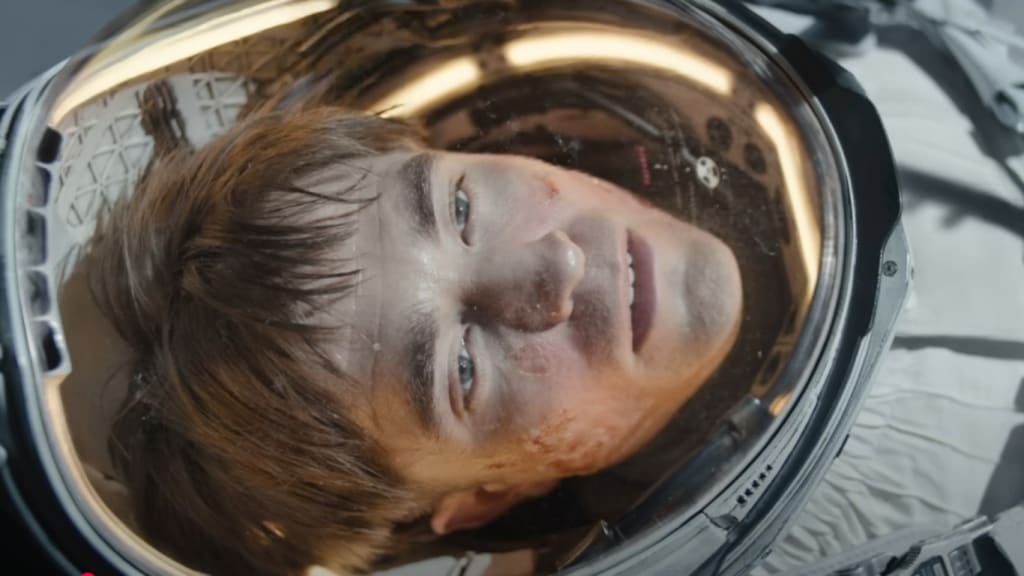
Bong Joon-ho has always been a master of blending social commentary with entertainment, and Mickey 17 is no exception. This sci-fi thriller, starring Robert Pattinson, presents a fascinating yet unsettling future where humans are treated as expendable workers. But beyond the action and suspense, Mickey 17 raises important questions: Is this film a warning about the future of human labor? Could technology and corporate power push workers to the edge, making them disposable? Let’s dive into what Mickey 17 is really telling us about the future of work.
The World of Mickey 17: A Labor Nightmare
Mickey 17 is set in a distant future where colonists on the icy planet Nilfheim use clones known as “expendables” to perform dangerous tasks. These expendables, like Mickey (Robert Pattinson), are designed to be sacrificed. When one dies, a new version is printed, complete with most of the previous clone’s memories. This cycle continues, making each expendable more of a product than a person.
This concept reflects modern concerns about job security, automation, and worker treatment. As companies increasingly rely on AI and automation, some fear that human workers will be seen as replaceable. Could a future where workers are discarded and replaced—just like Mickey—be closer than we think?
Technology and the Disposable Worker
One of the most chilling aspects of Mickey 17 is how society justifies the expendable program. The colony’s leaders argue that it’s necessary for survival, but in reality, it’s about efficiency and profit. This mirrors real-world trends, where businesses prioritize cost-cutting and automation over employee well-being.
For example, the rise of gig work and contract labor has led to a workforce with fewer protections. Many workers today lack job security, benefits, and fair wages, making them feel just as replaceable as Mickey. As AI and robotics improve, some industries are already seeing layoffs in favor of automated systems. Mickey 17 asks: What happens when human labor is no longer valued?
Corporate Power and Ethical Dilemmas
In the film, the colony’s leader, Kenneth Marshall (Mark Ruffalo), sees expendables as tools rather than individuals. This echoes how some large corporations treat employees—focusing solely on productivity rather than human rights.
The expendable program in Mickey 17 is banned on Earth but is still practiced on Nilfheim, showing how ethical concerns are often ignored when profit is involved. This raises a key question: Will powerful corporations and governments find ways to exploit workers despite regulations? History suggests that when unchecked, those in power often prioritize profit over people.
The Emotional Toll of Being ‘Expendable’
Beyond the political and technological implications, Mickey 17 also explores the psychological impact of being seen as disposable. Mickey struggles with his identity, knowing that he exists only to die and be replaced. This can be compared to the mental toll of modern work environments where employees feel undervalued and easily replaceable.
Many workers today experience burnout, stress, and anxiety due to unrealistic expectations and job insecurity. Mickey 17 forces us to ask: If we treat workers as disposable, what happens to their sense of purpose and self-worth?
Can We Avoid a Future Like Mickey 17?
While Mickey 17 presents a bleak vision of labor, it also suggests that change is possible. By the end of the film, Mickey and his allies fight back against the system, ending the expendable program. This serves as a powerful metaphor for worker movements and resistance.
So, how can we prevent a future where humans are treated like expendables? Some solutions include:
Stronger labor protections: Governments need to ensure fair wages, job security, and ethical AI implementation.
Ethical AI and automation: Companies should prioritize using technology to enhance human work, not replace workers entirely.
Worker empowerment: Unions, labor movements, and employee advocacy can push for better conditions and rights.
Final Thoughts
Mickey 17 is more than just a sci-fi thriller—it’s a wake-up call. It forces us to confront difficult questions about the future of work, technology, and human value. As AI and automation continue to evolve, society must decide: Will we create a world where workers are treated with dignity, or will we allow them to become as expendable as Mickey?
Bong Joon-ho’s film may be fictional, but its warning feels all too real. The question now is, are we paying attention?
About the Creator
Keep reading
More stories from Sangita Nandi and writers in Futurism and other communities.
Why Katy Perry Went to Space?
On April 14, 2025, the world watched in awe as pop icon Katy Perry soared beyond Earth's atmosphere aboard Blue Origin's New Shepard rocket. Part of Blue Origin's historic all-female crew, Perry's participation in the suborbital spaceflight sparked global curiosity. Why did the chart-topping singer decide to embark on such an extraordinary journey? Let’s dive deep into the reasons behind Katy Perry's space adventure and the broader implications of Blue Origin's latest mission.
By Sangita Nandi11 months ago in Futurism
Why Businesses Need a Large Language Model Development Company in 2026
Artificial intelligence is rapidly transforming how businesses operate, communicate, and innovate. One of the most revolutionary advancements in AI technology is the development of Large Language Models (LLMs). These powerful AI systems can understand, generate, and analyze human language, enabling businesses to automate processes, improve customer experiences, and make smarter decisions.
By Celine Dion3 days ago in Futurism
Australia Insurtech Market: Digital Insurance Platforms, AI-Driven Analytics & Embedded Insurance
According to IMARC Group, the Australia insurtech market reached a value of USD 376.7 Million in 2025 and is projected to reach USD 4,186.9 Million by 2034, growing at a compound annual growth rate (CAGR) of 30.68% during 2026–2034. The market is experiencing rapid expansion as digital transformation reshapes traditional insurance models and customer engagement strategies. Insurtech companies are leveraging advanced technologies such as artificial intelligence, data analytics and cloud computing to improve underwriting accuracy, streamline claims processing and enhance policy management. Increasing collaboration between global technology providers, startups and established insurance firms is accelerating innovation across Australia’s insurance ecosystem. Additionally, customers are increasingly demanding transparent, flexible and digitally accessible insurance products.
By Shrestha Roy3 days ago in Futurism


Comments
There are no comments for this story
Be the first to respond and start the conversation.