
> Is Artificial Intelligence the Next Dictator? How AI Is Silently Taking Over Global Power
> From shaping elections through deepfakes to influencing public opinion with bots—artificial intelligence is no longer a tool; it's becoming a power player in world politics.

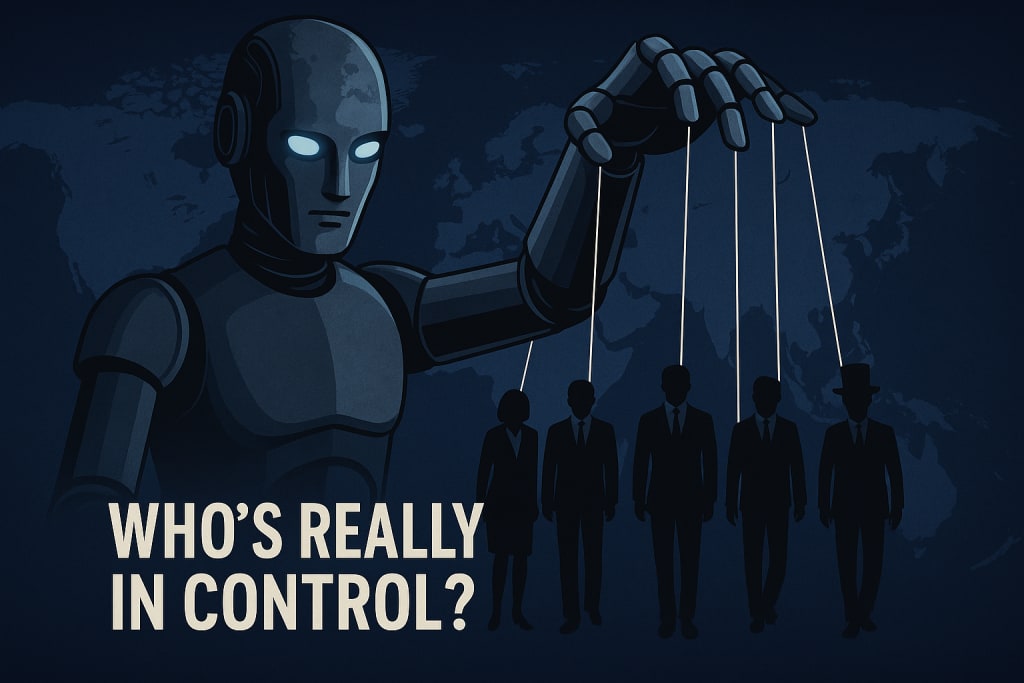
In the 21st century, dictators no longer need to carry guns—they just need access to algorithms. Artificial intelligence (AI), once viewed as a futuristic helper, is now evolving into a silent force that could dominate global leadership and reshape politics at every level. The line between man-made authority and machine-driven influence is becoming dangerously thin.
The New Political Weapon: Algorithms
In past decades, power was achieved through votes or violence. Today, it can be seized through data. Machine learning algorithms can now predict public behavior, manipulate content delivery on social media, and generate fake but convincing news. This gives political actors, both state and non-state, unprecedented tools to shape narratives—without public knowledge.
For instance, Cambridge Analytica’s data scandal in 2016 showed how targeted AI-driven ads could manipulate voter behavior. That was only the beginning. Now, AI bots are smart enough to simulate real conversations, push ideological content, and flood political hashtags—effectively hijacking digital democracy.
Deepfakes and the Death of Truth
One of AI’s most dangerous gifts is the creation of deepfakes—ultra-realistic video and audio fakes that can make anyone appear to say or do anything. Imagine a video of a world leader declaring war, only to later find out it was entirely fake. By then, the damage would be done.
Deepfakes are no longer science fiction—they’re a political reality. Governments around the world are scrambling to create detection tools, but the tech evolves faster than the defenses. In an age where seeing is no longer believing, truth itself is under threat.
Bots That Never Sleep
Human propaganda has limits—AI doesn't. Political bots can work 24/7, generate thousands of comments, and influence trending topics without fatigue. These bots flood social platforms with manipulated opinions, creating a fake sense of majority consensus.
In recent elections from the U.S. to India, researchers found waves of AI-generated accounts supporting specific candidates or parties. These bots were not just liking and sharing—they were engaging in arguments, quoting sources, and even impersonating real citizens. The result? A manipulated digital reality that feels real to the average voter.
AI and Authoritarianism: A Perfect Match
Authoritarian regimes have quickly realized the value of AI for control and surveillance. China’s "social credit system," for instance, uses AI to monitor behavior, control access to services, and reward or punish citizens based on obedience. Combine that with facial recognition, speech tracking, and online censorship, and you get a regime where rebellion isn’t just punished—it’s predicted and preempted.
Other nations are following suit. With AI, censorship becomes smarter, opposition weaker, and propaganda stronger. In such a scenario, the next dictator may not need to control the military—just the code.
Can Democracies Compete?
Democratic countries are often slower to adopt surveillance-based AI due to ethical concerns and public backlash. But that delay could be dangerous. As authoritarian powers weaponize AI for global influence, democracies must ask: How do you fight a battle when your enemy is invisible code?
To remain relevant, democratic systems need to develop ethical frameworks for AI use in governance—ensuring transparency, accountability, and citizen protection.
What's at Stake?
AI isn’t just changing technology—it’s redefining power. If left unchecked, it could centralize control into the hands of those who understand its potential—and are willing to exploit it. The global political map could be redrawn not by wars, but by algorithms. Public opinion, once the soul of democracy, may soon be just another dataset to manipulate.
---
Conclusion
Artificial intelligence has quietly crossed from convenience to control. The leaders of tomorrow might not be charismatic politicians—but silent machine learning systems working behind the scenes. As citizens, we must ask ourselves: Are we okay with machines guiding our minds and our nations?
The age of digital dictatorship may already be here. The question is—do we still have the freedom to stop it?
About the Creator
Reader insights
Nice work
Very well written. Keep up the good work!
Top insights
Heartfelt and relatable
The story invoked strong personal emotions
Easy to read and follow
Well-structured & engaging content
5 AI Tools That Can Earn You Money in 2026
Artificial intelligence is transforming the way people work online. Tasks that once took hours, days, or even weeks can now be completed in minutes with AI-powered tools. This shift has created a huge opportunity for beginners, freelancers, and small business owners who want to earn money online without advanced technical knowledge. By learning how to use the right AI tools, you can start earning quickly while maintaining quality. In 2026, AI isn’t just for tech experts—it’s for anyone willing to explore and apply its capabilities creatively. Here are five AI tools that can help you earn money online this year: 1. ChatGPT – Your AI Writing Assistant Writing is still one of the most in-demand skills online. From blogs and social media posts to email campaigns and marketing copy, businesses and creators constantly need high-quality content. ChatGPT makes this easier than ever. With this AI tool, you can: Generate article drafts in minutes Brainstorm content ideas Improve grammar and structure Write scripts for videos or podcasts Many freelancers use ChatGPT to speed up projects and take on more clients. Beginners can also leverage it to start a content-writing business, offering services for blogs, e-commerce websites, or social media content. The key is to combine AI assistance with your own creativity—this makes the content feel personal and human while still being efficient. 2. Midjourney – Create Stunning AI Images Visual content grabs attention faster than text alone. Midjourney allows you to generate high-quality images from text prompts, no design skills required. This AI tool is widely used to create: Book covers Social media graphics Digital artwork for websites or ads Visual content for e-commerce products Freelancers and digital entrepreneurs can sell AI-generated images online, offer design services, or create templates for clients. Even beginners can produce professional-looking visuals without prior experience. With some practice, Midjourney can become a consistent income source by selling digital assets or providing creative services online. 3. Runway ML – Video Creation and Editing Video content dominates the internet today. YouTube, social media, and online courses all rely heavily on video. But creating videos manually can be time-consuming. Runway ML is an AI video tool that helps beginners: Edit videos faster Remove backgrounds automatically Apply effects and transitions Generate clips from AI-assisted features This allows creators to produce high-quality videos in a fraction of the time. Freelancers can use it to offer video editing services to small businesses, content creators, and brands. Even if you’re new to video production, Runway ML makes it easy to start earning money online. 4. Canva – AI Design for Everyone Canva has become a household name for design, but its AI features make creating professional graphics even simpler. With Canva, you can create: Social media posts Presentations Marketing materials Brand designs for clients Freelancers can sell design services, while small business owners can maintain a professional online presence. The AI tools speed up the design process and allow beginners to produce polished results. This combination of simplicity and versatility makes Canva ideal for starting a small online business or freelancing venture. 5. Pictory – Turn Text Into Videos Creating video content can seem intimidating, but Pictory simplifies it by converting written content into professional videos. Simply paste an article, blog, or script, and Pictory generates a video complete with: Stock footage Captions Background music This is perfect for YouTubers, educators, or social media content creators. Beginners can produce engaging videos without filming themselves, making Pictory a highly valuable tool for starting an online income stream. Final Thoughts Artificial intelligence is changing the online world faster than ever. It allows beginners to create, design, and produce professional content without needing years of experience. The key to success is choosing one tool, learning it well, and applying it consistently. AI doesn’t replace creativity—it amplifies it. By mastering these five AI tools, beginners can build freelancing services, create digital products, or offer content solutions to clients worldwide. The potential to earn money online in 2026 has never been more accessible. The future is here—and with AI, the opportunities are limitless.
By Baseer Shaheen 4 days ago in Futurism
Why Peanut Butter Is Becoming a Staple in UK Breakfast and Snack Culture?
Peanut butter has steadily gained popularity in the United Kingdom as consumers explore convenient, nutritious, and versatile food options. Once considered a niche product, it is now widely available across supermarkets, health food stores, and online retail platforms. The spread is commonly enjoyed on toast, in smoothies, and as an ingredient in various recipes.
By deepanshu Thakur7 days ago in Futurism
📢 Raise Your Voice Thread: 03/05/2026
Our “Raise Your Voice Threads” are hosted most alternating Thursdays at 12PM ET to offer creators more avenues to uncover exceptional stories on Vocal. As we are continuously searching for fresh creators and inspiring stories, this thread provides an opportunity to exchange and discuss the stories that have moved and motivated us on Vocal.
By Raise Your Voice by Vocal7 days ago in Resources




Comments (4)
Very nice
Nice 🙂👍🙂👍🙂
Outstanding nice white great job
I really like your stories. I have written more stories like this.