
Intellectual Singularity and the Rise of cyborgs
Cyborg Synergy
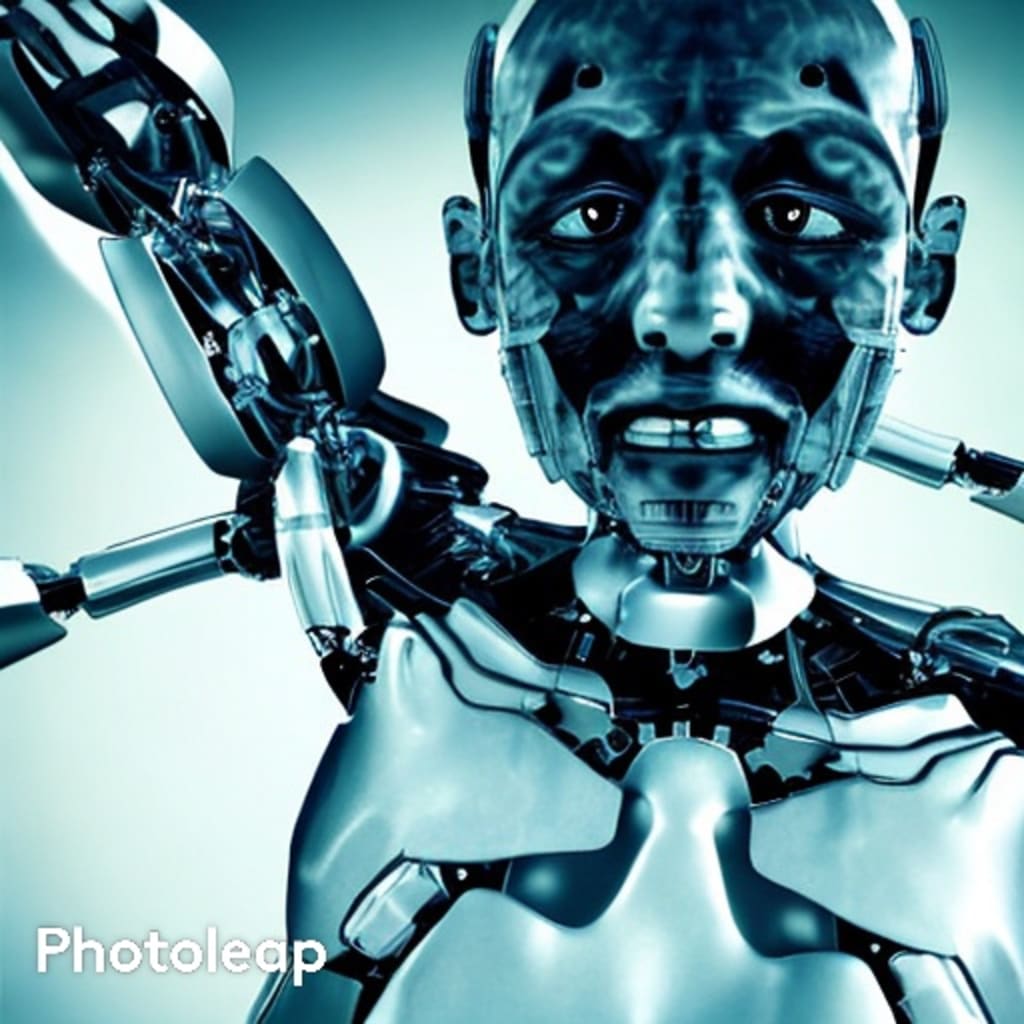
Picture this, A world where machines are able to think and operate beyond human comprehension, creating a kind of “superintelligence” that could revolutionize the way we live our lives. This concept might sound like something out of a science fiction novel, but it could soon become our reality. The idea of intellectual singularity, where machines surpass human intelligence, has been around for decades, and it’s only in recent years that it’s become a more mainstream topic of discussion.
The roots of intellectual singularity can be traced back to the 1950s, with the development of the first electronic computers. These machines were nothing compared to the supercomputers we have today, but they still represented a leap forward in computational power. Along the way, there have been several milestones in the advancement of AI, from the development of expert systems in the 1970s to the rise of machine learning algorithms in the 1990s. The dawn of the 21st century saw the explosion of AI capabilities, with the advent of deep learning, neural networks, and more recently, reinforcement learning, which has garnered widespread interest and raised hopes for unlocking new heights in AI development.
Fast forward to today, and we are witnessing a new rise of cyborgs where humans and machines are increasingly intertwined. From prosthetic limbs to brain implants, we are becoming one with the machines and augmenting our physical reaches beyond what is currently possible. The rise of cyborgs offers a future where we can extend our physical and mental abilities to new frontiers, paving the way for bionic humans who will be capable of doing superhuman tasks.
While advancements in AI and our integration with machines offer remarkable potential for progress, it’s also important to recognize the potential risks and ethical concerns associated with the proliferation of cyborgs. From configuring perfect human replicants as seen in movies to intelligent robots that can make autonomous decisions, we are instrumental in defining the future relationship between machines and humans. We must ensure that the rise of cyborgs is founded on ethical principles, and that machines are designed to enhance our capabilities, rather than become a threat to our existence.
The future of intellectual singularity is exciting yet uncertain, with leading AI experts and futurists predicting the future course of AI and the rise of cyborgs. Some predict that we will see the creation of machines that can pass the Turing test, a measure of a machine’s ability to display intelligent behavior similar to that of a human.
Others predict that AI will transform our world beyond recognition, resulting in massive economic disruption and a shift in power structures. As machines become more intelligent and capable, there are concerns that they could take over many tasks currently done by humans, leading to job losses and human degradation which may result in unprecedented socio-economic disparities.
In conclusion, the rise of intellectual singularity and cyborgs represents a significant turning point in the human race’s advancement towards a future marked by progress as well as by uncertainty. However, we must take an active role to ensure that we shape the future we want. This means that we need to pay close attention to the ethical implications of our choices regarding AI and cyborgs, and to ensure that humans remain in control. Harnessing the power of technology while focusing on achieving ethical solutions remains the key to a successful future where human and machine can coexist, thrive, and live together in harmony. The rise of intellectual singularity and cyborgs will undoubtedly have far-reaching implications for humanity’s future. How we choose to embrace and control these technological advancements will shape the future of our species, and only time will tell whether this leads to positive changes or negative consequences.
About the Creator
HC
My views are Unorthodox. I strive to always LIVE, LOVE, LAUGH & LEARN.
About Binding Prometheus
I want to start actively advocating on behalf of my own work, and the most valuable part of my canon is, without a doubt, Binding Prometheus, the play I have been working on since 2019 and only finished in 2023 as part of my MA. The play itself is an amalgamation of a million different inspirations. On one end, it evokes the Ancient Greek myth-play, deriving its own title from the earliest extant work of Western drama we have, Aeschylus’s Prometheus Bound. On the other end, it borrows significantly from the sci-fi bulwarks from over the years, namely Mary Shelley’s Frankenstein and Karel Capek’s Rossum’s Universal Robots. The play could be an episode of Black Mirror, I fear. I don’t know. I’ve only ever seen one episode of Black Mirror.
By Steven Christopher McKnight15 days ago in Futurism
GCC Furniture Market: Residential Demand, Design Innovation & Growth Outlook
According to IMARC Group's latest research publication, GCC Furniture Market Size: The GCC furniture market size reached USD 16.4 Billion in 2025. Looking forward, IMARC Group expects the market to reach USD 30.5 Billion by 2034, exhibiting a growth rate (CAGR) of 7.13% during 2026-2034.
By Abhay Rajput7 days ago in Futurism
Getting Serious About Comedy (Part I)
If I were asked to remark on my life and the childhood that paved some road leading me to this point, I would have to say something about all the funny people who surrounded me for the last 26,872 days (and counting). Somewhere along that road, I became a big fan of laughter and the comedy that spawns it – and, I mean not only my own laughter, but the laughter of others, some of which I have actually been responsible for inducing.
By John Oliver Smith7 days ago in Humor




Comments
There are no comments for this story
Be the first to respond and start the conversation.