
Innovations in Industrial Wearables Enhancing Worker Safety and Performance
The global industrial wearables market grew at a CAGR of 12.4% from 2020 to 2027.

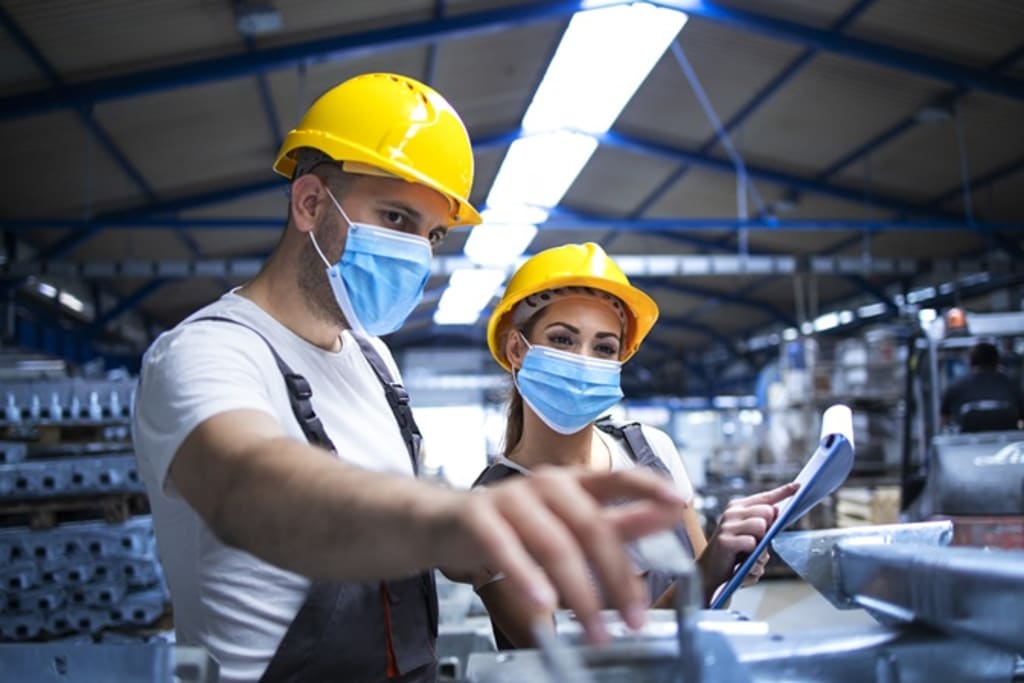
Industrial wearables are devices that workers can wear in industrial environments to boost safety, productivity, and effectiveness. These wearables encompass smart glasses, helmets, gloves, and other devices that track the health and performance of the workers. They are designed to help monitor important signs, give real-time information, and even alert workers of potential hazards.
The industrial wearable sector is experiencing a notable rise because of increased safety concerns and the need for better efficiency in workplaces. Many companies are using these devices to lower the number of accidents and enhance the health of their workers. In addition, the rise in demand for worker safety, the need for real-time data, and the surge in the adoption of automation in industries contribute to the expansion of the industry. Industrial wearables have become an essential tool in modern workplaces, offering a safer and more efficient space for employees with improved capability and lower expenses.
Increased adoption of wearables in industrial operations
Over the years, the industrial wearables market has grown significantly, because of the advancements in technology and connectivity. The sector valued at $3.79 billion in 2019, is anticipated to obtain revenue of $8.40 billion by 2027, growing at a CAGR of 12.4% from 2020 to 2027. The incorporation of advanced sensors, IoT, and AI has a big impact on these technologies, permitting them to gather and analyze real-time data. For example, smart helmets are equipped with augmented reality features, including the DAQRI Smart Helmet, which allows workers in construction or manufacturing to access real-time data overlays, which enhances their productivity and safety on the job.
Furthermore, wearables like smart glasses and exoskeletons are being utilized in industrial environments. For instance, Microsoft HoloLens are a type of smart glasses that allow technicians to visualize complicated data and schematics directly in their field of view while performing maintenance tasks. Exoskeletons developed by companies like Ekso Bionics assist workers with labor-intensive tasks, supporting to prevention of injuries or overexertion.
Besides, the importance of connectivity in these developments cannot be underestimated. The advent of 5G technology introduces the possibility of immediate data transfer, which will make wearable devices more functional and efficient. For example, the wearable health monitor, which contains 5G connectivity responds instantly in case of emergencies and ensures workers' safety at risky workplaces.
A large number of companies are investing in cutting-edge solutions with the increased adoption of wearable technology among various industries to enhance operational performance and safety. The expansion of this trend is predicted to assist industrial wearables increase penetration and create substantial growth for the global industrial wearable sector. Companies can streamline their operations, acquire essential data on employee performance and thereby help create a safer working environment by utilizing these technologies.
Applications of industrial wearables
Manufacturing
Industrial wearables in manufacturing, such as smart glasses (e.g., Google Glass Enterprise Edition), provide workers with real-time access to instructions, blueprints, or machine data. This device permits hands-free operation, thereby improving performance and lowering mistakes on production lines. Workers can get instant help for troubleshooting, which reduces downtime. For example, BMW uses smart glasses to guide assembly-line workers, improving productivity, and quality control.
Healthcare
In the healthcare sector, industrial wearables like exoskeletons (for instance, Ekso Bionics) help release some of the physical burden for caregivers and workers performing repetitive or heavy lifting tasks. They also assist patients in rehabilitation, helping them regain mobility through guided physical therapy. These wearables improve safety and efficiency, especially in hospitals or elder care facilities. For example, Toyota uses exoskeletons to support workers in medical and industrial environments, showing their versatility.
Oil & gas industries
In the oil and gas industry, wearable AR devices, consisting of augmented reality headsets, are used for remote assistance and maintenance. Workers at high-risk locations, such as offshore rigs, benefit from hands-free guidance, live video support, and real-time data overlays. These features reduce the need for experts to travel to dangerous locations. Shell is among those companies using AR technology to make operations safer and easier.
Logistics
ProGlove barcode scanners are transforming the logistics and supply chain industries through wearable technology. Lightweight and hands-free barcode scanning for workers, inventory management, picking, and packing tasks. They reduce the usage of manual scanning tools, thereby improving efficiency and accuracy. DHL, a global leader in the logistics sector, has streamlined its warehouse operations with wearables, achieving higher productivity levels as well as faster picking processes.
Key initiatives by industry leaders fueling the growth of industrial wearables
The top companies in the industry are focusing on improving the quality of their products and services and expanding their presence in various regions. These leading organizations aim to offer innovations that guarantee customer satisfaction. They are also forming alliances or merging with other firms to maintain their dominance.
Wearable Devices and RayNeo™ collaborated to revolutionize AR with neural gesture control
In October 2024, Wearable Devices Ltd., a global leader in AI-powered touchless sensing wearables, announced a collaboration with RayNeo™, an AR technology innovator to provide modern neural interface AR glasses at a mass production scale.
This partnership incorporated Wearable Devices' neural gesture control technology with RayNeo's advanced AR glasses, bringing gesture-based, hands-free interactions into augmented and mixed reality environments. The alliance focused on offering intuitive, immersive, and natural experiences for the users in this rapidly evolving extended reality (XR) space.
According to Wearable Devices CEO Asher Dahan, the company is looking forward to revolutionizing human-tech interaction as a leader in AR and neural gesture technology. On the other hand, Howie Li, CEO of RayNeo, highlighted the collaboration's ability to provide groundbreaking wearable experiences by combining AR innovation with the latest neural interface technology.
This collaboration represents a major development in smart wearables, enabling seamless and touchless interactions across various applications. Both companies are actively negotiating toward finalizing the agreements, with a shared commitment to driving innovation and expansion in the XR space.
To summarize, the industrial wearables sector has experienced significant growth owing to an increased focus on safety, productivity, and efficiency. Emerging technologies such as IoT, AI, and 5G are essential in driving this expansion. In addition, advancements aimed at enhancing worker safety, along with reductions in accidents and improvements in performance, are offering substantial opportunities for industries like manufacturing, healthcare, oil & gas and logistics.
Trending Reports in the Semiconductor and Electronics Industry:
The global Wearable AI Market was valued at $38.1 billion in 2023 and is projected to reach $200.8 billion by 2032, growing at a CAGR of 20.5% from 2024 to 2032.
About the Creator
Keep reading
More stories from Shubham Jamdade and writers in Futurism and other communities.
How Have AI and Machine Learning Reshaped the Fire Alarm and Detection System Industry in 2024?
Fire alarm and detection systems are electronic devices designed specifically to discover fires early in their development stage. They are regularly used in residential and commercial spaces to alert the occupants of a possible fire outbreak, thereby reducing property loss and casualties. These gadgets generally feature smoke detectors, temperature sensors, microcontroller panels, and electronic alarms to evaluate signals and provide accurate alerts. Nowadays, these systems are directly connected to water sprinklers; once these alarms are activated, the sprinklers are automatically turned on with the aim of dozing off the fire in its early stages.
By Shubham Jamdadeabout a year ago in Futurism
APAC Creator Economy Market to hit USD 390.7 Billion By 2034
APAC Creator Economy Market Overview The Asia Pacific Creator Economy Market is projected to reach approximately USD 390.7 Billion by 2034, increasing from USD 41.6 Billion in 2024, reflecting a strong CAGR of 25.1% during the forecast period from 2025 to 2034.
By Roberto Crum4 days ago in Futurism
The Refactor Command in Claude: Code 8 Underrated Tricks I Wish I Knew on Day One
I remember the exact moment I realized I’d been using Claude Code all wrong. It was 1:13 a.m., my third cup of coffee was going cold, and I was staring at a function so bloated it should’ve come with its own zip code. I typed a desperate prompt into Claude about “cleaning this up” and expected the usual: some polite suggestions, maybe a renamed variable or two.
By abualyaanart7 days ago in Futurism



Comments
There are no comments for this story
Be the first to respond and start the conversation.