
Industrial Automation and IoT Driving Growth in the Pressure Sensor Market
The pressure sensor market is experiencing strong growth, driven by rising adoption of industrial automation and the integration of Internet of Things (IoT) technologies across manufacturing, process industries, and smart infrastructure.

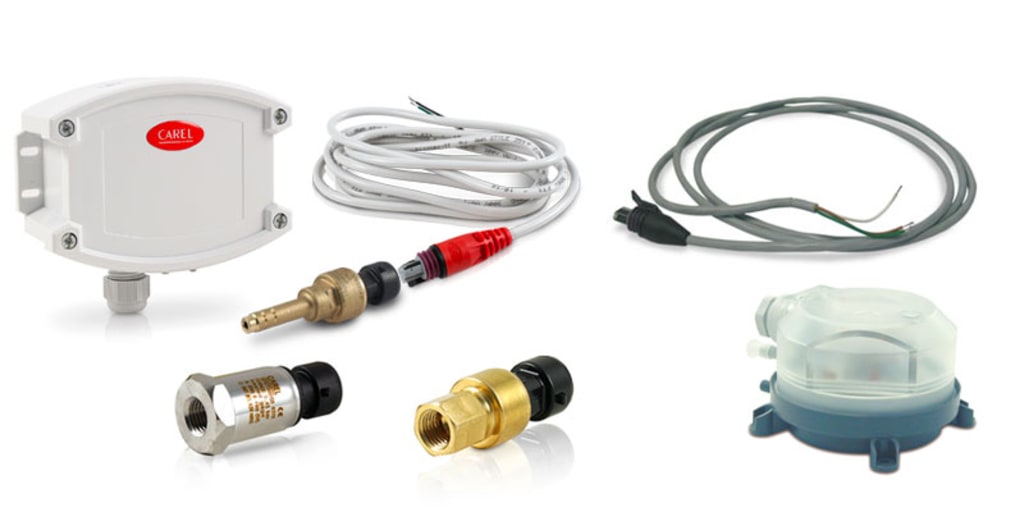
Rising demand for accurate monitoring and control across automotive, industrial, healthcare, and consumer electronics sectors is driving growth in the pressure sensor market. According to IMARC Group's latest research publication, The global pressure sensor market size was valued at USD 17.64 Billion in 2024. Looking forward, IMARC Group estimates the market to reach USD 36.66 Billion by 2033, exhibiting a CAGR of 8.04% during 2025-2033.
How AI is Reshaping the Future of Pressure Sensor Market
- Predictive Maintenance and Failure Detection: AI algorithms analyze sensor data to predict equipment failures before they occur, enabling proactive maintenance strategies. Machine learning models identify anomalies, reducing industrial downtime and improving operational reliability.
- Smart Calibration and Temperature Compensation: AI-powered systems automatically compensate for environmental disturbances including temperature fluctuations and voltage changes. Neural networks achieve calibration accuracy within ±1% across extreme temperature ranges from -50°C to 150°C.
- Real-Time Process Optimization: AI processes pressure data instantly to optimize manufacturing parameters including temperature, humidity, and ventilation control. Automated systems adjust production variables dynamically, minimizing waste and enhancing energy efficiency across industrial operations.
Pressure Sensor Industry Overview:
The global pressure sensor industry is experiencing transformation through Industry 4.0 integration, with over 4.28 million operational industrial robots globally requiring high-performance sensors for process optimization. Smart manufacturing adoption accelerates sensor deployment, particularly in Asia where cellular IoT connections in industrial sectors grew 27% year-over-year. Advanced technologies including MEMS miniaturization and wireless connectivity are enabling sensors to deliver real-time monitoring across automotive, healthcare, and industrial automation applications, supporting precision measurement requirements in increasingly complex production environments.
Pressure Sensor Market Trends & Drivers
The automotive sector drives substantial pressure sensor demand, with tire pressure monitoring systems alone representing 27% of global sensor shipments. Safety regulations mandate TPMS installation across new vehicles, while advanced driver-assistance systems require multiple sensors per vehicle for engine control, braking, and emission monitoring. Electric vehicle adoption accelerates sensor integration, with automotive suppliers embedding pressure sensor arrays in over 200,000 EVs, each containing 10+ sensors for battery management and performance optimization. The United States deployed over 12,000 new automotive models with TPMS in recent years, while Asia-Pacific automotive production expansion particularly in China and India creates sustained demand for precision monitoring solutions across internal combustion and electric powertrains.
Industrial automation and IoT proliferation are transforming pressure sensor applications beyond traditional manufacturing uses. Over 50% of industrial plants are implementing AI-powered smart sensors by 2025, enabling continuous condition monitoring that reduces downtime by predicting machine failures. Integration with computerized maintenance management systems creates powerful forecasting capabilities, with one industrial automation OEM reducing downtime by 18% across 3,000 factory lines globally through sensor deployment. Wireless technologies including LoRaWAN and Bluetooth Low Energy eliminate hard wiring requirements, providing remote process control in tight spaces and harsh environments. The smart sensors market reaching USD 58.84 Billion reflects growing demand for IoT-enabled devices requiring precise real-time data across consumer electronics, automotive systems, and industrial applications.
Healthcare sector expansion and building automation initiatives create additional growth channels for pressure sensor technologies. Medical device manufacturers incorporated miniature optical pressure sensors in over 1 million ventilators, expanding critical-care monitoring capabilities globally. Pressure sensors enable accurate blood pressure monitoring, respiratory equipment control, and diagnostic device functionality where precision directly impacts patient outcomes. Building automation systems utilize sensors for HVAC optimization, energy management, and occupant comfort, with new sensor launches offering high accuracy and fast response for regulatory compliance. Smart cities deploy sensors extensively for infrastructure monitoring, air quality assessment, and traffic management, making urban areas cleaner and more efficient. The 5G connectivity enhancement enables advanced applications in autonomous vehicles and remote healthcare where real-time data transmission proves essential for operational success.
Leading Companies Operating in the Global Pressure Sensor Industry:
- ABB Ltd
- All Sensors Corporation (Amphenol)
- Bosch Sensortec GmbH (Robert Bosch GmbH)
- Endress+Hauser Group Services AG
- Honeywell International Inc.
- Infineon Technologies AG
- Kistler Group (Kistler Holding AG)
- NXP Semiconductors N.V.
- Rockwell Automation Inc.
- Sensata Technologies Inc.
- Siemens AG
- Texas Instruments Incorporated
Pressure Sensor Market Report Segmentation:
By Product:
- Absolute Pressure Sensors
- Differential Pressure Sensors
- Gauge Pressure Sensors
Absolute pressure sensors represent the largest segment with 45% market share, as they provide highly accurate and stable readings based on a perfect vacuum reference.
By Type:
- Wired
- Wireless
Wired dominates the market holding 82%, because of its established reliability and capacity to provide reliable results across various operating conditions.
By Technology:
- Piezoresistive
- Electromagnetic
- Capacitive
- Resonant Solid-State
- Optical
- Others
Piezoresistive holds the biggest market share with 27%, owing to its remarkable sensitivity, extensive measurement ranges, and excellent thermal stability.
By Application:
- Automotive
- Oil and Gas
- Electronics
- Medical
- Industrial
- Others
Automotive represents the largest segment, accounting for 30% market share, owing to the industry's growing dependence on cutting-edge technologies to improve safety, efficiency, and performance.
Regional Insights:
- North America (United States, Canada)
- Asia Pacific (China, Japan, India, South Korea, Australia, Indonesia, Others)
- Europe (Germany, France, United Kingdom, Italy, Spain, Russia, Others)
- Latin America (Brazil, Mexico, Others)
- Middle East and Africa
Asia-Pacific leads the market in 2024 with a share of 38%, because of its robust manufacturing environment, quick technology adoption, and the growing use in the industrial sector.
Recent News and Developments in Pressure Sensor Market
- June 2025: Bosch officially launched the SMP290, a novel tire pressure sensor featuring Bluetooth capabilities. The standardized Bluetooth interface allows for direct communication with smartphones, while its incredibly low energy usage guarantees a longer lifespan.
- June 2025: Crane Company announced plans for the acquisition of Precision Sensors & Instrumentation, a prominent manufacturer of sensor-based technologies, including pressure sensors. The acquisition is expected to strengthen Crane Company's position in the pressure sensors sector across various crucial applications.
- May 2025: IFM officially launched its most recent high-resolution pressure sensors, which include the PI series made particularly for hygienic uses. These cutting-edge sensors provide accuracy and dependability in operations in sectors such as the manufacturing of food and beverages.
- April 2025: TE Connectivity expanded its wireless IoT pressure sensor lineup with the 65xxN (BLE-based) for short-range and 69xxN (LoRaWAN-based) for long-range coverage. These compact sensors fit seamlessly into tight spaces and diverse environments, bringing practical innovation to industrial monitoring.
- February 2025: Honeywell International Inc. announced a strategic collaboration with ForwardEdge ASIC, a Lockheed Martin subsidiary, to develop radiation-hardened microelectronics for space applications. Leveraging Honeywell's proven foundry capabilities, the partnership aims to deliver high-reliability ASICs and memory solutions for satellites and defense systems.
Note: If you require specific details, data, or insights that are not currently included in the scope of this report, we are happy to accommodate your request. As part of our customization service, we will gather and provide the additional information you need, tailored to your specific requirements. Please let us know your exact needs, and we will ensure the report is updated accordingly to meet your expectations.
About the Creator
James Whitman
With years of experience in analyzing global industries, I specialize in delivering actionable market insights that help businesses stay ahead in an ever-changing landscape.
Keep reading
More stories from James Whitman and writers in Futurism and other communities.
Insect Repellent Market Outlook: Health Awareness and Growth Opportunities
Rising incidence of vector-borne diseases, increasing outdoor recreational activities, and growing awareness of personal health protection are driving growth in the insect repellent market. According to IMARC Group's latest research publication, The global insect repellent market size reached USD 5.2 Billion in 2024. Looking forward, IMARC Group expects the market to reach USD 8.6 Billion by 2033, exhibiting a growth rate (CAGR) of 5.6% during 2025-2033.
By James Whitmanabout 8 hours ago in Futurism
Europe SEO Market Size and Forecast 2026–2034
Introduction The Europe Search Engine Optimization (SEO) market is entering a decisive growth phase as businesses across industries prioritize organic visibility and long-term digital performance. According to Renub Research, the Europe SEO Market is expected to expand from US$ 19.02 Billion in 2025 to US$ 43.66 Billion by 2034, registering a strong CAGR of 9.67% during the forecast period 2026–2034.
By Sakshi Sharmaa day ago in Futurism




Comments
There are no comments for this story
Be the first to respond and start the conversation.