
Impact of AI on Humanity: Transforming the Present and Shaping the Future
Building a Future Together: The Harmony of Humanity and AI
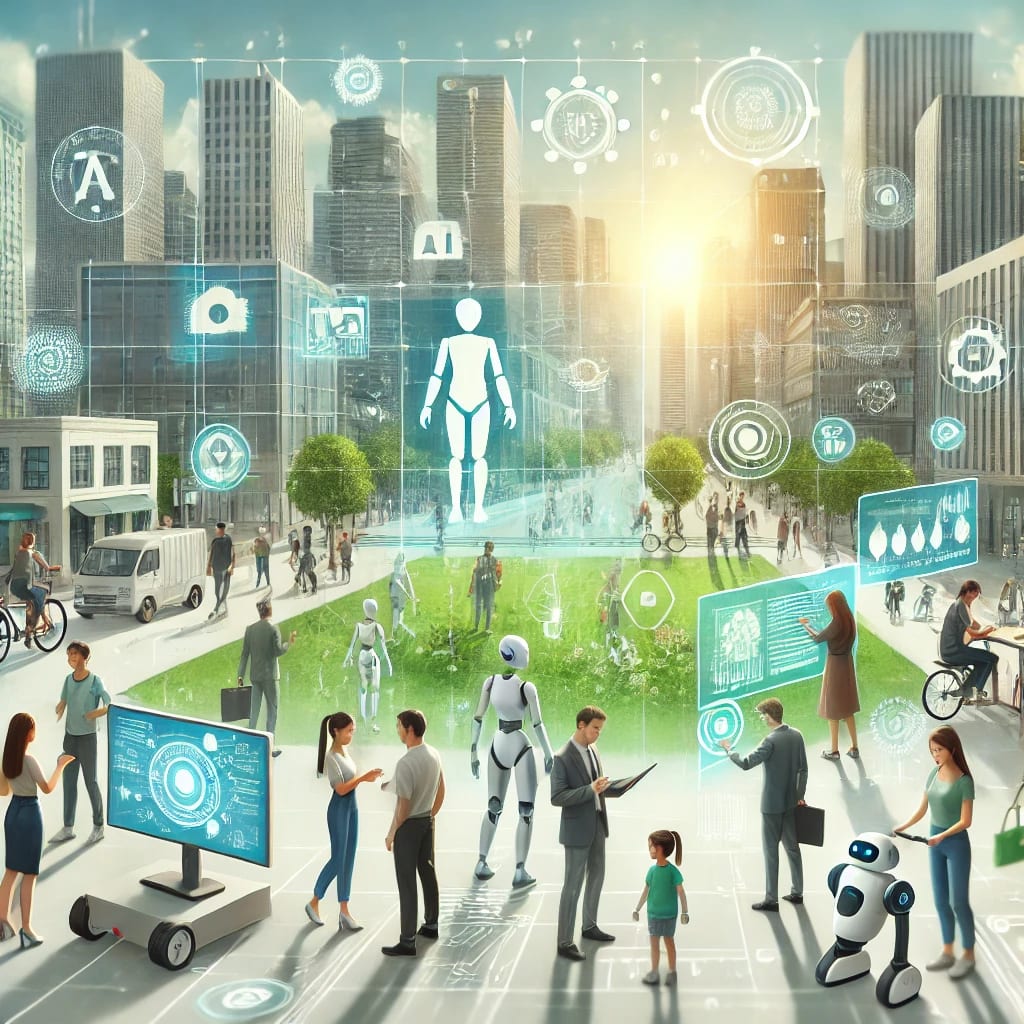
Artificial Intelligence (AI) has become an influential force that is reshaping our world in profound ways. From revolutionizing industries and enhancing everyday conveniences to sparking ethical debates and concerns, AI is undoubtedly one of the most transformative technologies of our time. Its rapid development and integration into various aspects of human life raise questions about its benefits, challenges, and long-term implications for humanity. This article explores the multifaceted impact of AI on humanity, delving into the potential advantages, ethical concerns, and the transformative changes it brings to society.
1. Revolutionizing Industries and Economy
AI has already begun revolutionizing multiple industries by enabling more efficient processes, improving productivity, and driving innovation. In the business world, AI-powered tools optimize customer service, personalize marketing strategies, and streamline supply chains. Algorithms analyze vast amounts of data to detect patterns and predict consumer behavior, allowing businesses to anticipate demand, reduce waste, and maximize profits. In manufacturing, AI enhances automation through robotics, reducing labor costs, and increasing precision. AI-driven logistics enable faster deliveries and minimize errors, transforming the e-commerce and retail sectors.
In finance, AI algorithms help detect fraudulent transactions, predict stock market trends, and streamline customer services with automated chatbots. Healthcare has also seen AI advancements with diagnostics, robotic surgeries, and personalized medicine. By analyzing genetic information, health records, and lifestyle factors, AI can help doctors create tailored treatment plans for patients, improving outcomes and reducing healthcare costs.
Economically, AI is poised to increase global GDP, with estimates suggesting that AI could contribute trillions of dollars to the global economy by 2030. However, this growth also raises concerns about wealth distribution, as businesses that adopt AI are likely to outcompete those that don’t, potentially creating larger economic divides.
2. Impact on Employment and Workforce Dynamics
AI’s capability to automate tasks is redefining the workforce, creating both opportunities and challenges. Automation has the potential to replace repetitive, low-skill jobs, increasing efficiency but also risking job displacement for certain sectors. Jobs in manufacturing, data entry, and retail are particularly vulnerable to automation, as machines and algorithms can now perform these tasks more accurately and cheaply than humans. This shift could lead to job losses, reduced income, and economic inequality, especially for workers who lack the skills needed for high-tech or creative roles.
However, AI is also expected to create new types of jobs that focus on AI management, development, and oversight. Fields like data science, machine learning, AI ethics, and AI-driven cybersecurity are likely to grow as the demand for skilled professionals in these areas increases. Moreover, AI can complement human workers by taking over monotonous tasks, allowing people to focus on more complex and creative work. Upskilling and reskilling initiatives will be crucial to ensure workers can transition into these new roles, highlighting the need for governments, companies, and educational institutions to invest in lifelong learning programs.
3. Healthcare Transformation
AI’s impact on healthcare could be one of the most life-altering. Medical professionals use AI to analyze diagnostic images, enabling faster and more accurate diagnoses of diseases like cancer and cardiovascular conditions. AI-powered wearable devices can monitor a patient’s vital signs in real-time, allowing for continuous health tracking and early intervention. Personalized medicine is another breakthrough, where AI algorithms can process genetic and medical data to create treatment plans specifically tailored to an individual’s needs, potentially improving efficacy and reducing side effects.
AI could also alleviate the burden on healthcare systems, especially in countries facing doctor shortages. Virtual health assistants and AI-driven diagnostic tools can provide preliminary health assessments, freeing doctors to focus on critical cases. This democratization of healthcare access is particularly beneficial for underserved or rural communities, bringing them essential services that may have been previously inaccessible.
However, the use of AI in healthcare raises ethical issues regarding privacy and data security. Patients’ health data is highly sensitive, and breaches can lead to significant harm. Ensuring that AI systems comply with strict privacy regulations and data protection standards will be essential to maintaining trust in AI-driven healthcare.
4. Enhancing Daily Life and Convenience
AI has become an integral part of daily life, with applications that make routines more convenient and personalized. Smart home devices powered by AI can learn user preferences, adjusting lighting, heating, or even recommending recipes based on previous choices. Virtual assistants like Siri, Alexa, and Google Assistant simplify tasks, from setting reminders and answering questions to controlling smart home appliances. AI also enhances personalization in streaming services, online shopping, and social media, delivering content and recommendations based on individual preferences.
However, this convenience comes at a cost, often in the form of personal data collection. AI-driven products and services rely on data to improve accuracy, raising concerns about how companies use and protect this information. Balancing convenience with privacy will be a challenge as AI technology becomes more ubiquitous in our lives.
5. Education and Knowledge Accessibility
AI holds the potential to transform education by making learning more accessible and personalized. Through adaptive learning platforms, AI can tailor educational content to fit each student’s needs, pace, and learning style. This approach can help address learning gaps and enhance student engagement, particularly for those who may struggle in traditional classroom settings. AI tutors and virtual classrooms can also bridge geographical and financial barriers, providing quality education to students in remote or underprivileged areas.
Furthermore, AI can assist teachers by automating administrative tasks, allowing them to focus on instruction and student support. Predictive analytics can identify students at risk of falling behind, enabling early intervention and support. However, while AI can enhance educational systems, it cannot replace the empathy and insight of human educators. Ensuring that AI is used as a supportive tool rather than a replacement for teachers will be essential to maintaining a well-rounded education system.
6. Ethical Considerations and AI Regulation
As AI becomes more advanced, it raises significant ethical questions that humanity must address. One of the main concerns is privacy; AI systems often require vast amounts of personal data to operate effectively, which can expose individuals to surveillance and misuse of information. Data protection laws, such as GDPR in the European Union, aim to safeguard user information, but enforcement and adaptation of such laws globally remain a challenge.
Bias is another ethical issue. AI algorithms can unintentionally reflect or amplify biases present in the data they are trained on, potentially leading to discriminatory practices. For example, facial recognition systems have been criticized for their inaccuracies, particularly in identifying people of color. Ensuring that AI systems are trained on diverse and unbiased datasets is critical to preventing discrimination and fostering fairness.
Moreover, as AI becomes more autonomous, questions arise about accountability and control. Who is responsible if an AI system makes a harmful decision? Establishing regulatory frameworks and ethical guidelines for AI is essential to ensure that AI development aligns with societal values and protects individuals.
7. AI and Human Interaction
AI’s role in human interactions, particularly through chatbots and virtual assistants, is transforming the way we communicate with technology and even with each other. AI can simulate human-like conversations, provide emotional support, and even engage in therapeutic activities. However, this shift raises questions about the authenticity and depth of these interactions. Relying too heavily on AI for companionship or emotional support could affect human relationships, potentially reducing real social connections and empathy.
Furthermore, AI-driven social media algorithms shape public opinion by curating the content people see. While this personalization can enhance user experience, it also creates “echo chambers” where individuals are only exposed to information that aligns with their beliefs. This can intensify societal polarization and hinder critical thinking, as people may become less likely to engage with diverse perspectives.
8. Environmental Impacts
AI can also influence environmental sustainability. In agriculture, AI optimizes crop yields, reduces pesticide use, and improves resource management, helping to feed growing populations sustainably. Smart grids powered by AI can enhance energy efficiency, reduce carbon emissions, and support the transition to renewable energy sources. Autonomous vehicles promise a future with reduced traffic congestion and lower emissions, while AI-powered recycling systems improve waste management.
However, AI also contributes to environmental concerns, particularly through energy-intensive data centers required to power complex algorithms. As AI adoption increases, it is crucial to develop energy-efficient AI models and technologies that align with sustainability goals.
9. The Future of AI and Humanity
The long-term impact of AI on humanity will depend on how we choose to guide its development. With responsible governance, ethical guidelines, and a commitment to fairness, AI can empower societies and solve some of humanity’s greatest challenges. However, without careful oversight, AI may deepen inequalities, erode privacy, and compromise ethical standards.
Ultimately, AI’s impact on humanity is a double-edged sword, with the potential for both great benefits and significant challenges. As AI continues to evolve, society must engage in ongoing dialogue about its role, ensuring that this powerful technology remains a force for good and respects human values. By fostering a responsible and inclusive approach to AI, we can harness its transformative potential to build a brighter future for all of humanity.
About the Creator
Keep reading
More stories from Bhaskar Das and writers in Futurism and other communities.
Rise Above
Title: Rise Above Subtitle: Believe in your strength, even when the world doubts. --- Maya grew up in a quiet village nestled at the base of towering mountains, their snowy peaks glistening in the distance like a silent, unyielding challenge. From a young age, she was mesmerized by those mountains, feeling that they held a power she longed to tap into. As she grew older, the mountains became more than just a beautiful backdrop; they turned into a symbol of her own dreams and aspirations. She dreamed of standing at the top, of conquering that vastness, and of proving to herself that she was capable of more than her small-town life.
By Bhaskar Dasabout a year ago in Motivation
About Binding Prometheus
I want to start actively advocating on behalf of my own work, and the most valuable part of my canon is, without a doubt, Binding Prometheus, the play I have been working on since 2019 and only finished in 2023 as part of my MA. The play itself is an amalgamation of a million different inspirations. On one end, it evokes the Ancient Greek myth-play, deriving its own title from the earliest extant work of Western drama we have, Aeschylus’s Prometheus Bound. On the other end, it borrows significantly from the sci-fi bulwarks from over the years, namely Mary Shelley’s Frankenstein and Karel Capek’s Rossum’s Universal Robots. The play could be an episode of Black Mirror, I fear. I don’t know. I’ve only ever seen one episode of Black Mirror.
By Steven Christopher McKnight24 days ago in Futurism
Mobile App Development in Indianapolis Faces New Talent Shifts
The meeting begins the same way it always has. A manager reviews hiring plans. Timelines are discussed. Budgets are checked. Then someone points out that the last three candidates turned down offers, not because of pay, but because of flexibility, project scope, or long-term growth.
By Samantha Blake4 days ago in Futurism



Comments
There are no comments for this story
Be the first to respond and start the conversation.