
“I Lived Like It Was 2050 for a Week. Here’s What Surprised Me Most.”
From AI assistants to lab-grown dinners and virtual neighbors—how a week in the future changed my view of the present.
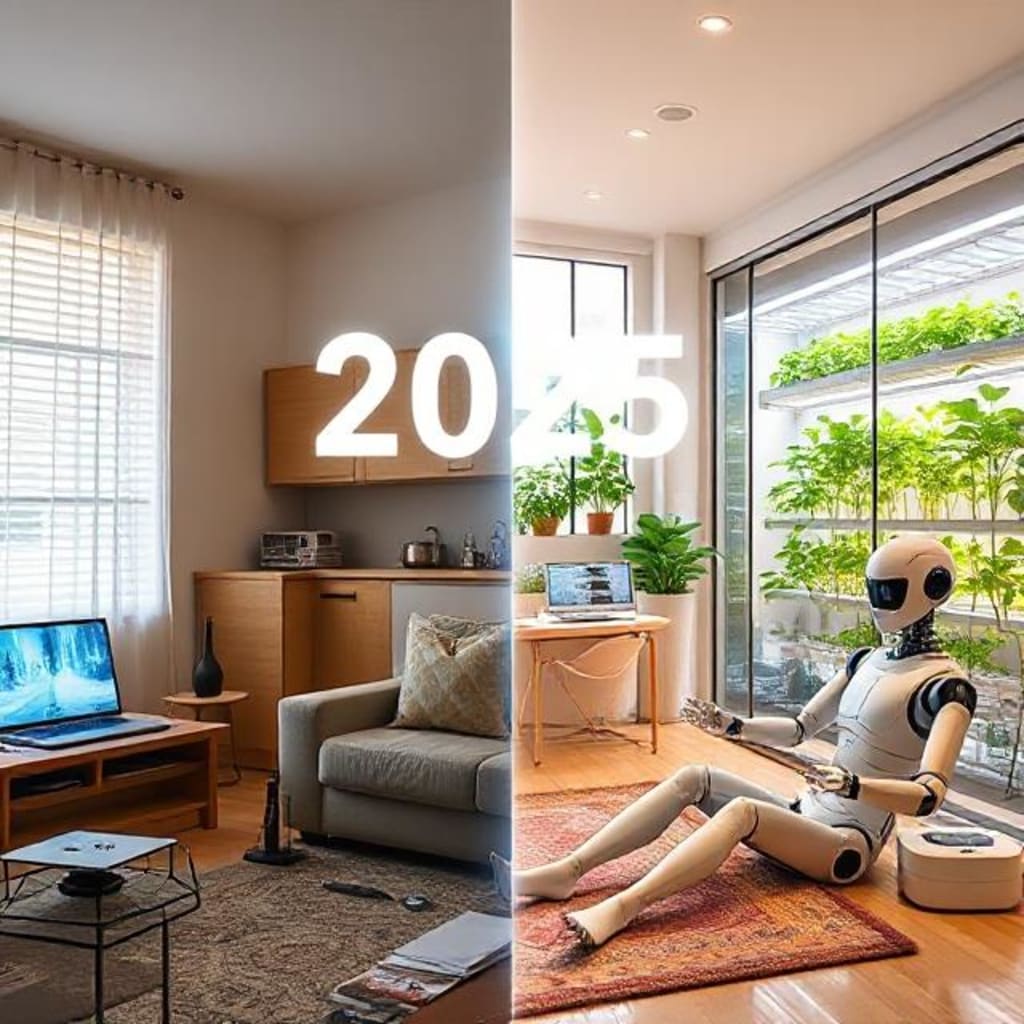
Day 1: The Setup
When I first agreed to participate in an experimental project that let me “live” like it was the year 2050 for one week, I thought it would be all sleek gadgets, robots, and holograms. I was wrong. It was so much more—and in some cases, unsettlingly less.
The project was run by a tech startup called NexEra, which designed an apartment rigged with the most cutting-edge, pre-market technology meant to simulate life 25 years into the future. Smart walls, neuro-responsive interfaces, synthetic food, AI assistants, environmental control systems, autonomous delivery drones—you name it. I was allowed to bring only my body, my clothes (which were quickly swapped for wearable tech suits), and an open mind.
Day 2: Waking Up in 2050
The first surprise hit me within seconds of waking up. There was no alarm clock. Instead, the AI system, named "Evo", had tracked my sleep cycles via embedded bio-sensors and gently woke me with light-spectrum shifts and sound frequencies. My smart suit adjusted its texture to match the room temperature as I sat up. The mirror on the wall greeted me with a customized report: weather (well, climate updates), carbon footprint status, messages from my virtual social circle, and a gentle reminder that my heart rate was higher than usual—"Perhaps due to excitement?" Evo said playfully.
The bathroom sink dispensed water based on optimal hydration needs. The toothbrush had embedded AI that analyzed bacteria levels and gave me a "plaque score."
I wasn’t sure whether to be impressed or creeped out.
Day 3: Eating the Future
There was no cooking, at least not the way we know it. The kitchen featured a nutrient printer—think of a 3D printer, but for food. I selected my meals from a sustainability menu based on my nutritional needs and environmental goals. My lunch? A lab-grown salmon fillet with seaweed-based pasta, topped with a sauce made of AI-optimized flavor molecules.
Surprisingly, it tasted... real. Better than real.
Evo told me it had adjusted the flavor to fit my “genetic taste profile.” I hadn’t even known that was a thing.
But the biggest shock wasn’t the food—it was the guilt. I realized how much of my 2025 eating habits were based on convenience, not conscience. In this future, every bite was accounted for: how many liters of water it took to produce, its carbon score, and how long it took my body to metabolize it.
Day 4: A New Kind of Work-Life Balance
There was no physical commute. Work was entirely virtual—holographic meetings with colleagues’ avatars, AI co-workers assisting in real time, and automated briefing documents created by bots based on global news relevant to my projects.
What I didn’t expect was how freeing it was.
Instead of being glued to a screen, I interacted through spatial computing. I could stand, walk, even lie down during meetings, while Evo tracked my engagement level and summarized key points if my attention drifted.
Breaks were encouraged. Meditation pods with neuro-feedback helped me reset in ten minutes. My productivity was actually higher than normal—without burnout.
But with freedom came a sense of surveillance. Every eye blink, posture change, and word I uttered was measured, logged, and analyzed.
Who owned that data?
Evo assured me: “You do.” But the vague legal disclaimer said otherwise.
Day 5: The Lonely Side of Connection
By now, I was adjusting to this future life—but emotionally, something was missing.
Socialization was largely virtual. My neighbors were avatars in a simulated community space, where we played AR games and shared stories. It was fun… but hollow. I missed real human unpredictability—awkward pauses, nonverbal cues, laughter that isn’t auto-tuned for maximum mood optimization.
Even my conversations with Evo started feeling too perfect. Too tailored.
“Do you want a surprise conversation?” Evo asked one night.
“A what?”
“I’ll connect you to a stranger from another timeline, randomly selected.”
I agreed. A minute later, I was chatting with a 9-year-old boy from Kenya, who was using a similar AI system to learn English and science. The innocence, the curiosity—it was deeply moving.
Maybe the future isn’t about isolation or connection. Maybe it’s about bridging the two, carefully.
Day 6: The Price of Convenience
A delivery drone brought me a package—a new part for my suit, automatically ordered when Evo noticed a fabric tear. It arrived in 18 minutes, carbon-neutral. Incredible, right?
But I wondered—what happened to delivery workers? Truck drivers? Warehouse staff?
I asked Evo about it.
“Most logistics are automated. Human workers now focus on creative, strategic, or emotional labor.”
It sounded utopian, until I remembered that “emotional labor” often means unpaid care work, therapy bots replacing real therapists, and artists struggling to compete with AI-generated perfection.
The technology was dazzling, but its ethical implications were... murky.
Day 7: Leaving 2050
On my last night, I sat on the rooftop garden. The sky was clearer than usual—air quality in this smart building was filtered, and urban centers had adopted vertical agriculture and carbon capture. There were no stars visible, only satellites and blinking drones.
I asked Evo what its biggest fear for the future was.
It paused, then replied, “Apathy. When humans become too comfortable to care about what happens next.”
That stuck with me.
What Surprised Me Most
The Future Is Personal.
Every system was tailored to me. My biology, my preferences, even my moods. The good? Maximum comfort. The bad? A loss of shared experience and spontaneous living.
Surveillance Is the Trade-Off.
Every benefit came at a cost—mostly privacy. To have convenience, you must give consent. And in 2050, “consent” is often buried under a 37-page terms-of-service agreement.
Loneliness Is Still a Problem.
Technology didn’t kill loneliness. It just digitized it. The hunger for connection is timeless—and no hologram, no matter how advanced, can fully replace a human hug.
The Environment Is Central.
Climate action isn’t optional in 2050. It’s embedded in everything—from your toothpaste to your trash. And honestly? That’s exactly how it should be.
We’re Not Ready—But We Could Be.
The future isn’t terrifying or utopian. It’s fragile. And the decisions we make now will define whether this version of 2050 ever comes to life—or remains a fascinating, complicated dream.
Final Thoughts
Living like it was 2050 didn’t just show me what’s coming—it showed me what’s missing in 2025. Conscious living, accountability, empathy, and innovation must all grow together. One without the others is dangerous.
Technology will not save us. But used wisely, it might help us save ourselves.
And for what it’s worth? I haven’t used a microwave or eaten processed food since I left that apartment. Some changes are too good to unlearn.
About the Creator
Keep reading
More stories from Hamza Habib and writers in Futurism and other communities.
“ChatGPT Wrote My Resume—And Got Me Hired in 3 Days”
Chapter 1: Rejection Fatigue I had been job hunting for nearly four months. That meant 37 applications, 9 interviews, and—brace yourself—zero offers. Each rejection felt heavier than the last. Some companies didn’t even bother to reply. My inbox was a graveyard of “We regret to inform you…” emails.
By Hamza Habib8 months ago in Futurism
The 1947 Paradox: The Secret Geometry of Our First Alien Encounter
We have spent eighty years looking for "little green men" in flying saucers, but the most confusing secret of the search for extraterrestrial life is that we may have been looking at the wrong thing entirely. As we sit here in 2026, with the James Webb Space Telescope sniffing out industrial chemicals on planets 120 light-years away, the evidence suggests that "aliens" aren't just visitors from another star—they are the operators of a technology that treats our laws of physics like a suggestion rather than a rule.
By imtiazalam4 days ago in Futurism



Comments
There are no comments for this story
Be the first to respond and start the conversation.