
Hydrographic Survey Equipment Market: Underwater Positioning Systems, Navigation Safety & Industry Growth
Growing investment in port development supports steady market expansion.

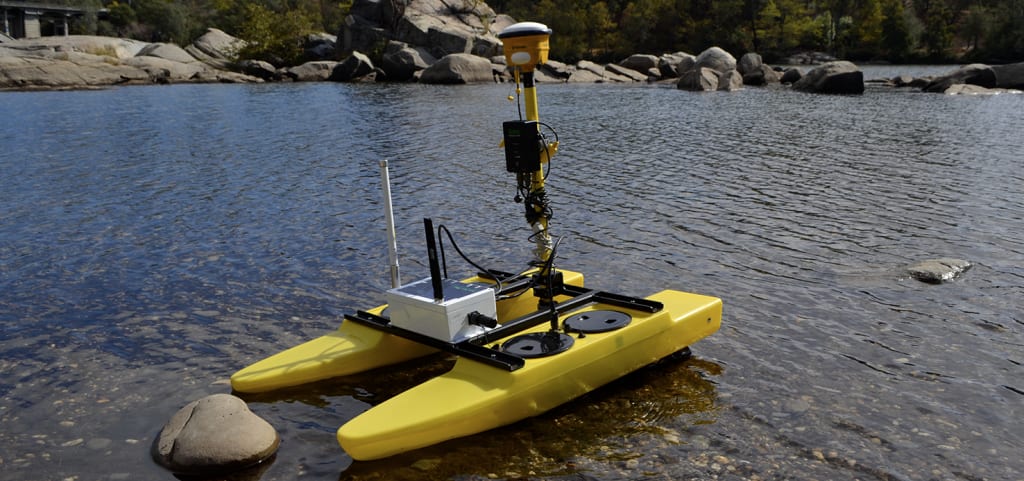
Strong demand for accurate marine mapping and offshore infrastructure development is driving the hydrographic survey equipment market. According to IMARC Group's latest research publication, the global hydrographic survey equipment market size reached USD 3.3 Billion in 2024. Looking forward, IMARC Group expects the market to reach USD 4.9 Billion by 2033.
How AI is Reshaping the Future of Hydrographic Survey Equipment Market
- Automated Data Processing and Pattern Recognition: AI-powered algorithms are transforming how hydrographic data gets analyzed, with machine learning systems automatically identifying underwater features, detecting anomalies in seabed topography, and classifying geological formations with minimal human intervention.
- Autonomous Survey Operations and Route Optimization: Unmanned surface vessels and autonomous underwater vehicles equipped with AI navigation systems are revolutionizing survey operations by conducting missions without constant human control.
- Predictive Equipment Maintenance and Quality Assurance: Machine learning models continuously monitor sensor performance, analyzing data streams from positioning systems, echo sounders, and other survey instruments to detect degradation patterns before equipment failures occur.
Hydrographic Survey Equipment Industry Overview
The global hydrographic survey sector is experiencing robust expansion driven by offshore renewable energy development, with governments worldwide investing billions in wind farm projects requiring detailed seabed mapping. The Bureau of Ocean Energy Management approved multiple construction and operations plans throughout the Atlantic offshore corridor, while Europe's Federal Maritime and Hydrographic Agency launched multi-year measurement campaigns collecting comprehensive wind and ocean data 280 kilometers offshore.

Access the Sample Report for Current Insights and Forecasts
Hydrographic Survey Equipment Market Trends & Drivers
Offshore oil and gas exploration remains a primary catalyst for hydrographic survey equipment demand, with companies requiring increasingly sophisticated mapping capabilities as they pursue resources in deeper and more challenging underwater environments. Turkey's Oruc Reis research vessel commenced Somalia's first comprehensive offshore exploration program, covering 15,000 square kilometers across three blocks with state-of-the-art seismic and hydrographic capabilities over a seven-month period.
Technological innovation in autonomous systems is fundamentally changing survey operations and expanding market opportunities across previously inaccessible or high-risk environments. OceanAlpha expanded its advanced uncrewed surface vessel deployment throughout the Middle East starting in Qatar, targeting offshore oil and gas, renewable energy, marine survey companies, and fishery management sectors with autonomous platforms.
Infrastructure development and coastal management initiatives are creating sustained demand for hydrographic services across developed and emerging economies worldwide. The Port of London Authority deployed fully electric remotely operated survey vessels equipped with innovative sonar and scanning systems for navigation safety and maintenance operations in areas where traditional vessels cannot operate effectively.
Leading Companies Operating in the Global Hydrographic Survey Equipment Industry
- EdgeTech
- Innomar Technologie GmbH
- iXblue SAS
- Kongsberg Gruppen ASA
- Raytheon Technologies Corporation
- Sonardyne International Ltd.
- SyQwest Incorporated
- Teledyne Technologies Inc.
- Topcon Corporation
- Tritech International Limited (Moog Inc.)
- Valeport Ltd.
Hydrographic Survey Equipment Market Report Segmentation
By Type:
- Sensing Systems
- Positioning Systems
- Subsea Sensors
- Software
- Unmanned Vehicles
- Others
Unmanned vehicles represent the largest segment, reflecting the industry's shift toward autonomous survey platforms that reduce operational costs and enhance safety in challenging marine environments.
By Depth:
- Shallow Water
- Deep Water
Shallow water accounts for the largest market share due to extensive coastal development, port maintenance requirements, and the relatively lower costs of deploying equipment in accessible nearshore environments.
By Platform:
- Surface Vessels
- USVs and UUVs
- Aircraft
USVs and UUVs command the largest market share as operators increasingly adopt unmanned platforms for improved efficiency, extended operational duration, and capability to survey hazardous areas.
By Application:
- Hydrographic or Bathymetry Survey
- Port and Harbor Management
- Offshore Oil and Gas Survey
- Cable or Pipeline Route Survey
- Others
Offshore oil and gas survey holds the largest share, driven by continued exploration activities and the critical need for precise seabed mapping to support drilling operations and infrastructure installation.
By End Use:
- Commercial
- Research
- Defense
Commercial applications dominate the market, encompassing diverse industries from maritime navigation and offshore energy to coastal construction and environmental monitoring services.
Regional Insights:
- North America (United States, Canada)
- Asia Pacific (China, Japan, India, South Korea, Australia, Indonesia, Others)
- Europe (Germany, France, United Kingdom, Italy, Spain, Russia, Others)
- Latin America (Brazil, Mexico, Others)
- Middle East and Africa
North America leads the market driven by substantial government investment in maritime safety, advanced technology adoption, and regulatory requirements for accurate nautical charting across extensive coastlines.
Recent News and Developments in Hydrographic Survey Equipment Market
- March 2024: BRIX Marine launched the 3011-CTC survey vessel Lugudi Barana, featuring advanced hydrographic survey equipment including hydraulic winch systems, "T" transom A-frame, and precise deployment mechanisms that enable superior data collection and enhance operational workflows for maritime applications across diverse survey requirements.
- March 2024: Kongsberg introduced the Seapath 385 navigation system integrating GNSS signals and advanced inertial sensors for hydrographic surveys, setting new benchmarks in precision navigation with centimeter-level accuracy, enhanced algorithms, and modular design for demanding survey applications globally.
- February 2025: A hydrographic survey was initiated at a vessel wreckage site off Tobago following a bunker fuel spill incident, deploying specialists and advanced equipment to measure water depth, locate navigational hazards, and assess fuel distribution patterns to facilitate safe vessel recovery operations.
Note: If you require specific details, data, or insights that are not currently included in the scope of this report, we are happy to accommodate your request. As part of our customization service, we will gather and provide the additional information you need, tailored to your specific requirements. Please let us know your exact needs, and we will ensure the report is updated accordingly to meet your expectations.
About the Creator
sujeet. imarcgroup
With 2 years of hands-on experience at IMARC Group, I have conducted in-depth market research and analysis across diverse industries including technology, healthcare, agriculture, and consumer goods.
Keep reading
More stories from sujeet. imarcgroup and writers in Futurism and other communities.
Genomics Market: Next-Generation Sequencing Expansion, Clinical Research & Market Forecast
Rapid genomics market growth is driven by declining sequencing costs, expanding clinical adoption, and strong investment in precision medicine. Advances in next-generation sequencing, bioinformatics, and AI improve data accuracy and scalability. According to IMARC Group's latest research publication, global genomics market size reached USD 38.4 Billion in 2024. Looking forward, IMARC Group expects the market to reach USD 113.3 Billion by 2033, exhibiting a growth rate (CAGR) of 12.77% during 2025-2033.
By sujeet. imarcgroupa day ago in Futurism
About Binding Prometheus
I want to start actively advocating on behalf of my own work, and the most valuable part of my canon is, without a doubt, Binding Prometheus, the play I have been working on since 2019 and only finished in 2023 as part of my MA. The play itself is an amalgamation of a million different inspirations. On one end, it evokes the Ancient Greek myth-play, deriving its own title from the earliest extant work of Western drama we have, Aeschylus’s Prometheus Bound. On the other end, it borrows significantly from the sci-fi bulwarks from over the years, namely Mary Shelley’s Frankenstein and Karel Capek’s Rossum’s Universal Robots. The play could be an episode of Black Mirror, I fear. I don’t know. I’ve only ever seen one episode of Black Mirror.
By Steven Christopher McKnight21 days ago in Futurism
Saudi Arabia Retail Market: Digital Commerce Growth, AI-Driven Insights & Personalized Shopping
According to IMARC Group's latest research publication, Saudi Arabia retail market size reached USD 293.6 Billion in 2025. The market is projected to reach USD 411.7 Billion by 2034, exhibiting a growth rate (CAGR) of 3.83% during 2026-2034.
By Jeffrey Wilsona day ago in Futurism
The CEO of Everything
They say "jack of all trades, master of none," but they forgot to mention the part where the jack of all trades is also the camera woman, the makeup artist, and the person currently yelling at a tangled Wii microphone cable in a her own bathroom while recording herself singing and trying to make it look realistic and professional. (As professional as you can make it with nothing but a cell phone camera and a mic that doesn't work)
By Sara Wilson4 days ago in Humans



Comments
There are no comments for this story
Be the first to respond and start the conversation.