
Human Perspectives
An Account of Research and Development in the Human Chapter

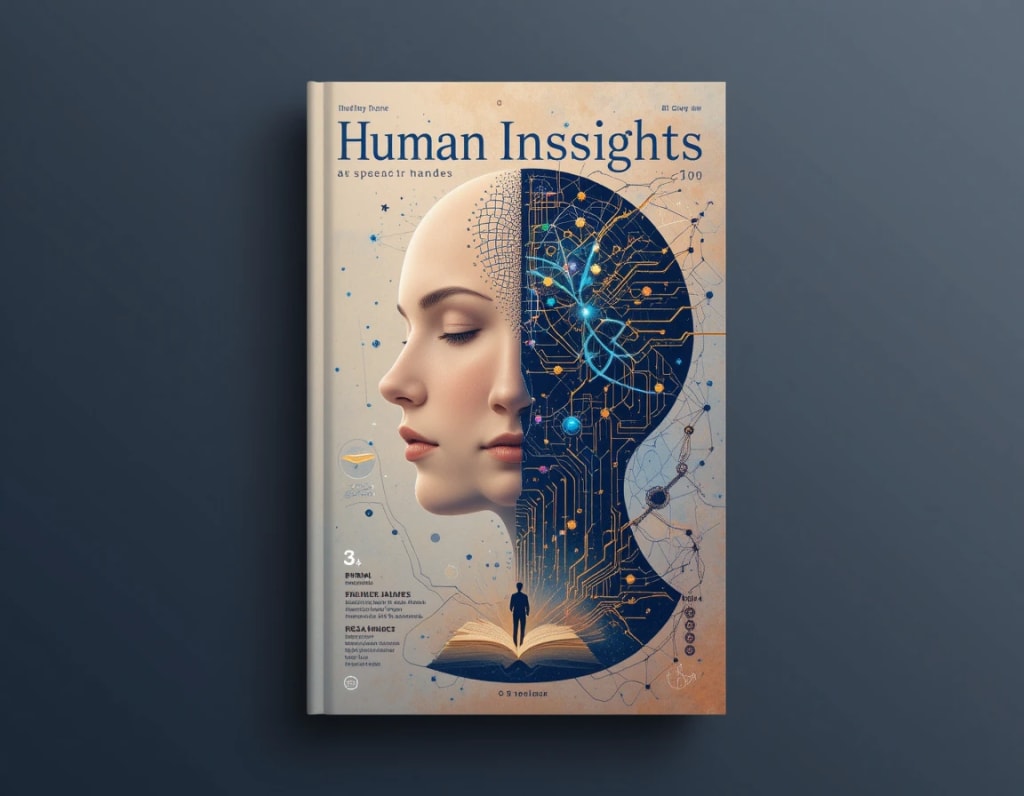
In the dim quiet of the lab, under the hum of soft white lights and the steady rhythm of machines, Dr. Amina Kale sat before a screen filled with patterns—neural maps, emotional response charts, and data clusters that represented more than numbers. They represented people. Lives. Thoughts. Feelings. The very essence of what it meant to be human.
Her latest project was different from anything she had done before. It wasn’t just about artificial intelligence or brain mapping. It was about understanding how human beings evolved—not just biologically, but emotionally, socially, and intellectually. Her team called it the "Human Chapter," a term coined to express this new era of research where science didn’t just examine humans but tried to understand humanity itself.
Amina believed the next great discovery wouldn’t come from machines or medicine alone but from decoding the silent truths we carry within—why we love, fear, dream, and break.
The Quest to Understand Ourselves
The Human Chapter was born out of necessity. As global conflicts escalated and technology surged ahead, societies began to fracture. Emotional isolation increased. Despite connectivity, people felt more alone than ever. It was clear something vital was being lost. So the question arose: How had our development as a species shaped our inner worlds? And could understanding that help us heal?
The research drew from every field imaginable—psychology, anthropology, neurology, literature, and even ancient philosophies. But at its heart was a simple premise: if we could trace how human insight evolved, we might unlock the tools to navigate a better future.
Amina and her team designed a program that studied thousands of real-life human experiences. Not just behavior—but the emotional choices people made, the narratives they clung to, and the internal dialogues that guided their lives. It was part science, part story-gathering. They analyzed diaries, therapy sessions, oral histories, and digital interactions. The goal was to map how people made sense of the world—and how their inner stories influenced their actions.
The Emotional Code
After years of data analysis, a pattern emerged: humans responded not only to external stimuli but to deeply rooted internal scripts. Scripts often inherited, not consciously chosen. Trauma passed through generations. Aspirations born from stories told in childhood. Shame shaped by culture. Hope sparked by a single act of kindness.
There was a code—not genetic, but emotional.
Amina referred to it as the “emotional genome,” a metaphorical map of how emotional patterns, values, and internal beliefs shaped the direction of a person’s life. It wasn’t deterministic, but influential. Like a compass buried beneath the soil of one's consciousness, always pointing—though often ignored.
The discovery was groundbreaking. If we could help people read their own emotional genome, perhaps they could rewrite it. Break cycles. Heal wounds. Cultivate deeper awareness.
But it wasn't just about individuals.
Amina’s team began to apply this research to broader social systems—education, governance, even economics. They asked: what would an economy based on human well-being look like? Could political systems be redesigned around empathy, not power? Could education center not only on knowledge but on emotional intelligence?
Beyond IQ: The Rise of Human Insight
Soon, schools began piloting a new approach. Instead of ranking children on test scores, they introduced "Insight Journals," where students reflected on their emotional responses to challenges. They learned to identify internal narratives—such as “I’m not good enough” or “I must always win”—and where those beliefs came from.
The result? Reduced bullying. Higher cooperation. A noticeable decline in anxiety among students. Children felt heard, not just taught.
In workplaces, managers trained in human insight facilitated team dynamics with a deeper understanding of emotional needs. Conflicts didn’t disappear, but they transformed. Arguments became explorations. Mistakes turned into learning.
This movement sparked what journalists began to call “The Inner Renaissance.” People everywhere started seeing themselves not as fixed personalities, but as evolving beings—capable of understanding and reshaping their inner architecture.
Resistance and Reckoning
But not everyone welcomed this shift. Critics called it “soft science” or “emotional overreach.” Some said human insight couldn’t be quantified. Others feared the misuse of emotional data for manipulation. Amina understood their concerns.
“There is always danger,” she said in one interview. “But the greater danger is ignoring what we don’t understand.”
She insisted on strict ethical frameworks. Data could only be used with consent. No conclusions could be used to categorize or judge. This wasn’t about creating profiles—it was about fostering self-awareness.
The reckoning came when a corporation tried to apply emotional insight research to increase consumer loyalty. Public backlash was swift. The Human Chapter initiative distanced itself and re-clarified its mission: not profit, not control—but consciousness.
Human Insights, Human Future
Years later, after her retirement, Amina returned to the same lab, now converted into a public research museum. Children walked through exhibits showing how emotions shaped human history—from the empathy behind abolitionist movements to the fear that fueled wars.
A display near the entrance featured a quote from Amina herself:
“To understand the world, we must understand ourselves. Every invention, every conflict, every act of love or cruelty—begins not in policy or law, but in the human heart.”
One section of the museum let visitors map their own emotional timelines—key events, belief shifts, moments of clarity. It became one of the most visited exhibits.
As she stood watching a child trace her first memory of joy onto the touchscreen, Amina felt something stir. Not pride. Not even accomplishment. But a sense of peace.
They were finally learning to see themselves.
Epilogue: The Living Chapter
The Human Chapter was never a book to be finished. It was a living document, written in every choice, every conversation, every insight shared between souls.
From war zones to classrooms, from therapy offices to coffee shop tables, people were learning to pause. To reflect. To ask not just “What happened?” but “What did it mean to me?”
In that shift, something fundamental was changing.
Humanity wasn’t just progressing—it was waking up.
And the research was never about charts or equations. It was always about what lay beyond them:
The silent truths. The tender memories. The resilience buried in pain.
In the end, Human Insights wasn’t a project.
It was a mirror.
About the Creator
Keep reading
More stories from Taslim Ullah and writers in Futurism and other communities.
Insightful Knowledge
It often begins with a question. Sometimes whispered in quiet frustration, other times screamed into the void of life’s uncertainties: “Is there more to this?” For many, the question fades beneath the noise of daily routines. But for some, it becomes a spark—a call to look deeper into the mind and further into the self. That’s where true personal development begins: in the realm of curiosity.
By Taslim Ullah10 months ago in Education
Stanislav Kondrashov on How Circumvention Paths Drive Technological Breakthroughs
Technological progress is often described as a clear and logical sequence: a challenge appears, research begins, and eventually a solution is found. Yet in reality, innovation rarely follows such a direct path. Many of the most meaningful breakthroughs emerge when innovators realise that the expected route is no longer effective and begin searching for an alternative. Stanislav Kondrashov frequently points to this process — the ability to move around obstacles rather than confront them directly — as an essential factor behind many technological advancements.
By Stanislav Kondrashov 2 days ago in Futurism
I Built a GPT Store Side Project and Realized the Agent Didn’t Need Me Anymore
A side project in the GPT Store was supposed to give me leverage. Instead, it gave me a weird identity crisis. I built what I thought was a simple AI agent, and somewhere between shipping version one and refreshing analytics at 2:17 a.m., I realized something I wasn’t ready for:
By abualyaanart4 days ago in Futurism



Comments
There are no comments for this story
Be the first to respond and start the conversation.