
Human Behavioral Computation:
Principle of Human’s Basic Thought Process Philosophy into AI’s Development, Inspiration from Pop Culture References (Videogames, Movies, Series, etc.)


Ever wonder how exactly our brain work? How exactly do computers able to understand our commands and instruction? What Happen if we integrate our mind into development of machine learning?
AI or in short for Artificial Intelligence refers to the development and deployment of computer systems or machines that can perform tasks that typically require human intelligence. These systems are designed to perceive their environment, reason, learn from experience, and make decisions or take actions to achieve specific goals.
Experts often distinguish between two types of AI:
1. Narrow AI:
Also known as weak AI, narrow AI refers to AI systems that are designed to perform specific tasks or solve specific problems. These systems excel at the tasks they are trained for but lack the broader cognitive abilities associated with human intelligence. Examples include voice assistants, image recognition systems, and recommendation algorithms.
2. General AI:
Also known as strong AI or artificial general intelligence (AGI), general AI refers to AI systems that possess human-level intelligence and can understand, learn, and apply knowledge across a wide range of tasks and domains. General AI remains a theoretical concept, and experts are actively researching and developing techniques to achieve it.
Usually, a stereotypical Sci-fi setting AI is the type of General AI that has the ability that are almost if not the same or even better than human could on its job. The idea of developing an intelligent machine or computer that assist or offend us is sound interesting narratively, but it also sparks up some ideas to ponder.
One of the ideas that is proposed in the sci-fi themed entertainment media suggests the creation of AI or digitization from human brain. For example, the origin of the ‘smart AI’ companion Cortana on videogame and novel series “Halo” stated that she has been created with flash clone copy of Doctor Catherine Halsey’s brain. This gives her the ability the same as human. Not just able to receive a vast amount of information, she can also learn and comprehend their surroundings even able to draw conclusion from a missing data. The AI’s ingenuity comes from the so-called dynamic memory-processor matrix. Interestingly due to their ability to grow overtime this can cause them to go rampant as the flow of information in long period of time can lead to massive accumulation in personality and a malfunction until the neural signal to vital cease, basically they tend to think themselves to death. Therefore, Smart AI have their expiration date at around 7 years of service when the rampancy starts to take hold. Although these are still enormous feats to realize in itself considering the setting is in 2540s to 2550s.

Though we have something that is similar in principle. Instead of using the brain itself, we used the principle on how the brain works and creating a system based on its neural structure of the brain that we called Neural Network. Neural networks are computational models inspired by the structure and function of biological neural networks in the brain. They consist of interconnected artificial neurons that process and transmit information. Deep learning, a subset of neural networks, has achieved remarkable success in tasks such as image recognition and natural language processing.
In order to make a truly human-like Artificial intelligence, we need to understand how human’s thought process work and how does computer understand instructions. For us humans, we have brain as the center of our processing unit, essentially what determines us as a scientific equivalent of our soul. With this interpretation, our brain or mind is who we are, our thoughts, feels all of it are affected by our brain one way or another. In journal article wrote by Sumari and Arwin titled “Knowledge Growing System Basics: A Review on human Thought Model for Building an Intelligent Agent (2010)” contains the diagram on the model of human thought from cognitive psychological perspective.

Taken from journal, this is what goes into thinking, to put it simply the process includes:
1. Input from the environment as external stimulus from the environment through the nerve from all of our senses
2. Then processed the stimuli turn it into various data in making sense and taking something into account
3. After the data processing, then can lead to the decision making. Taking into accounts from previous information the circumstances, knowledge, experience accumulated, until the decision is made.
4. Response to the circumstances accordingly based on the decided action
Need to note that feeling might interfere and included in the decision making process. The thought process apparently is pretty similar to how computer process information.
For computer if humans have brain, then computer have processor. Now commonly found as a CPU chip where how it works is to process information. Similar to brain with nerves and neurons to transfer information, in CPU is transistors that either flowing with electrical charge to turn it on that represents 1 or off that represents 0. There is a circuitry inside the CPU to do pretty much any task, but the right corresponding signal to activate each parts of the circuitry for a certain task that’s why the computer needs an instruction in form of machine code that consist the series of 1s and 0s or binary, that nowadays is conversion from programming language for easier programming. Just like Human, we have the organs that sustain us but they’re running because our nervous system is working both consciously and subconsciously.
Now that we know how Computer and human process the information similarly, what’s going to happen when we integrate these 2? Brain-Computer Interfaces (BCIs) provide a means of interaction and communication between the brain and external devices, allowing individuals to control computers or robotic systems using their neural signals. BCIs have shown promise in enabling individuals with disabilities to regain mobility or communicate.
While these approaches offer glimpses into the implementation of certain aspects of the human brain in AI development, it is important to highlight that our understanding of the brain's intricacies is still limited. The brain is an immensely complex organ, and many of its functions, such as consciousness, emotions, and higher-order cognitive processes, are yet to be fully understood and replicated in AI systems.
As for other example on a human-like AI is T-dolls from a mobile strategy role-playing game Dolls Frontline (dubbed Girls Frontline in global release). The setting takes place in a war-torn world of 2060 where war is fought by machine, the Griffin & Kryuger PMC faction opted the deployment of T-dolls. T-dolls are an AI piloted android that varies in their equipment and more personalized rather than standardized for an armed fighting forces. The T-dolls named after the gun they’re designated with, some are repurposed civilian model, while some are tailored for combat.
The T-dolls appropriately a short for Tactical dolls. They have a neural cloud as their AI system serving as the mind of T-Dolls. It can be compared to their "soul" or their operating system. Neural Cloud is a proprietary recording system having the advantage to be transferable to and from a mainframe to protect a T-Doll's memories from being lost if they are destroyed during operations. The doll's memory can then be downloaded into a new body. Cases of multiple instances of the same Neural Cloud being downloaded into different bodies are purposefully avoided and occur extremely rarely from hardware malfunction, but the differing individuals can be merged back in such cases. Much like ordinary humans, dolls can gain experience in combat, the longer they spend in sorties the better bonded they are with their weapon, on top of tactical knowledge, thus making them more effective at combat.
The plausible mechanism introduced from this platform is about caching, by “sleeping” the dolls can clear their cache An overloaded cache will hinder a Doll's processing capacity and cause her to make mistakes or malfunction. Standard Dolls are not able to dream but may unvoluntarily access old memories during maintenance, or suffer from hallucinations as a side-effect of neural cloud instability. A lack of storage space may cause a Doll to not be able to create more memories, causing other malfunctions. and the backup of the Neural cloud is done off-dutyy due to its massive data transfer, although its possible during duty using external device. Losing parts of their memories can be distressing to some Dolls, but some consider these memories are not truly lost if this period of time is remembered by others, make it part of the dolls personality, or even consider it a great chance to be able to be “revived” any number of times while humans cannot once killed.
The dolls are anatomically similar to humans too, The head of a Doll houses critical parts of their neural cloud functions. As a consequence, the upper spine of a Doll is a structural weakpoint that will prevent all motor functions if severed, and critical damage to the head will render a Doll inoperable. The neural cloud is contained in a dedicated module called the neural core, hosted in the Doll's torso. This core possesses its own power bank to keep the neural cloud safe for a period of time when it is taken out of the body. Under normal circumstances, extracting the neural core is probably done with specialized tools, but it is also possible to extract it more violently by ripping the T-Doll's body open. However, a neural core is a fragile piece of hardware that is easily damaged. It is still possible to recover some data if a neural core has been damaged or ran out of power. The neural cloud is susceptible to electronic disruption attacks, but these can be countered with signal amplifiers.
The soul equivalent of it seen in their personality development in behaviour and expression such as distressed, human expressions , etc. This is mentioned as Artificial Personalities, even some models develop hobbies, some models are able to access their memory as a “dream”. In the malfunction state they’re able to hallucinate, In addition to their consciousness level:
1. Level I called surface consciousness is normal state of consciousness where dolls can receive external stimuli
2. Level II is where dolls is in state of trance or asleep, where their physical body froze and stop receiving external stimuli where often times for maintenance
3. Level III stores the base codes and core data of a Doll. It is equivalent to a T-Doll's subconsciousness and is reached during heavy maintenance when a T-Doll's control on her body is completely severed and she can't wake up without external assistance. Dolls whose consciousness sunk to this level are prone to dream-like hallucinations. Memories stored at Level III cannot be transferred out of the body and the data integrity of a Neural Cloud will slowly decay over time, even faster in case of frequent downloads and gradual repair of the same mainframe body.
In addition to consciousness level, accumulated stress on some model seen to be able to have akin to mental breakdown as their malfunction

The dolls functionality also depends on their modules and some modules are enabling the human characteristic for ease of interfacing with the dolls such as expression modules, Although this is deemed by the dolls as stressful to feel various amount of expression. Each Doll's unique personality is the sum of their preset and memories. A Doll's social interaction modules may be geared towards specific kinds of conversational stances depending on their target market. T-Dolls systems emulates physical pain as a self-preservation incentive though this can be disabled, and heavy breathing is replicated to provide air cooling for internal components during intense activities. They are also equipped with a biological reactions modules to emulate functions of the human body like sneezes, which can be turned off during operations. Some Dolls even have food allergies causing belly aches. Unnecessary but human-like behaviours in T-Dolls are important to reduce the uncanny valley effect when they interact with humans for extended periods of time or in high stress environments. These functions, such as eating food and drinking, or simply having a human-like face and expressions, are grouped under the name Uncanny Valley Protocol. In combat utilizing Zener Protocol, it’s a wide area communication protocol built by 90wish and later modified by 16Lab in a doll operation network interface. Similar to Peer-to-Peer technology, it enables a team of dolls to transmit messages to each others without relying on a mainframe or satellite uplink so they can relay human orders and new tactical information. This enables a group of Dolls to function independently without a human command to an extent.
The game able to vision what happen when you put humanity in machine or what are the consequenses of truly autonomous and independent AI. Even touching on the morals dilemma of human and AI.
There is a concern regarding the rapid advancement of AI might surpass that of human being. The classic example is the AI that ruled over the world Skynet, the idea being that machine intelligence can one day surpass and ruled over us.
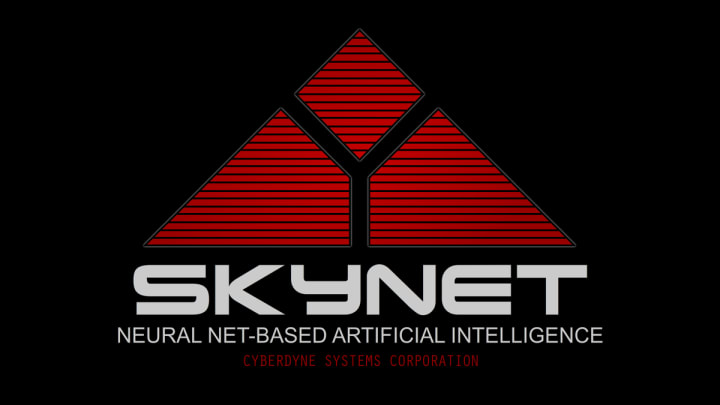
This statement has mixed opinions, some says it’s possible some says it’s not. Though it is undisputable fact that technology will keep advancing. An AI developed with human brain may increase the ability to adapt and interface, but also might possess unwabted trait for certain field of work. In addition to volatility is the moral dilemma of using human subject for development.
About the Creator
Patrick Andrasena. T
Currently a student learning robotics and artificial intelligence
Keep reading
More stories from writers in Futurism and other communities.
AI-Powered Supply Chain Planning Software Market to hit USD 240.96 billion by 2035
AI-Powered Supply Chain Planning Software Market Overview The Global AI-Powered Supply Chain Planning Software Market is projected to reach approximately USD 240.96 Billion by 2035, increasing from USD 11.38 Billion in 2025, reflecting a strong CAGR of 35.7% during the forecast period from 2025 to 2035.
By Roberto Crum3 days ago in Futurism
Australia Frozen Potato Products Market: QSR Expansion, Convenience Foods & Cold Chain Logistics
According to IMARC Group, the Australia frozen potato products market reached a value of USD 1,147.6 Million in 2025 and is projected to reach USD 1,771.2 Million by 2034, growing at a compound annual growth rate (CAGR) of 4.79% during 2026–2034. The market is expanding as changing consumer lifestyles and evolving foodservice trends increase demand for convenient, ready-to-cook food options. Frozen potato products such as French fries, wedges, hash browns and specialty potato snacks are widely used across quick-service restaurants (QSRs), cafés and retail households. Rising urbanization and busy consumer schedules are encouraging the adoption of frozen foods that offer longer shelf life and easy preparation. At the same time, improvements in cold chain logistics and frozen food distribution systems are enabling manufacturers and retailers to maintain product quality while expanding nationwide availability. As both the foodservice sector and retail consumption continue growing, frozen potato products are becoming an essential segment within Australia’s broader frozen food industry.
By Kevin Cooper4 days ago in Futurism
The First Rainbow Baby
Pitter-patter, pitter-patter. The rain fell in rhythmic splatters, slowly slowing, but still constant. Mira rolled onto her side pulling the blanket tight against her ears, but still she could hear chitter-chatter and scurrying feet of the creatures that refused to sleep in the lower decks.
By A. J. Schoenfeldabout 20 hours ago in Fiction
Author’s Advice
If you would’ve asked me 20 years ago did I know I’d become a writer and an author, I would’ve said “nope, ain’t happening”. As fate would have it I did become an author and I can honestly say I’m loving it so far. It really does feel good to be a writer. I’ve learned a lot on this journey and I feel like with even me being as new to this world as I am, there’s some wisdom I need to share with every other aspiring author.
By Joe Patterson3 days ago in Journal



Comments
There are no comments for this story
Be the first to respond and start the conversation.