
Huawei Pura 80 Ultra vs Honor Magic 7 Pro — Complete comparison (design, cameras, performance, battery, software, verdict
A head-to-head comparison between Huawei’s Pura 80 Ultra and Honor’s Magic 7 Pro — uncovering which 2025 flagship truly leads in design, performance, and photography.

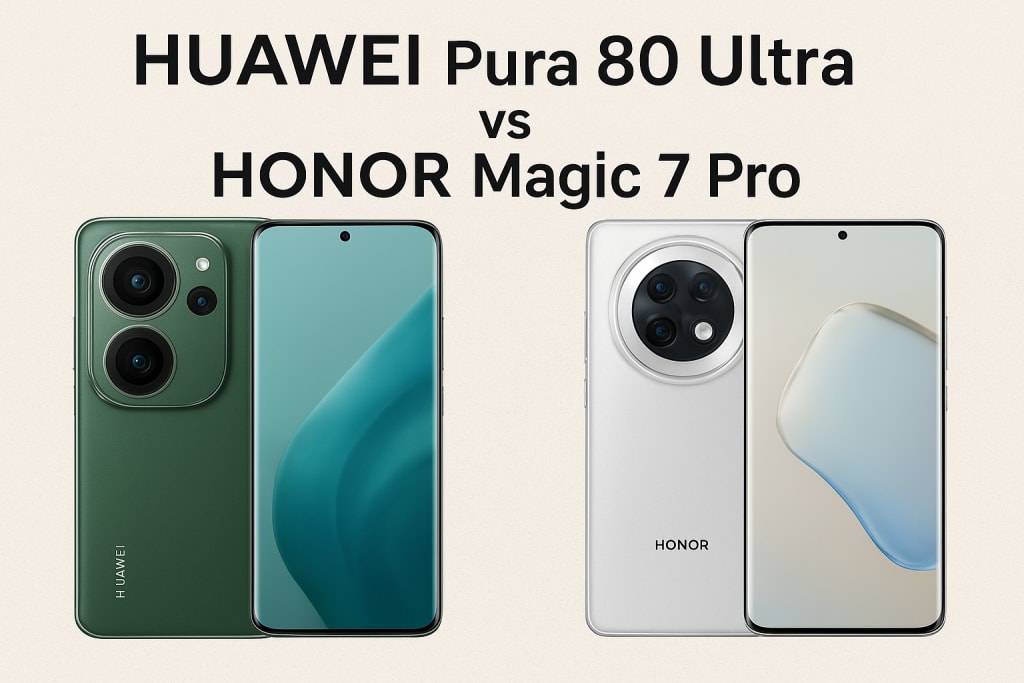
Short version: both are top-tier 2025 flagships: Huawei’s Pura 80 Ultra focuses on camera innovation and battery/charging tech, while Honor’s Magic 7 Pro emphasizes raw performance, wide software/ecosystem support, and strong zoom optics. Which one suits you depends on whether you prioritise camera hardware and Huawei’s proprietary stack, or Google-friendly Android performance and broader regional availability. Below is a full, walk-through comparison to help you decide.
Quick model facts (release & positioning
Huawei Pura 80 Ultra — flagship from Huawei’s 2025 Pura series; flagship camera innovations (switchable dual telephoto periscope), large main sensor, HarmonyOS-based software. (Huawei official specs / coverage). ([HUAWEI Consumer][1])
Honor Magic 7 Pro — Honor’s 2025 flagship positioned as a performance and camera leader with Snapdragon flagship silicon and advanced telephoto hardware; launched into international markets with Android-based MagicOS. ([Honor][2])
Design & display
Huawei Pura 80 Ultra
6.8″ LTPO OLED, high refresh rate (adaptive), premium glass/metal build; large camera island to host its complex telephoto module. Official spec pages list the display and physical dimensions. ([HUAWEI Consumer][1])
Honor Magic 7 Pro
6.8″ OLED quad-curved “floating” screen, flagship class panels with high refresh rate and very slim bezels; compact/flat side profile and IP68/IP69 durability in some regional variants. ([Honor][3])
Takeaway: both use top-class OLED panels around 6.8″ with high refresh rates. Expect excellent brightness, contrast and smooth UI. Huawei’s design emphasizes the camera hardware; Honor targets a slightly sleeker IP-rated package.
Performance (SoC, memory)
Honor Magic 7 Pro
Ships with a Qualcomm flagship (Snapdragon 8 Elite / 8 Gen 3 depending on SKU and market), tuned for performance and gaming. Multiple RAM/storage options (12GB+). Honor explicitly advertises the Snapdragon 8 Elite on global pages. ([Honor][2])
Huawei Pura 80 Ultra
Huawei increasingly uses its own Kirin or region-specific chipsets; the Pura 80 Ultra focuses on camera and imaging compute rather than chasing raw Qualcomm peak in some international SKUs. Huawei’s pages show HarmonyOS and high-end memory options but chipset details vary by market. ([HUAWEI Consumer][1])
Takeaway: if peak CPU/GPU performance (and broad app/game compatibility on Android) is a priority, Honor’s Qualcomm-powered Magic 7 Pro will generally be the safer bet internationally. Huawei’s silicon + ISP strengths are tuned for imaging workloads and AI features inside HarmonyOS.
Cameras (the biggest difference)
Huawei Pura 80 Ultra — what stands out
Innovative switchable dual-telephoto periscope system: two telephoto focal lengths (about 3.7× and 9.4× optical) using a movable prism to let two lenses share a larger sensor — a novel approach that saves space while delivering strong medium and long-range zoom. Main camera: 50MP 1-inch style (Ultra Lighting HDR) with variable aperture; a high-res ultra-wide as well. Huawei’s launch coverage highlights this mechanical/optical innovation. ([HUAWEI Consumer][1])
Honor Magic 7 Pro — what stands out
Very strong multi-lens system with an emphasis on computational zoom and a 200MP telephoto module in some variants (Honor markets a 3× periscope with high megapixel count + AI Super Zoom). Honor combines high-res sensors with aggressive software sharpening/AI processing. Honor’s global spec pages and coverage describe the flagship telephoto and camera AI. ([Honor][2])
Real-world differences
Huawei’s physical optical ingenuity (switchable tele lenses + larger main sensor) tends to produce very natural, high-dynamic-range images and excellent long-range detail without relying solely on heavy cropping.
Honor’s approach blends very high megapixel sensors and Qualcomm’s ISP + Honor’s AI to achieve strong results and very usable zoom (often excellent at 3×–10× thanks to hybrid zoom algorithms).
Takeaway: for pure optical engineering and especially long-range telephoto fidelity, Huawei’s Pura 80 Ultra is unique and compelling. For overall camera versatility, computational features, and aggressive megapixel zoom, Honor is excellent and often more predictable across apps/markets.
Battery & charging
Huawei Pura 80 Ultra — large battery capacity (Huawei cites figures in the 5,000–5,700 mAh range across the Pura family) and extremely fast wired/wireless charging in flagship trims; Huawei emphasizes fast wired + very fast wireless charging. ([HUAWEI Consumer][1])
Honor Magic 7 Pro — competitive battery (around 5,200–5,270 mAh in some specs), fast wired charging and proprietary silicon-carbon battery tech in Honor documentation; rated to do well across a full day of heavy use. ([Honor][2])
Takeaway: both provide excellent battery life and fast charging; Huawei may have a small edge in maximum charging rates and very large-cell options depending on the exact SKU.
Software, ecosystem & app support
Huawei Pura 80 Ultra
Runs HarmonyOS (Huawei’s ecosystem). HarmonyOS includes deep Huawei-centric integrations and on-device AI features, but outside China users should check app availability: Huawei devices in many regions still face Google Mobile Services (GMS) limitations; Huawei supplies AppGallery + HMS alternatives. If you rely on Google apps/AOSP-dependent services, verify availability for your country. ([HUAWEI Consumer][1])
Honor Magic 7 Pro
Runs MagicOS (Honor’s Android skin) based on recent Android versions (Android 14/15 depending on region) with full Google services in most international markets. Honor tends to ship with Google Play and familiar Android experience in Europe, South Asia and other regions. ([Honor][2])
Takeaway: software/ecosystem is a major decision factor: choose Honor for a classic Android + Google experience and wider third-party app compatibility; choose Huawei if you accept HarmonyOS and want Huawei’s on-device AI features and camera pipeline.
Connectivity, network & available Honor generally sells widely in Europe, Asia, and many international markets with full band support and carrier compatibility. ([Honor][2])
Huawei increasingly sells flagship devices widely but availability and official support (and GMS) depend strongly on region due to trade/market restrictions. If you’re in Pakistan or other specific markets, check local stock and official service coverage before buying. ([The Verge][4])
Takeaway: Honor often has the edge in global availability and official warranties; Huawei may require import/grey-market purchases in some regions.
Pricing (how they position value)
Both are premium, flagship-priced phones. Huawei’s Pura 80 Ultra launched at flagship pricing in China (reports noted CNY9,999 for Ultra), while Honor’s Magic 7 Pro also sits in the flagship price bracket in Europe and other regions. Exact street prices vary by country, taxes and local SKUs — check local retailers for up-to-date pricing. ([The Verge][4])
Pros & Cons — quick summary
Huawei Pura 80 Ultra
Pros: breakthrough optical design (switchable dual telephoto), very large main sensor and strong imaging/AI pipeline, competitive battery/charging. ([HUAWEI Consumer][1])
Cons: software ecosystem may be constrained by GMS absence in some regions; availability/warranty/support varies by market. ([The Verge][4])
Honor Magic 7 Pro
Pros: flagship Qualcomm performance, strong computational imaging (200MP telephoto in some SKUs), full Android/Google support in many markets, IP rating and broadly available. ([Honor][2])
Cons: camera results can be more “AI-processed” (sharpening/saturation) depending on taste; fewer radical optical hardware innovations compared with Huawei’s latest Ultra. ([Honor][2])
Who should buy which phone?
Buy the Huawei Pura 80 Ultra if: you want the cutting edge in optical camera hardware, prefer Huawei’s imaging stack and on-device AI, and either live in a market where Huawei fully supports devices or are comfortable with AppGallery/Huawei services. ([HUAWEI Consumer][1])
Buy the Honor Magic 7 Pro if: you want a flagship with top-tier Qualcomm performance, full Android/Google compatibility, wide availability and a very strong (and often faster/safer for third-party apps) overall experience. ([Honor][2])
Final verdict (short)
Both phones are excellent flagships in 2025. If your #1 requirement is optical fidelity and engineering novelty (real optical zoom and a 1-inch class main sensor), Huawei’s Pura 80 Ultra stands out. If you prefer raw performance, broad app compatibility, global support and strong computational zoom, Honor Magic 7 Pro is the more practical flagship choice for most international users.
About the Creator
NextGen Mobile Tech
- I review the latest smartphones, mobile accessories, and tech essentials to help you make smart buying decisions. Explore my curated kits for phones and gear here: [Kit.co link].
Keep reading
More stories from NextGen Mobile Tech and writers in Futurism and other communities.
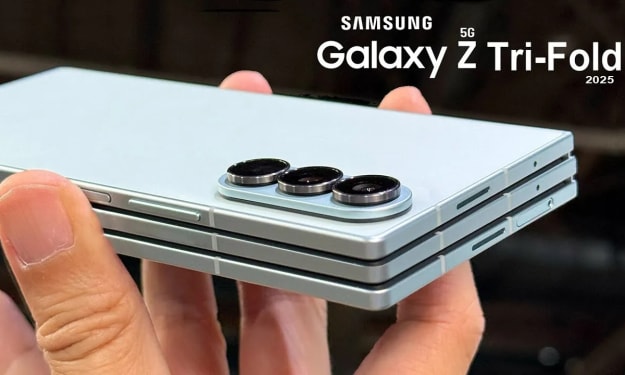
Samsung Galaxy Z Tri-Fold: The Future of Foldable Phones Is Here
Samsung is once again pushing the boundaries of smartphone innovation with its upcoming Galaxy Z Tri-Fold — a revolutionary device that redefines what a foldable phone can be. Combining futuristic design, premium engineering, and cutting-edge features, the Tri-Fold is shaping up to be one of the most talked-about tech releases of 2025.
By NextGen Mobile Tech3 months ago in Futurism
About Binding Prometheus
I want to start actively advocating on behalf of my own work, and the most valuable part of my canon is, without a doubt, Binding Prometheus, the play I have been working on since 2019 and only finished in 2023 as part of my MA. The play itself is an amalgamation of a million different inspirations. On one end, it evokes the Ancient Greek myth-play, deriving its own title from the earliest extant work of Western drama we have, Aeschylus’s Prometheus Bound. On the other end, it borrows significantly from the sci-fi bulwarks from over the years, namely Mary Shelley’s Frankenstein and Karel Capek’s Rossum’s Universal Robots. The play could be an episode of Black Mirror, I fear. I don’t know. I’ve only ever seen one episode of Black Mirror.
By Steven Christopher McKnight20 days ago in Futurism
Smart Lock Market Size to Surpass USD 9.9 Billion by 2033 Driven by IoT Integration & Connected Living Trends
According to IMARC Group's latest research publication, global smart lock market size reached USD 2.7 Billion in 2024. Looking forward, IMARC Group expects the market to reach USD 9.9 Billion by 2033, exhibiting a growth rate (CAGR) of 15.43% during 2025-2033.
By Suhaira Yusuf7 days ago in Futurism


Comments
There are no comments for this story
Be the first to respond and start the conversation.