
How to Create A Text-Based App Like Threads?
Threads by Instagram is booming! If you want to take advantage of this boom, know more about Threads and develop a similar app


With the rise of digital communication, text-based apps have become integral to our daily lives, providing platforms for seamless conversations and community building. Whether it's connecting with friends, sharing ideas, or seeking information, text-based apps offer a versatile and accessible medium. If you're considering developing your own text-based app like Threads, this step-by-step guide will provide you with valuable insights. From conceptualization to implementation, we'll explore the essential elements required to bring your app to life. By the end of this blog, you'll be equipped with the knowledge to create a dynamic and engaging text-based app that caters to the needs of your target audience.
What is Threads?
Threads is a text-based social media app developed by Instagram. It is designed to provide a private space for users to connect and share content with their close friends. With Threads, users can create a curated list of close friends and share photos, videos, messages, and statuses exclusively with them. The app emphasizes real-time updates and communication, allowing users to see when their close friends are active and easily engage in one-on-one or group conversations. Threads also offers features such as auto status, customizable themes, and direct messaging. It aims to enhance the sense of privacy and intimacy in social media by focusing on close relationships and fostering meaningful connections.
Features to Include in a Text-Based App Like Threads:
Seamless Integration:
Enable users to easily sign up and connect with their existing social media accounts, such as Instagram or Twitter, to facilitate a smooth onboarding process and access to their existing network.
Social Network Integration:
Allow users to automatically follow accounts they already follow on other social media platforms, enhancing their network and ensuring a seamless transition to the new app.
Messaging Capabilities:
Provide users with a versatile messaging system that supports various types of content, including text, images, videos, links, and quotes. Allow for private one-on-one conversations, group chats, and the ability to share content within the app.
Community Building:
Foster a sense of community by enabling users to join and create groups or communities based on shared interests. Offer features that facilitate discussions, collaboration, and the discovery of like-minded individuals.
Customizable Conversation Experience:
Empower users to customize their conversation experience by allowing them to control who can interact with their content, filter out unwanted replies or mentions, and manage their profile settings.
Interoperability:
Explore compatibility with other social networking platforms by supporting open protocols like ActivityPub. This enables users to connect and interact with users from different platforms, fostering a more inclusive and expansive social experience.
These features provide a foundation for building a text-based app similar to Threads, emphasizing seamless integration, messaging capabilities, community building, and user customization. By incorporating these elements, you can create a platform that encourages meaningful connections and engaging conversations.
Tech Stack Needed to Create an App like Threads
The technology stack for building an app like Threads can vary based on your development preferences and the desired features of your app. Here are some commonly used technologies:
Frontend Development:
JavaScript frameworks like React, Vue.js, or Angular are popular choices for building interactive user interfaces. They provide efficient rendering, component-based architecture, and a rich ecosystem of libraries and tools.
Backend Development:
Node.js, Ruby on Rails, or Django can be used to build the server-side logic, handle data storage, and create APIs for communication with the frontend.
Database Management:
Relational databases like MySQL or PostgreSQL are commonly used for structured data storage, while NoSQL databases like MongoDB are suitable for flexible and scalable storage needs.
Cloud Services:
Services like AWS (Amazon Web Services) or Google Cloud Platform can provide scalable infrastructure, storage, and serverless computing options.
Real-Time Communication:
Technologies like WebSockets or Pusher can be utilized to enable real-time messaging and updates in the app.
Remember to choose technologies based on their scalability, community support, security features, and your development team's expertise.
A Step-By-Step Guide To Develop an App Like Threads
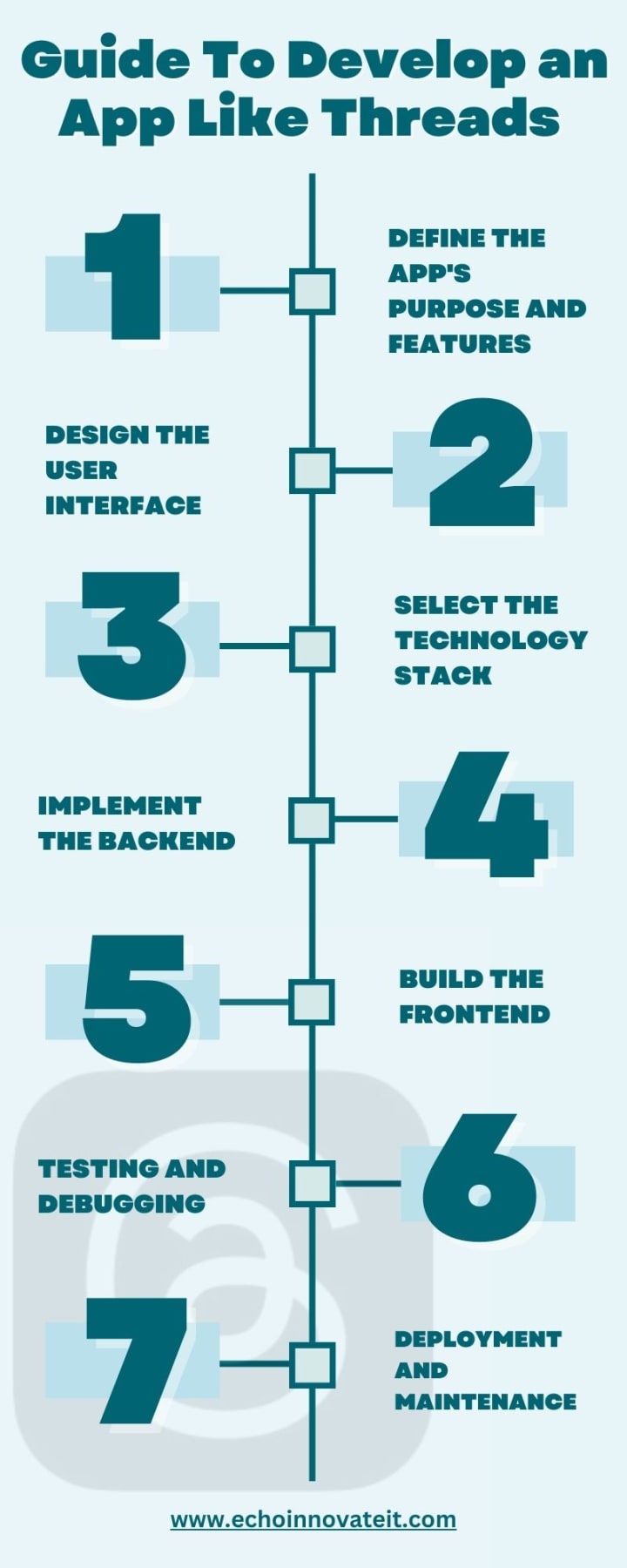
1. Define the App's Purpose and Features
The first step in building a text-based app like Threads is to clearly define its purpose and the features it will offer. Determine the specific goals of your app: Will it be a messaging app for personal use, a discussion forum for a particular niche, or a social media platform? Outline the core features your app will provide, such as message creation, replies, user profiles, search functionality, notifications, and more. This step is crucial as it sets the foundation for the entire development process and helps you prioritize your efforts.
2. Design the User Interface
Creating an intuitive and user-friendly interface is vital for the success of your text-based app. Start by sketching wireframes or mockups to visualize the layout and flow of your app. Pay attention to elements such as message threads, user profiles, message composition boxes, and navigation menus. Strive for consistency in visual styles, typography, and color schemes to maintain a cohesive user experience. Consider user interactions, such as swiping to reply or tapping to expand messages. Prototyping tools like Figma or Sketch can help bring your design to life and allow for iterative improvements based on user feedback.
3. Select the Technology Stack
Choosing the right technology stack is essential for developing your text-based app. Consider factors such as scalability, platform compatibility, and development expertise. For frontend development, popular choices include React, Vue.js, or Angular. These frameworks offer efficient UI rendering and provide robust component libraries. For the backend, you can opt for server-side technologies like Node.js, Ruby on Rails, or Django, which offer scalability and ease of development. Database management systems like MySQL, PostgreSQL, or MongoDB can be used for storing user data and messages. Additionally, ensure you have a good understanding of the selected technologies or be prepared to learn them.
4. Implement the Backend
The backend is responsible for handling data storage, user authentication, and API endpoints. Start by setting up your development environment and installing the necessary frameworks and libraries. Create a database schema that defines the structure of your data, including tables for users, messages, replies, and relationships between them. Implement user authentication mechanisms, such as JWT (JSON Web Tokens) or OAuth, to secure user accounts and provide access control. Develop the server-side logic to handle user actions, such as posting messages, replying to messages, and retrieving thread data. Use RESTful or GraphQL APIs to expose these functionalities to the frontend.
5. Build the Frontend
Using your chosen frontend framework, start developing the user interface of your text-based app. Divide the interface into reusable components for messages, replies, user profiles, and navigation elements. Leverage the power of component-based architecture to create a modular and scalable frontend codebase. Implement features such as real-time updates, message notifications, and search functionality to enhance the user experience. Ensure that the app is responsive and works seamlessly across different devices and screen sizes. Use frontend testing frameworks like Jest or Cypress to write tests and validate the functionality and responsiveness of your app.
6. Testing and Debugging
Thoroughly test your app to identify and fix any bugs or usability issues. Perform unit testing on both the backend and frontend components. Conduct integration testing to ensure that different parts of your app work together harmoniously. Use tools like Postman or Insomnia to test your APIs and verify their responses. Seek user feedback and conduct user testing to gather insights into the app's usability and identify areas for improvement. Fix any issues that arise and iterate on your design and functionality based on user feedback.
7. Deployment and Maintenance
Choose a hosting provider or set up your own server infrastructure to deploy your text-based app. Configure your backend server and database to handle the anticipated user load and ensure security measures are in place. Use containerization tools like Docker to package and deploy your app consistently across different environments. Set up monitoring tools to track the app's performance, user engagement, and server health. Regularly update and maintain your app by addressing security vulnerabilities, improving performance, and adding new features based on user feedback.
How to Make Money From an App Like Threads?
Creating a revenue stream from an app like Threads requires careful consideration of monetization strategies that align with the app's features and user base. Here are some potential ways to make money from your app:
In-App Advertising:
Integrate targeted advertisements within the app's interface. This can include banner ads, sponsored content, or native advertising that seamlessly blends with the user experience. Collaborate with advertisers or use ad networks to generate revenue based on impressions or clicks.
Premium Subscriptions:
Offer a premium version of the app with exclusive features, enhanced functionality, or an ad-free experience. Users can subscribe on a monthly or yearly basis, providing a recurring revenue stream. Consider offering a free trial to incentivize users to upgrade to the premium subscription.
In-App Purchases:
Incorporate virtual goods or additional content that users can purchase within the app. This can include digital stickers, themes, filters, or premium content. Ensure these purchases enhance the user experience and offer value to the users.
Sponsored Content and Influencer Partnerships:
Collaborate with brands or influencers to promote sponsored content within the app. This can involve sponsored threads, exclusive offers, or branded experiences. Carefully select partners that align with the app's audience and maintain transparency to maintain user trust.
Data Monetization:
Aggregating anonymized and non-sensitive user data can be valuable for market research, customer insights, or targeted advertising. Ensure you comply with privacy regulations and obtain proper user consent when utilizing this monetization strategy.
Affiliate Marketing:
Partner with relevant businesses or platforms and earn a commission for driving app users to make purchases or sign up for services through referral links. This can be implemented through affiliate marketing networks or direct partnerships.
White Labeling or Licensing:
If your app's features and functionality are unique and in demand, consider licensing or offering a white-label version of the app to other businesses or organizations. This allows them to customize and rebrand the app for their specific needs.
Data Analytics and Insights:
Provide premium analytics and insights to businesses or brands based on the data generated within the app. This can help them make informed decisions, optimize their marketing strategies, or understand user behavior.
How much does it cost to Build an App like Threads?
The cost of building an app like Threads depends on various factors, including the complexity of features, the technology stack chosen, development hours, and the location of the development team. Here's a breakdown of potential cost factors:
Design and Development:
Designing an appealing user interface and developing the frontend and backend functionality can require significant resources. Costs will vary based on the complexity of the app's features and the hourly rates of developers.
Technology Stack:
The choice of technology stack impacts both the development time and cost. Some frameworks and libraries are open source and free, while others may require licensing fees or subscriptions.
Third-Party Services:
Integrating third-party services such as cloud storage, real-time messaging, or image recognition can add additional costs, depending on the pricing models of these services.
Platform and Device Compatibility:
Building an app for both iOS and Android platforms may require more development hours and, consequently, increase the cost. Compatibility with different device sizes and operating system versions should also be considered.
Testing and Maintenance:
Allocating time and resources for thorough testing and ongoing maintenance is crucial. This includes fixing bugs, optimizing performance, and adding new features based on user feedback.
Conclusion
Building a text-based app like Threads requires careful planning, design, and implementation. By following the steps outlined in this guide, and considering additional features like those found in Threads by Instagram, you can create an engaging and user-friendly app for facilitating conversations and content sharing. Keep in mind the associated costs of development, including design, technology stack, third-party services, and ongoing maintenance. Selecting the appropriate tech stack is crucial, ensuring scalability, compatibility, and ease of development. With dedication, attention to detail and consulting a top social app development company, you can create a successful text-based app that meets the needs of your target audience.
About the Creator
Echoinnovate IT
Echoinnovate is a leading mobile app development company that offers custom app development services to clients across various industries.
Keep reading
More stories from Echoinnovate IT and writers in Futurism and other communities.
Top Swift Design Patterns for iOS App Development
When it comes to developing iOS applications with Swift, utilizing design patterns can greatly enhance code structure, maintainability, and reusability. Design patterns provide proven solutions to recurring problems, allowing developers to write cleaner, more efficient code. In this article, we will explore some of the top design patterns used in Swift for iOS app development. By understanding and implementing these patterns, you can elevate your programming skills and build robust applications that are easier to maintain and extend.
By Echoinnovate IT3 years ago in Futurism
A Chinese Official’s Use of ChatGPT Accidentally Exposed a Global Intimidation Operation
A Chinese official’s use of ChatGPT accidentally revealed a global intimidation operation By 1418603 CNN Expansion D.C. 2023 - May 24-26, 2023 - Washington, D.C., Sean Lyngaas
By Behind the Tech4 days ago in Futurism
Australia Paints & Coatings Market: Construction Demand, Product Innovation & Sustainability Trends
According to IMARC Group, the Australia paints and coatings market reached USD 5.2 Billion in 2024 and is projected to grow to USD 7.8 Billion by 2033, exhibiting a steady compound annual growth rate (CAGR) of 4.1% during 2025–2033. This consistent expansion reflects robust demand across residential, commercial and industrial sectors in Australia. Paints and coatings play a crucial role beyond aesthetics—they provide protection against corrosion, weathering and chemical exposure while enhancing durability and surface performance. As infrastructure investments accelerate and sustainability expectations rise, the industry is undergoing a transformation driven by innovation, regulatory compliance and green chemistry advancements.
By Kevin Cooper6 days ago in Futurism



Comments
There are no comments for this story
Be the first to respond and start the conversation.