
How Generative AI in Drug Discovery Opens New Paths for Life-Saving Treatment
Generative AI in Drug Discovery

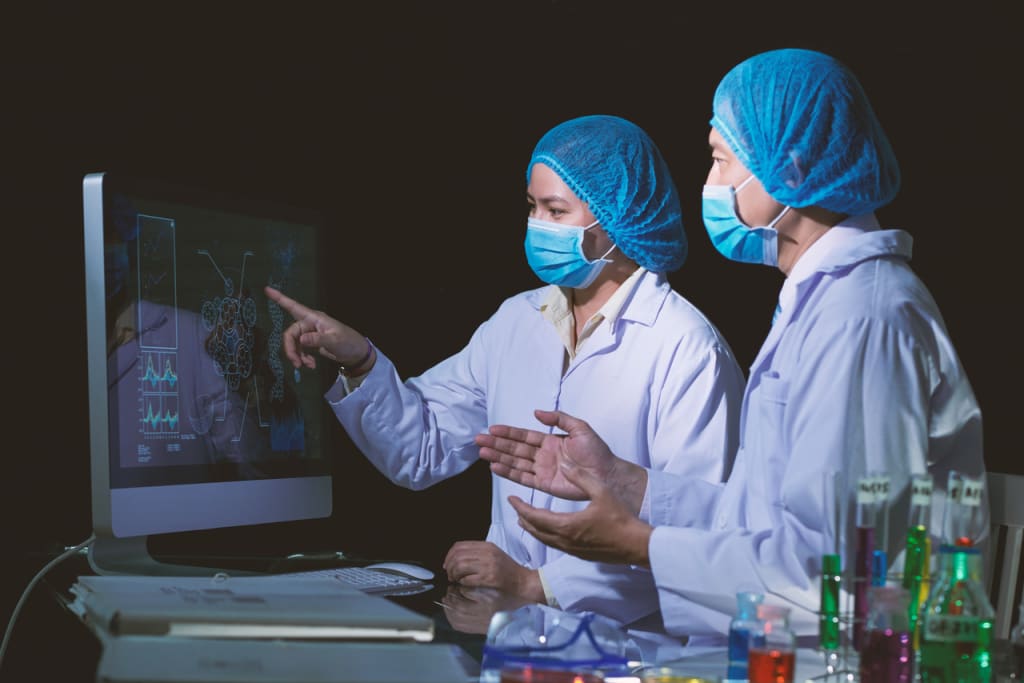
Drug development tends to crawl forward, with each stage demanding deep exploration, big funding, and strict checks—often taking years before patients see the benefits. Today, a major shift is unfolding across science: generative AI in drug discovery offers a faster, clearer, more informed path to new therapies. This technology sifts through massive medical data, creates fresh chemical ideas aimed at specific targets, and helps research teams cut through long stretches of uncertainty. It spotlights strong concepts early, filters out weaker ones before they drain time and money, and gives scientists sharper guidance. Here, we look at how this approach works, why it matters, and the main advantages it brings to the future of medical innovation.
Key Benefits of Generative AI in Drug Discovery
Generative AI transforms the process by which medical teams design and assess new treatments. It cuts most of the guesswork at the earliest stages, accelerates key decisions, and makes clearer directions throughout. Equipped with these functionalities, it paves faster routes toward safe, effective drug candidates.
1. Fast Creation of New Molecules
The first phase of drug research usually involves the most delays. It normally takes several years of trial and error before a targeting molecule is found for a particular disease. Generative AI accelerates this by suggesting new structures that best fit the behavior of the disease and provide a clear direction for further study.
- AI systems form new molecule structures with high accuracy
- AI platforms match each structure with a defined disease target
- Weak candidates drop early, which saves time and cost
2. Strong Prediction of Drug Behavior and Safety
Obviously, much-needed understanding of how a particular drug will behave in the human body is required well in advance before any real trials can materialize. Teams need to gauge toxicity, organ impact, and overall distribution. Generative AI provides early insights and reduces surprises later. With the use of known data, coupled with new chemical concepts, the system provides a clear view of potential risks.
- AI tools judge possible toxicity levels
- System output shows how a drug may pass through vital organs
- Early warnings appear for compounds with high risk
3. Rapid Advice for Global Health Threats
When new threats emerge, speed matters. Traditional labs can't always keep pace. Generative AI helps teams act with urgency, studying pathogen traits, integrating medical data, and highlighting ideas that strongly match the target.
- Generative AI platforms study new virus structures in detail
- A matching engine connects viral patterns with potential drug ideas
- Early guidance supports critical action during emergency phases
4. Support for Precision and Tailored Therapies
Modern medicine increasingly prefers treatment on a personal basis for each patient. AI aids in examining the genetics, disease variants, and personal health profiles that point to such treatments. Building from this, generative AI helps come up with ideas targeted at very specific patient groups.
- AI tools judge patient-level variations
- Systems support drug creation for narrow patient categories
- More accurate treatment paths appear with strong data support
5. Less Cost and More Access to Research Teams
Drug development is a capital-intensive business. Smaller biotech companies often cannot participate in the effort. AI reduces upfront costs and opens the market. Generative AI enables early transparency and avoids pursuing hopeless pathways.
- Shorter discovery stages reduce heavy expenses
- Weak candidates exit early before major financial commitment
- Research teams receive clearer, data-driven guidance
6.Progress for Rare and Overlooked Diseases
Rare diseases often receive much less attention due to limited market potential. Now, generative AI opens new possibilities by exploring broader chemical spaces at lower risk, with restored hope for communities still waiting for real treatments.
- AI platforms form early drug ideas for rare conditions
- Wider chemical spaces open for exploration
- New paths emerge for patient groups with limited prior progress
Conclusion
A powerful shift is underway in medicine. Generative AI in drug discovery provides fast insight, clear direction, and steady progress at every stage. It cuts delays, reduces early uncertainty, and opens new paths to life-saving breakthroughs. With responsible oversight, careful judgment, and expert generative AI development services, research teams can advance modern medicine with greater confidence and speed.
About the Creator
Kiran Moda
Passionate Techwriter: I love to empower business leaders with technological innovations. Let's explore the technical world, from software development to AI.
Keep reading
More stories from Kiran Moda and writers in Futurism and other communities.
10 Key Benefits of Integrating AI and ML in Your Business
The pace of change in the present world is rapid because of the so-called ‘digital’ era, where the demand increases exponentially with each passing day for better performance with increased efficiency and with fewer costs and a much satisfied ‘customer.’ The infusion of ‘AI’ and ‘ML’ is a guiding factor for any enterprise if they have ambitions of staying ‘competitive,’ ‘scalable,’ and ‘futuristic.’ Any enterprise can experience a change ‘revolution’ with the ‘implementation’ of ‘AI’ and ‘ML.’ Here are ten key ‘benefits’ of ‘AI’ and ‘ML.’
By Kiran Moda2 months ago in Futurism
About Binding Prometheus
I want to start actively advocating on behalf of my own work, and the most valuable part of my canon is, without a doubt, Binding Prometheus, the play I have been working on since 2019 and only finished in 2023 as part of my MA. The play itself is an amalgamation of a million different inspirations. On one end, it evokes the Ancient Greek myth-play, deriving its own title from the earliest extant work of Western drama we have, Aeschylus’s Prometheus Bound. On the other end, it borrows significantly from the sci-fi bulwarks from over the years, namely Mary Shelley’s Frankenstein and Karel Capek’s Rossum’s Universal Robots. The play could be an episode of Black Mirror, I fear. I don’t know. I’ve only ever seen one episode of Black Mirror.
By Steven Christopher McKnight19 days ago in Futurism
UAE Mental Health Market: Rising Awareness, Service Expansion & Growth Outlook
According to IMARC Group's latest research publication, UAE Mental Health Market size reached USD 13.10 Billion in 2024. Looking forward, IMARC Group expects the market to reach USD 28.26 Billion by 2033, exhibiting a growth rate (CAGR) of 8.92% during 2025-2033.
By Abhay Rajput7 days ago in Futurism
Center Stage with Paul Stewart
*** I'm keen to republish the interviews I did for my series with Vocal creators. It's been a few years and I thought it might be nice to revisit these wonderful conversations. I'll be releasing them one at a time for a few weeks/months.
By Heather Hubler4 days ago in Interview




Comments
There are no comments for this story
Be the first to respond and start the conversation.